

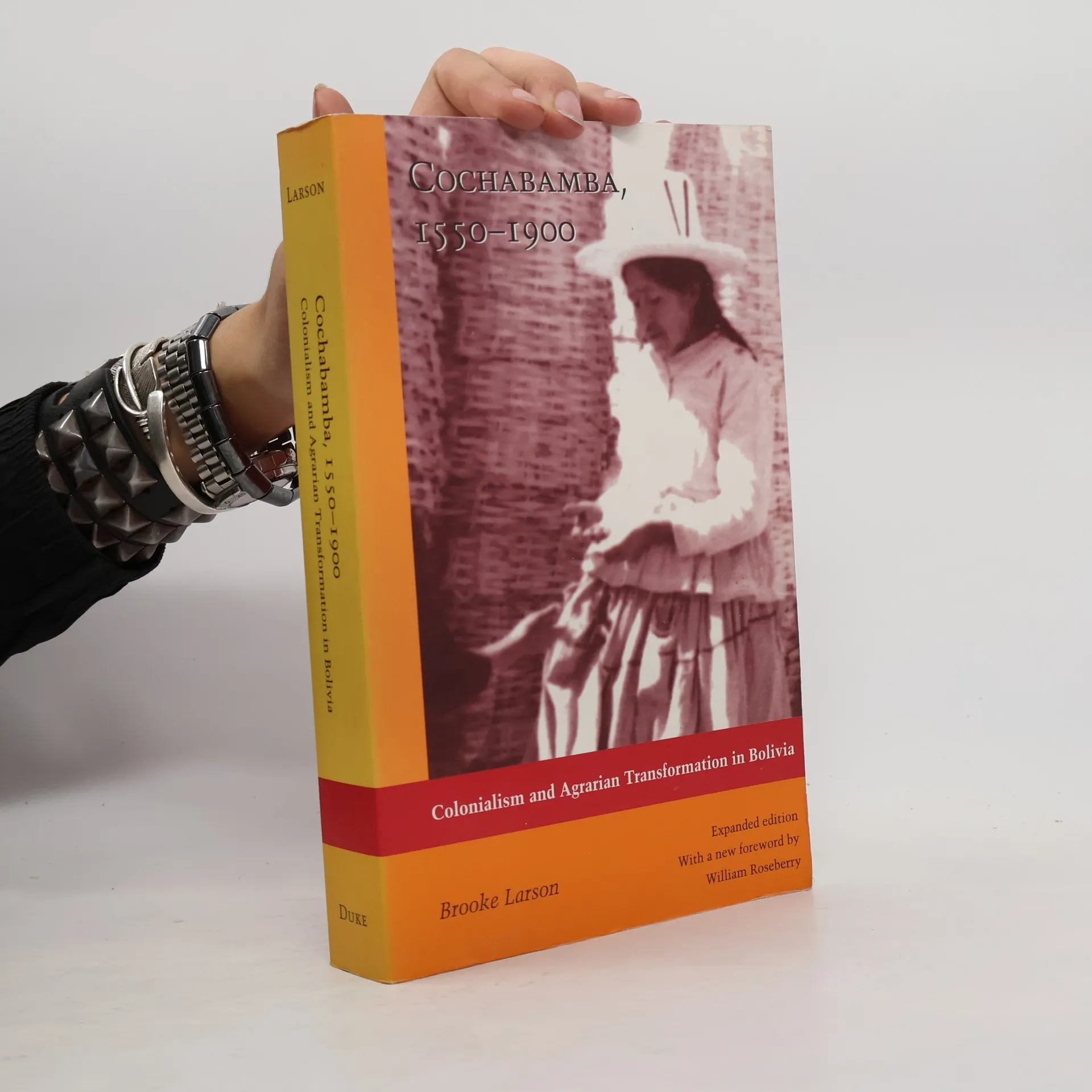



Cochabamba, 1550-1900
Colonialism And Agrarian Transformation In Bolivia - Expanded Edition With A New Foreword By William Roseberry
Parametre
- 456 stránok
- 16 hodin čítania
Viac o knihe
Winner of the 1990 Best Book Award from the New England Council on Latin American Studies This study of Bolivia uses Cochabamba as a laboratory to examine the long-term transformation of native Andean society into a vibrant Quechua-Spanish-mestizo region of haciendas and smallholdings, towns and villages, peasant markets and migratory networks caught in the web of Spanish imperial politics and economics. Combining economic, social, and ethnohistory, Brooke Larson shows how the contradictions of class and colonialism eventually gave rise to new peasant, artisan, and laboring groups that challenged the evolving structures of colonial domination. Originally published in 1988, this expanded edition includes a new final chapter that explores the book’s implications for understanding the formation of a distinctive peasant political culture in the Cochabamba valleys over the eighteenth and nineteenth centuries.
Nákup knihy
Cochabamba, 1550-1900, William Roseberry, Brooke Larson
- Jazyk

- Rok vydania
- 1998
- Väzba
- (mäkká),
- Stav knihy
- Poškodená
- Cena
- 20,49 €
Doručenie
Platobné metódy
Nikto zatiaľ neohodnotil.
- Titul
- Cochabamba, 1550-1900
- Podtitul
- Colonialism And Agrarian Transformation In Bolivia - Expanded Edition With A New Foreword By William Roseberry
- Jazyk
- anglicky
- Autori
- William Roseberry, Brooke Larson
- Vydavateľ
- Duke University Press
- Rok vydania
- 1998
- Väzba
- mäkká
- Počet strán
- 456
- ISBN10
- 0822320886
- ISBN13
- 9780822320883
- Série
- Štítky
- Historické téma, Politické teórie, Južná Amerika, Hospodárske dejiny, Latinská Amerika, Bolívia, Spoločenské triedy
- Anotácia
- Winner of the 1990 Best Book Award from the New England Council on Latin American Studies This study of Bolivia uses Cochabamba as a laboratory to examine the long-term transformation of native Andean society into a vibrant Quechua-Spanish-mestizo region of haciendas and smallholdings, towns and villages, peasant markets and migratory networks caught in the web of Spanish imperial politics and economics. Combining economic, social, and ethnohistory, Brooke Larson shows how the contradictions of class and colonialism eventually gave rise to new peasant, artisan, and laboring groups that challenged the evolving structures of colonial domination. Originally published in 1988, this expanded edition includes a new final chapter that explores the book’s implications for understanding the formation of a distinctive peasant political culture in the Cochabamba valleys over the eighteenth and nineteenth centuries.