

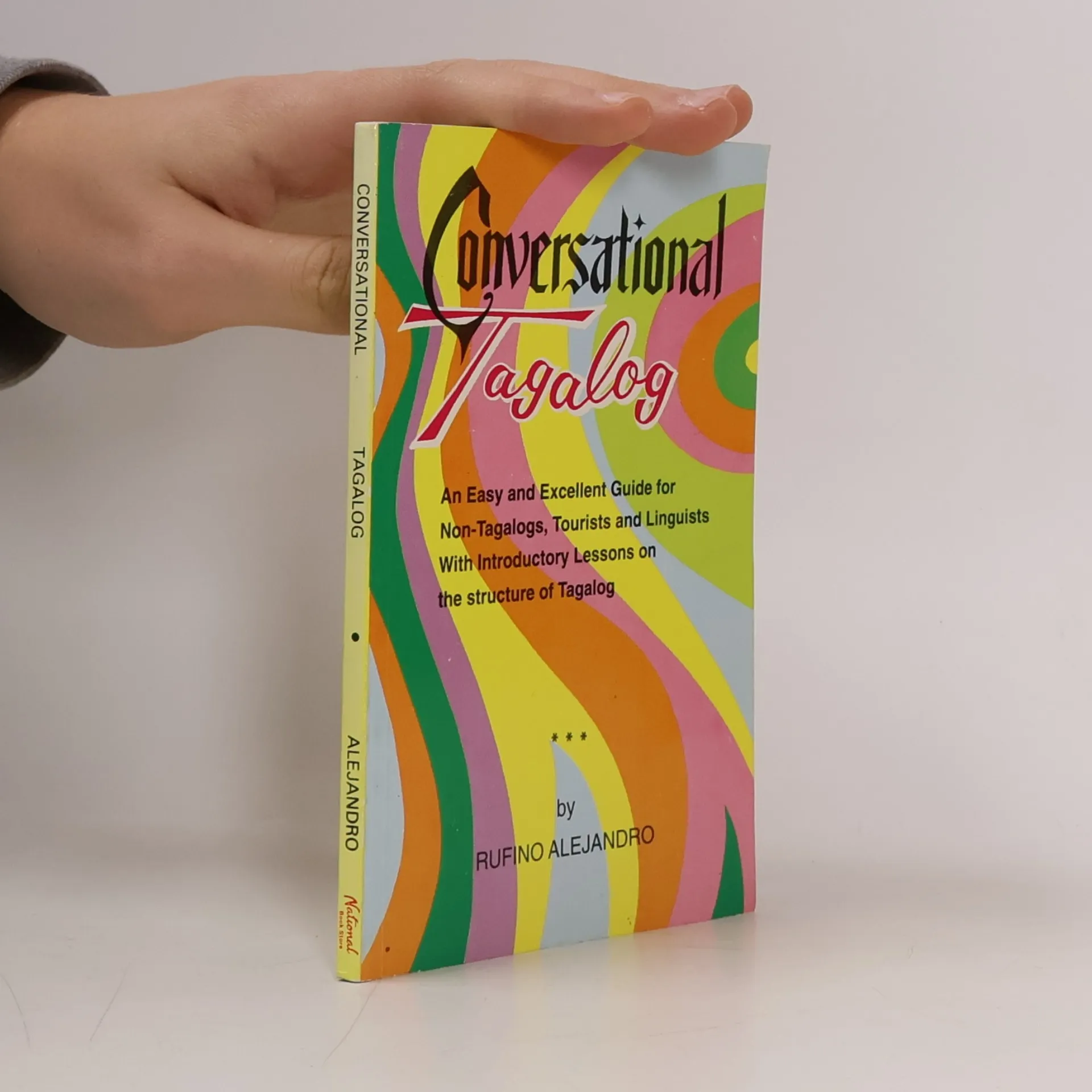

Conversational Tagalog; With Introductory Lessons in the Structure of Tagalog
Autori
Viac o knihe
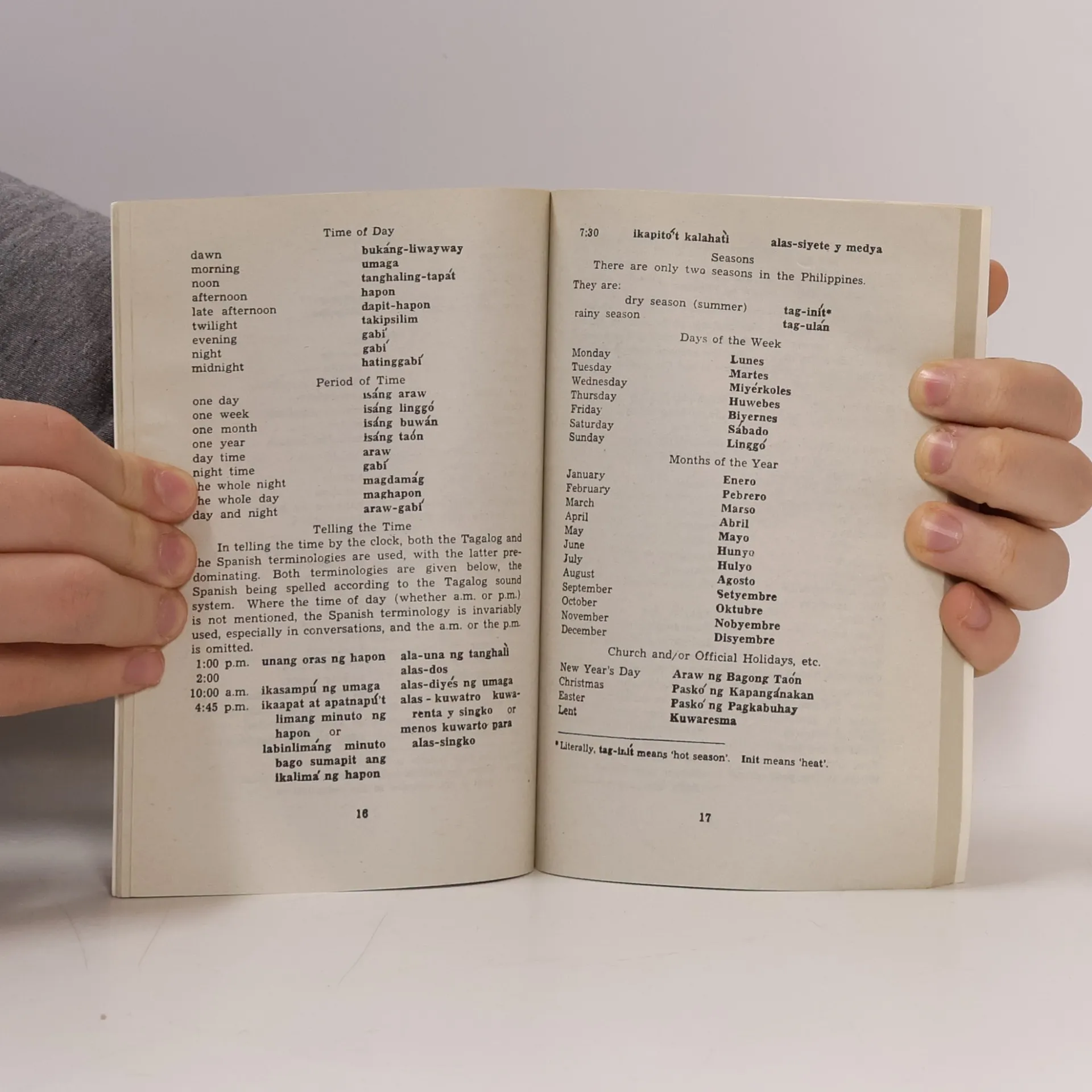
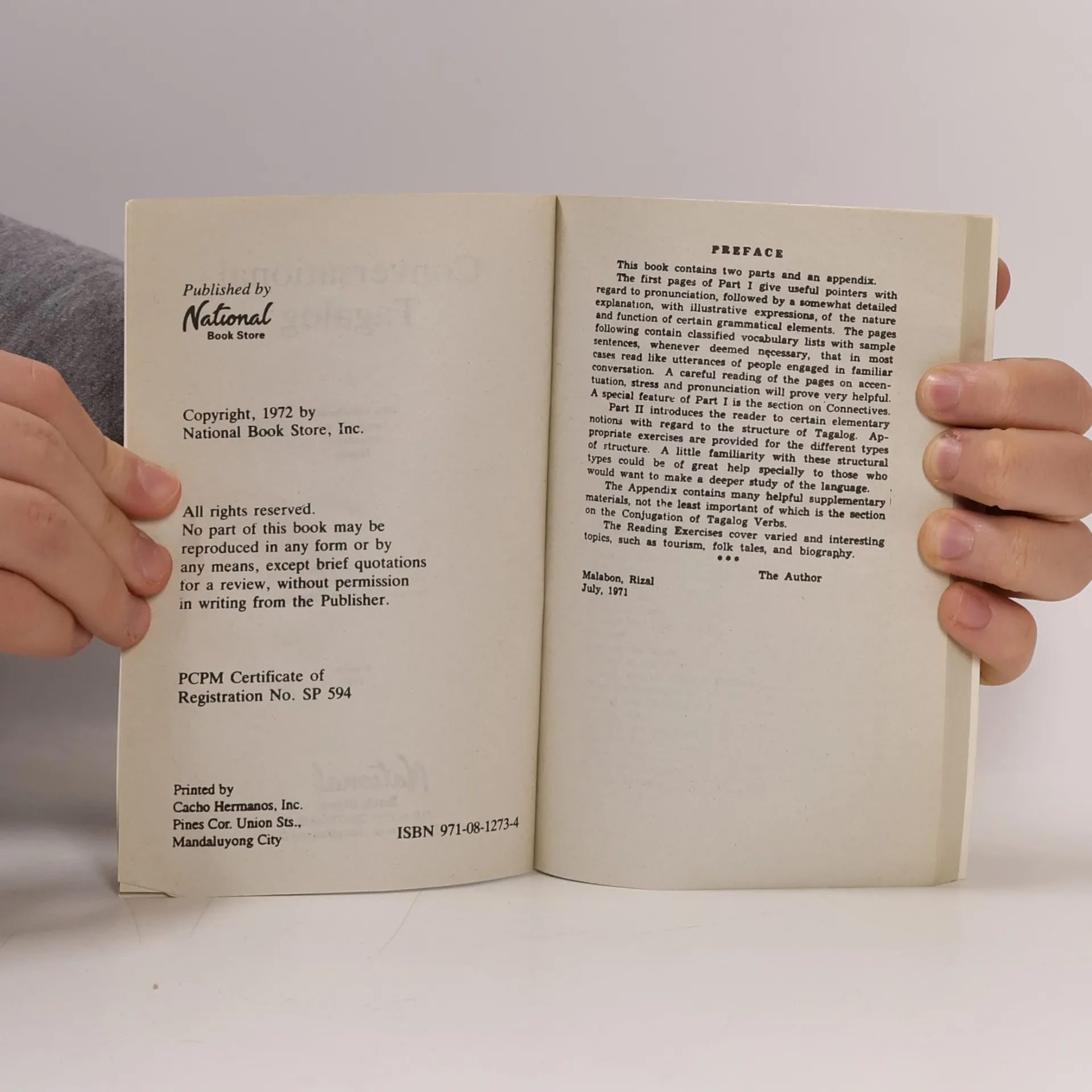
This contains two parts and an appendix. The first pages of Part I give useful pointers with regard to pronunciation, followed by a somewhat detailed explanation, with illustrative expressions, of the nature and function of certain grammatical elements. The pages following contain classified vocabulary lists with sample sentences, whenever deemed necessary, that in most cases read like utterances of people engaged in familiar conversation. A careful reading of the pages on accentuation, stress and pronunciation will prove very helpful. A special feature of Part I is the section on Connectives. Part II introduces the reader to certain elementary notions with regard to the structure of Tagalog. Appropriate exercises are provided for the different types of structure. A little familiarity with these structural types could be of great help specially to those who would want to make a deeper study of the language. The Appendix contains many helpful supplementary materials, not the least important of which is the sections on the Conjugation of Tagalog Verbs. The Reading Exercises cover varied and interesting topics, such as tourism, folk tales, and biography. The Author
Nákup knihy
Conversational Tagalog; With Introductory Lessons in the Structure of Tagalog, Rufino Alejandro
- Jazyk

- Rok vydania
- 1971
- Väzba
- (mäkká),
- Stav knihy
- Dobrá
- Cena
- 27,99 €
Doručenie
Platobné metódy
Nikto zatiaľ neohodnotil.
- Titul
- Conversational Tagalog; With Introductory Lessons in the Structure of Tagalog
- Jazyk
- anglicky
- Autori
- Rufino Alejandro
- Vydavateľ
- National Book Store
- Rok vydania
- 1971
- Väzba
- mäkká
- Počet strán
- 126
- ISBN10
- 9710812734
- ISBN13
- 9789710812738
- Série
- Štítky
- Anotácia
- This contains two parts and an appendix. The first pages of Part I give useful pointers with regard to pronunciation, followed by a somewhat detailed explanation, with illustrative expressions, of the nature and function of certain grammatical elements. The pages following contain classified vocabulary lists with sample sentences, whenever deemed necessary, that in most cases read like utterances of people engaged in familiar conversation. A careful reading of the pages on accentuation, stress and pronunciation will prove very helpful. A special feature of Part I is the section on Connectives. Part II introduces the reader to certain elementary notions with regard to the structure of Tagalog. Appropriate exercises are provided for the different types of structure. A little familiarity with these structural types could be of great help specially to those who would want to make a deeper study of the language. The Appendix contains many helpful supplementary materials, not the least important of which is the sections on the Conjugation of Tagalog Verbs. The Reading Exercises cover varied and interesting topics, such as tourism, folk tales, and biography. The Author