


Breuer Houses
Viac o knihe
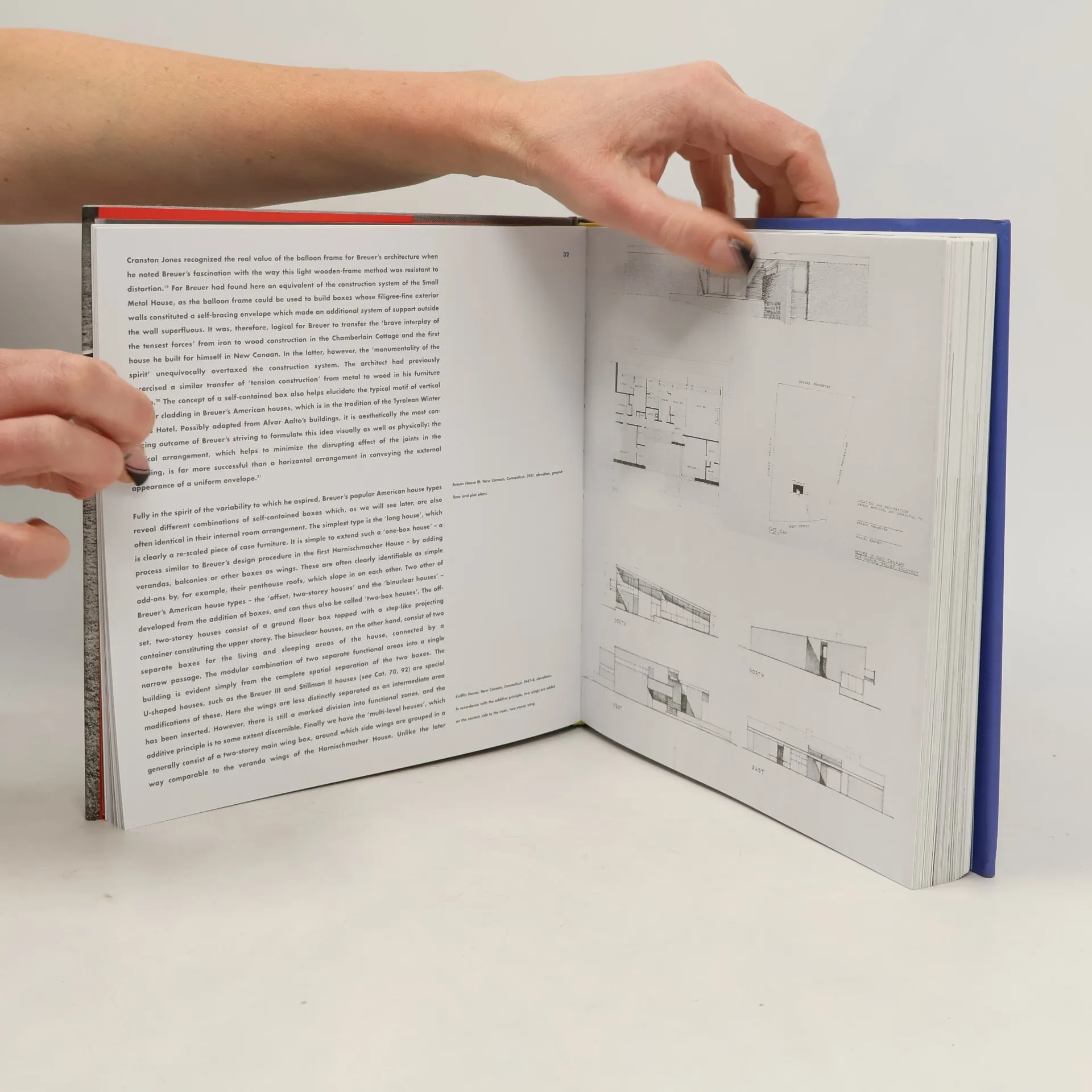
The Hungarian-born architect Marcel Breuer (1902-81) rose to prominence as a student under Walter Gropius at the Bauhaus and became head of the furniture workshop. He emigrated to the United States in 1937, where he taught at Harvard University, influencing a whole generation of practitioners. As the head of his own firm, Breuer became known for designs as diverse and powerful as the Whitney Museum of American Art in New York, the UNESCO headquarters in Paris and the iconic 'Wassily' chair - the first ever chair to use tubular steel, which revolutionized the furniture industry. Breuer, like many architects who work simultaneously on small- and large-scale commissions, used residential architecture as a laboratory for all of his design ideas. Not only is the quality and quantity of Breuer's residential output impressive, but when it is seen in sequence one can perceive a development of his spatial mastery and expertise. Because of their interplay of spaces and daring juxtaposition of materials, Breuer's houses have had a profound influence on residential architecture around the world and on many generations of young designers. This monograph is a comprehensive study of Breuer's house designs from 1923 to 1973. Richly illustrated with drawings, plans and archival photography, the book provides a penetrative insight into the working methods of a key twentieth-century architectural figure.
Nákup knihy
Breuer Houses, Marcel Breuer, Joachim Driller
- Jazyk

- Rok vydania
- 2000
- Väzba
- (pevná),
- Stav knihy
- Veľmi dobrá
- Cena
- 38,39 €
Doručenie
Platobné metódy
Nikto zatiaľ neohodnotil.
- Titul
- Breuer Houses
- Jazyk
- anglicky
- Autori
- Marcel Breuer, Joachim Driller
- Vydavateľ
- Phaidon
- Rok vydania
- 2000
- Väzba
- pevná
- Počet strán
- 272
- ISBN10
- 0714838934
- ISBN13
- 9780714838939
- Série
- Štítky
- Umenie, Architektúra, USA, Nemecko, 20. storočie, Dejiny umenia, Kutilstvo a DIY, Západná Európa, Kritika, Modernizmus, Dekoratívne umenie, Teória architektúry
- Anotácia
- The Hungarian-born architect Marcel Breuer (1902-81) rose to prominence as a student under Walter Gropius at the Bauhaus and became head of the furniture workshop. He emigrated to the United States in 1937, where he taught at Harvard University, influencing a whole generation of practitioners. As the head of his own firm, Breuer became known for designs as diverse and powerful as the Whitney Museum of American Art in New York, the UNESCO headquarters in Paris and the iconic 'Wassily' chair - the first ever chair to use tubular steel, which revolutionized the furniture industry. Breuer, like many architects who work simultaneously on small- and large-scale commissions, used residential architecture as a laboratory for all of his design ideas. Not only is the quality and quantity of Breuer's residential output impressive, but when it is seen in sequence one can perceive a development of his spatial mastery and expertise. Because of their interplay of spaces and daring juxtaposition of materials, Breuer's houses have had a profound influence on residential architecture around the world and on many generations of young designers. This monograph is a comprehensive study of Breuer's house designs from 1923 to 1973. Richly illustrated with drawings, plans and archival photography, the book provides a penetrative insight into the working methods of a key twentieth-century architectural figure.