


How to Talk American
A Guide to Our Native Tongues
Autori
Viac o knihe
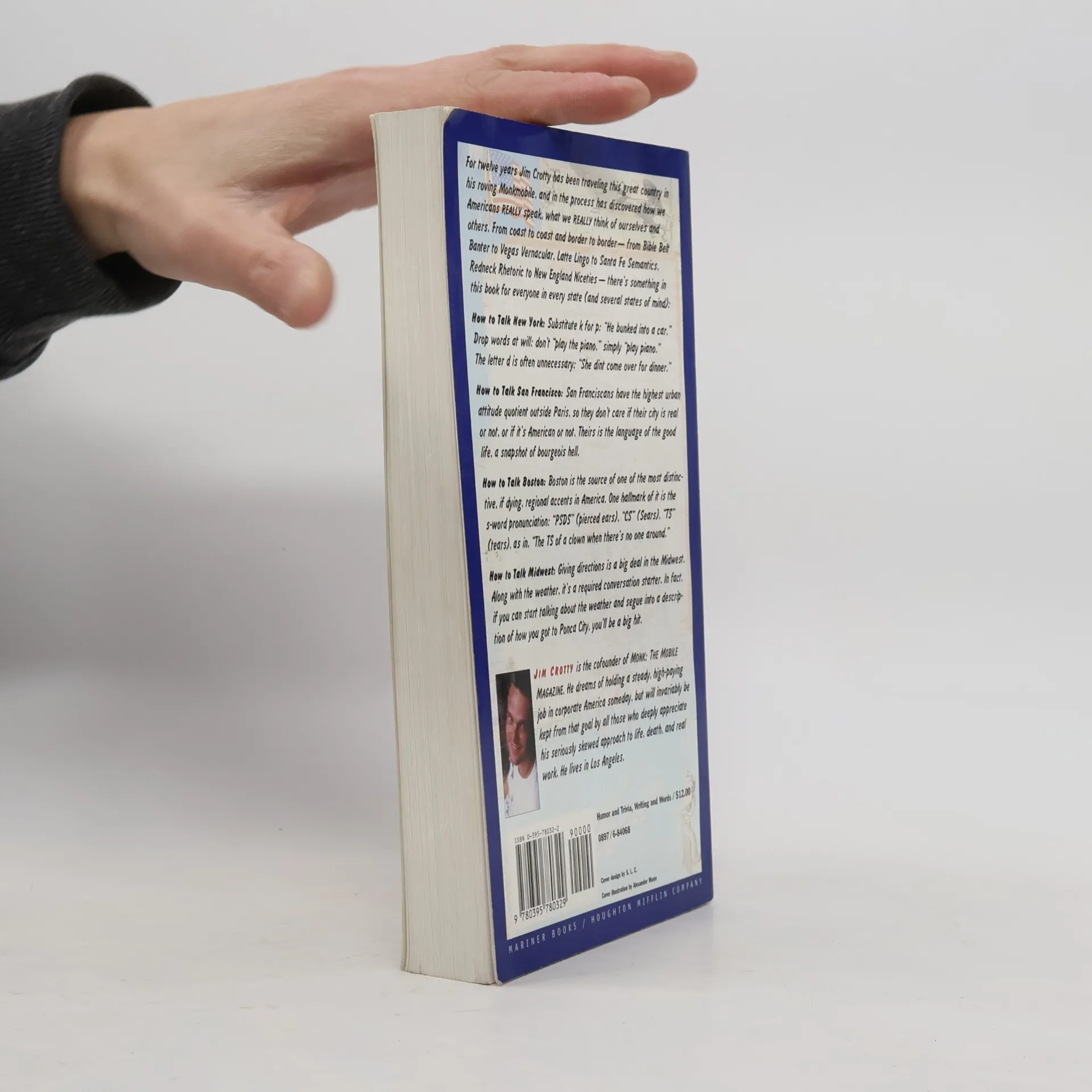
For twelve years Jim Crotty has been traveling this great country in his roving Monkmobile (don't ask) and in the process has discovered how Americans really speak, from coast to coast and border to border - from Bible Belt Banter to Vegas Vernacular, from Redneck Rhetoric to New England Niceties: Things you need to know about Boston before you go there: Quahog (say co-hog) - oil-slickened red-tide clam, prized by Bostonians for its taste; Santa Fe semantics: Blue corn - sacred food, sold as chips; Seattle-speak: Partly sunny - partly cloudy Crotty's savvy and often hilarious region-by-region guide to the way we talk provides a dead-on (and sometimes too strange) indication of how we think, how we behave, and what we hold dear.
Nákup knihy
How to Talk American, James Marshall Crotty
- Jazyk

- Rok vydania
- 1997
- Väzba
- (mäkká),
- Stav knihy
- Poškodená
- Cena
- 11,99 €
Doručenie
Platobné metódy
Nikto zatiaľ neohodnotil.
- Titul
- How to Talk American
- Podtitul
- A Guide to Our Native Tongues
- Jazyk
- anglicky
- Autori
- James Marshall Crotty
- Vydavateľ
- Mariner Books
- Rok vydania
- 1997
- Väzba
- mäkká
- Počet strán
- 448
- ISBN10
- 0395780322
- ISBN13
- 9780395780329
- Série
- Kategórie
- Štítky
- Cestovanie, Príručky a návody, Humor, USA, Lingvistika, Dejiny Európy, Nárečia, dialekty, Americká angličtina
- Anotácia
- For twelve years Jim Crotty has been traveling this great country in his roving Monkmobile (don't ask) and in the process has discovered how Americans really speak, from coast to coast and border to border - from Bible Belt Banter to Vegas Vernacular, from Redneck Rhetoric to New England Niceties: Things you need to know about Boston before you go there: Quahog (say co-hog) - oil-slickened red-tide clam, prized by Bostonians for its taste; Santa Fe semantics: Blue corn - sacred food, sold as chips; Seattle-speak: Partly sunny - partly cloudy Crotty's savvy and often hilarious region-by-region guide to the way we talk provides a dead-on (and sometimes too strange) indication of how we think, how we behave, and what we hold dear.