


Viac o knihe
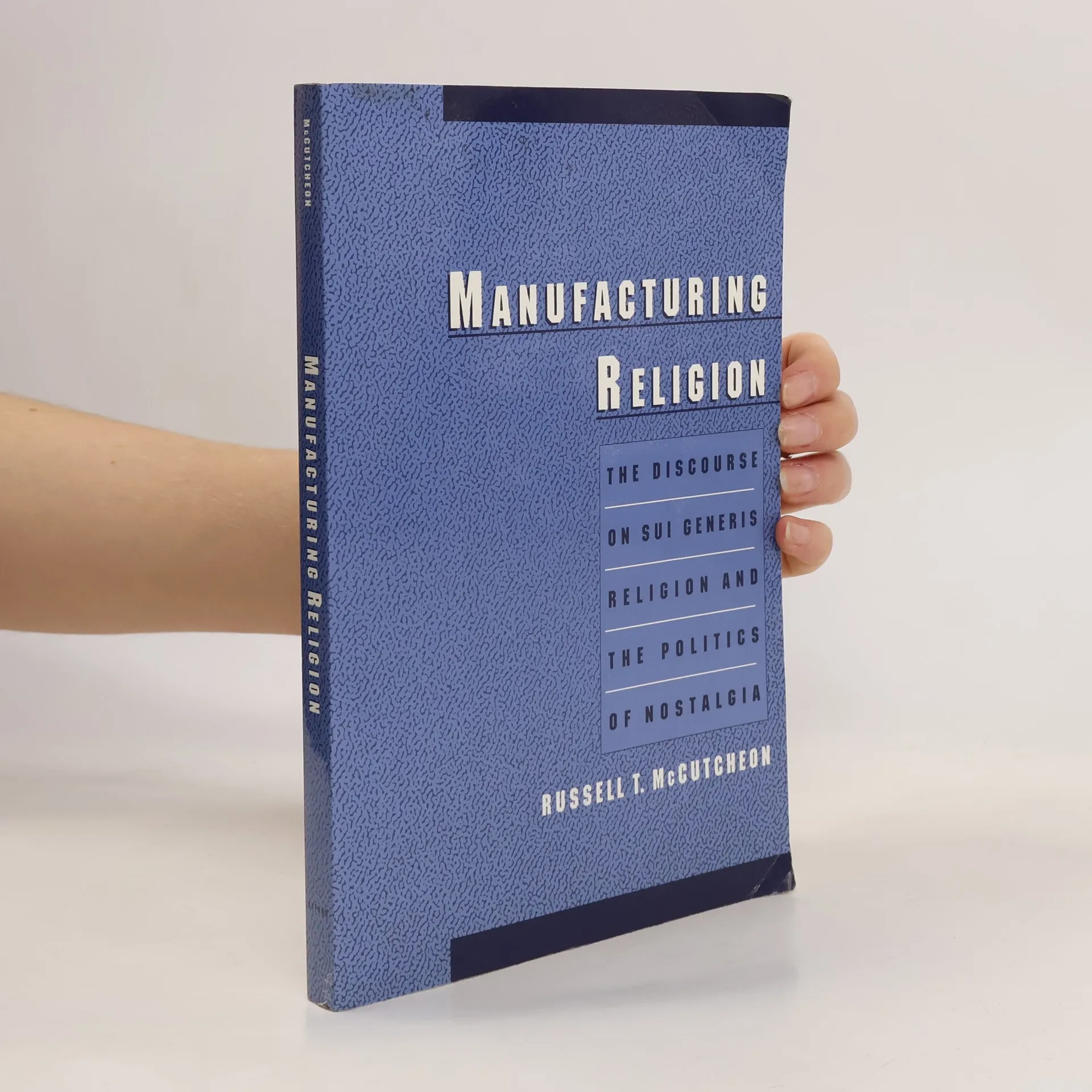
In this new work, Russell McCutcheon critiques traditional scholarship on religion, targeting several interrelated aspects. He focuses on the History of Religions as a discipline, the contributions of Mircea Eliade, recent studies on Eliade's life and politics, contemporary world religion textbooks, and the notion that "religion" is a sui generis phenomenon. McCutcheon analyzes the ideological foundations of the sui generis argument, revealing its role in shaping the field's object of study into something ahistoric, apolitical, fetishized, and sacrosanct. He argues that this perspective has fostered the creation of departments, jobs, and publication avenues for those who accept this problematic construction, resulting in a disciplinary ethos marked by theoretical naivete and a corresponding body of scholarship. Examining introductory comparative religion textbooks, he finds they uniformly embrace the sui generis viewpoint, which, while popular among intended audiences, undermines critical perspectives and capacities. Furthermore, he asserts that treating religion as an ahistorical category contributes to broader systems of political domination and cultural imperialism.
Nákup knihy
Manufacturing Religion, Russell T. McCutcheon
- Jazyk

- Rok vydania
- 2003
- Väzba
- (mäkká)
Doručenie
Platobné metódy
Tu nám chýba tvoja recenzia
- Titul
- Manufacturing Religion
- Jazyk
- anglicky
- Autori
- Russell T. McCutcheon
- Vydavateľ
- Oxford University Press on Demand
- Rok vydania
- 2003
- Väzba
- mäkká
- Počet strán
- 268
- ISBN10
- 0195166639
- ISBN13
- 9780195166637
- Série
- Štítky
- Učebnice, Náboženské témy
- Hodnotenie
- 3,9 z 5
- Anotácia
- In this new work, Russell McCutcheon critiques traditional scholarship on religion, targeting several interrelated aspects. He focuses on the History of Religions as a discipline, the contributions of Mircea Eliade, recent studies on Eliade's life and politics, contemporary world religion textbooks, and the notion that "religion" is a sui generis phenomenon. McCutcheon analyzes the ideological foundations of the sui generis argument, revealing its role in shaping the field's object of study into something ahistoric, apolitical, fetishized, and sacrosanct. He argues that this perspective has fostered the creation of departments, jobs, and publication avenues for those who accept this problematic construction, resulting in a disciplinary ethos marked by theoretical naivete and a corresponding body of scholarship. Examining introductory comparative religion textbooks, he finds they uniformly embrace the sui generis viewpoint, which, while popular among intended audiences, undermines critical perspectives and capacities. Furthermore, he asserts that treating religion as an ahistorical category contributes to broader systems of political domination and cultural imperialism.