

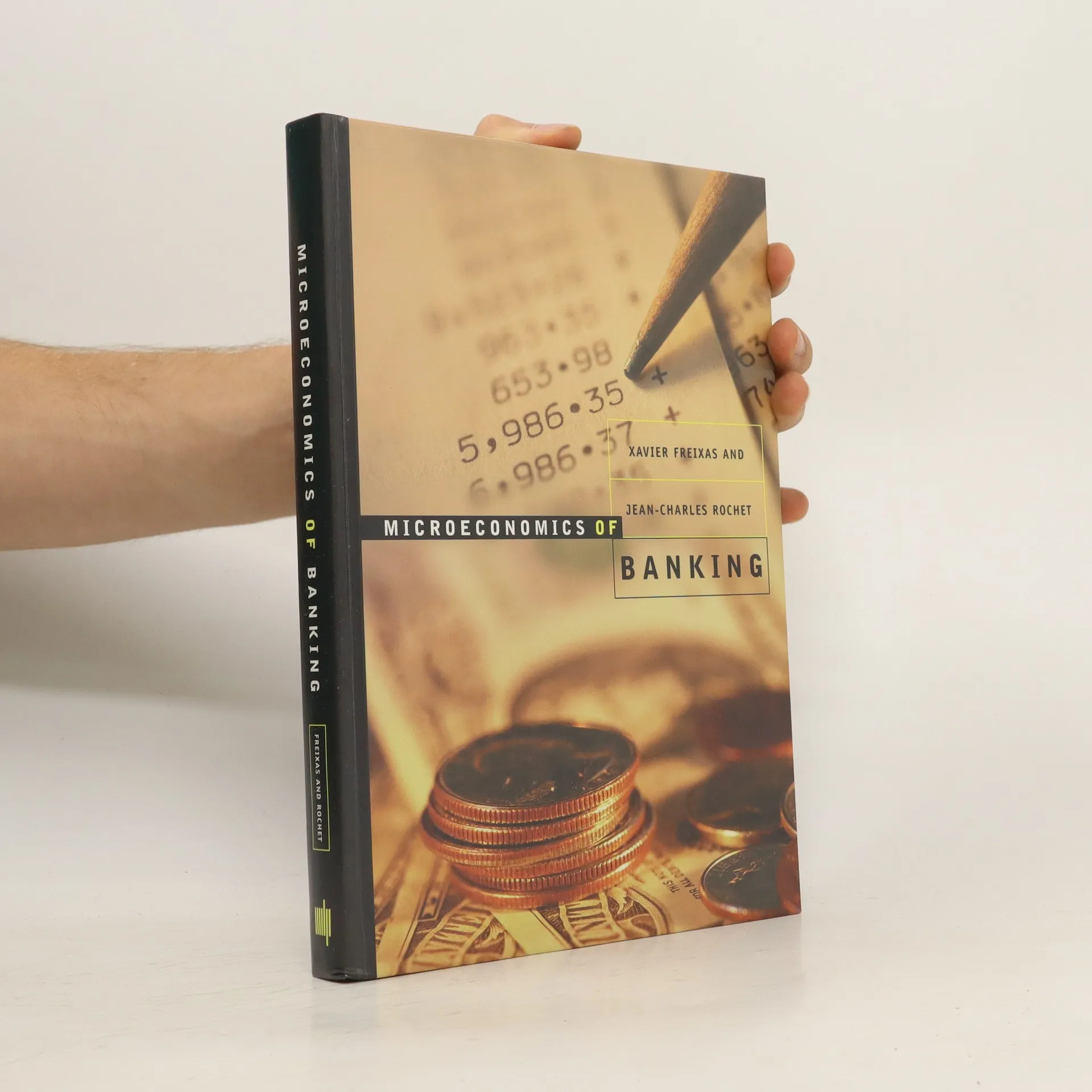


Viac o knihe
Twenty years ago, most banking courses focused on either management or monetary aspects of banking, with no connecting. Since then, a microeconomic theory of banking has developed, mainly through a switch of emphasis from the modeling of risk to the modeling of imperfect information. This asymmetric information model is based on the assumption that different economic agents possess different pieces of information on relevant economic variables, and that they will use the information for their own profit. The model has been extremely useful in explaining the role of banks in the economy. It has also been useful in pointing out structural weaknesses of the banking sector that may justify government intervention--for example, exposure to runs and panics, the persistence of rationing in the credit market, and solvency problems.Microeconomics of Banking provides a guide to the new theory. Topics include why financial intermediaries exist, the industrial organization approach to banking, optimal contracting between lenders and borrowers, the equilibrium of the credit market, macroeconomic consequences of financial imperfections, individual bank runs and systemic risk, risk management inside the banking firm, and bank regulation. Each chapter ends with a detailed problem set and solutions.
Nákup knihy
Microeconomics of Banking, Xavier Freixas, JeanCharles Rochet
- Jazyk

- Rok vydania
- 1997
- Väzba
- (pevná)
Doručenie
Platobné metódy
Tu nám chýba tvoja recenzia
- Titul
- Microeconomics of Banking
- Jazyk
- anglicky
- Autori
- Xavier Freixas, JeanCharles Rochet
- Vydavateľ
- MIT Press
- Rok vydania
- 1997
- Väzba
- pevná
- Počet strán
- 312
- ISBN10
- 0262061937
- ISBN13
- 9780262061933
- Série
- Hodnotenie
- 4 z 5
- Anotácia
- Twenty years ago, most banking courses focused on either management or monetary aspects of banking, with no connecting. Since then, a microeconomic theory of banking has developed, mainly through a switch of emphasis from the modeling of risk to the modeling of imperfect information. This asymmetric information model is based on the assumption that different economic agents possess different pieces of information on relevant economic variables, and that they will use the information for their own profit. The model has been extremely useful in explaining the role of banks in the economy. It has also been useful in pointing out structural weaknesses of the banking sector that may justify government intervention--for example, exposure to runs and panics, the persistence of rationing in the credit market, and solvency problems.Microeconomics of Banking provides a guide to the new theory. Topics include why financial intermediaries exist, the industrial organization approach to banking, optimal contracting between lenders and borrowers, the equilibrium of the credit market, macroeconomic consequences of financial imperfections, individual bank runs and systemic risk, risk management inside the banking firm, and bank regulation. Each chapter ends with a detailed problem set and solutions.