

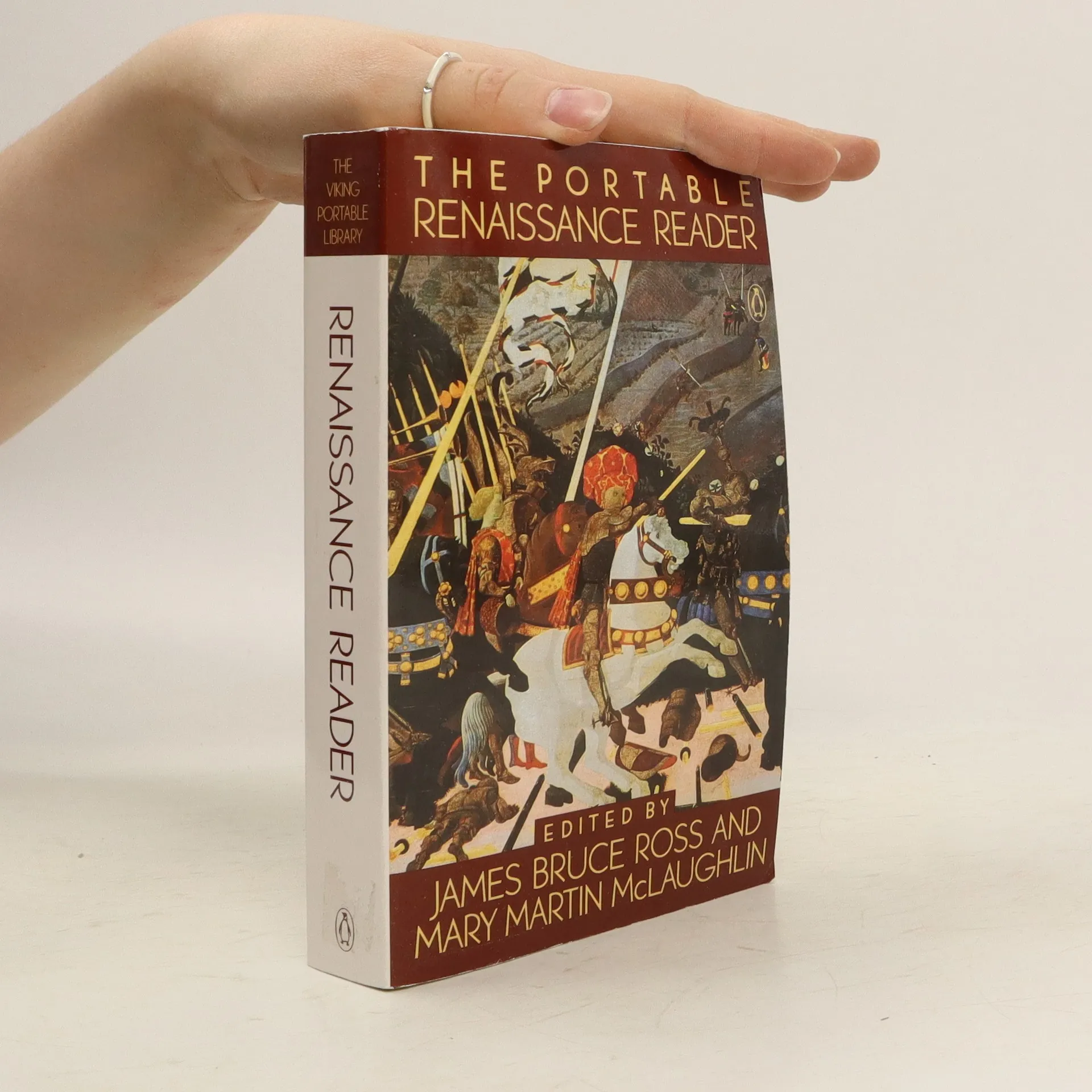


The portable Renaissance reader
Hodnotenie knihy
Parametre
Viac o knihe
Essential passages form the works of more than 100 fifteenth-and sixteenth-century thinkers and writers, including Erasmus, Cervantes, Boccaccio, Montaigne, Bodin, Dürer, Machiavelli, Guicciardini, Rabelais, Leonardo, Cellini, Copernicus, Galileo, Savonarola, Luther, and Calvin. It was the age in which Europe rediscovered antiquity even as it built the foundations of the modern world; when Christendom lost its eastern empire and conquered a new world to the west; an age in which Leonardo and Michelangelo glorified the human body while Andreas Vesalius stripped bare its skeleton; an age in which a revolution in scientific knowledge coexisted with a religious inquisition and the hysterical persecution of suspected witches. The 200 years we call the Renaissance were so eventful and contradictory that one man, Erasmus of Rotterdam, could decry their tyranny, avarice and iniquity, yet proclaim the "near approach of a golden age."
Nákup knihy
The portable Renaissance reader, James Bruce Ross, Mary Martin McLaughlin
- Jazyk

- Rok vydania
- 1981
- Väzba
- (mäkká)
Doručenie
Platobné metódy
Tu nám chýba tvoja recenzia
- Titul
- The portable Renaissance reader
- Jazyk
- anglicky
- Vydavateľ
- Penguin Books
- Rok vydania
- 1981
- Väzba
- mäkká
- ISBN10
- 0140150617
- ISBN13
- 9780140150612
- Série
- Kategórie
- Štítky
- Filozofická tematika, Dejiny Európy, Čítanky
- Hodnotenie
- 3,85 z 5
- Anotácia
- Essential passages form the works of more than 100 fifteenth-and sixteenth-century thinkers and writers, including Erasmus, Cervantes, Boccaccio, Montaigne, Bodin, Dürer, Machiavelli, Guicciardini, Rabelais, Leonardo, Cellini, Copernicus, Galileo, Savonarola, Luther, and Calvin. It was the age in which Europe rediscovered antiquity even as it built the foundations of the modern world; when Christendom lost its eastern empire and conquered a new world to the west; an age in which Leonardo and Michelangelo glorified the human body while Andreas Vesalius stripped bare its skeleton; an age in which a revolution in scientific knowledge coexisted with a religious inquisition and the hysterical persecution of suspected witches. The 200 years we call the Renaissance were so eventful and contradictory that one man, Erasmus of Rotterdam, could decry their tyranny, avarice and iniquity, yet proclaim the "near approach of a golden age."