

Viac o knihe
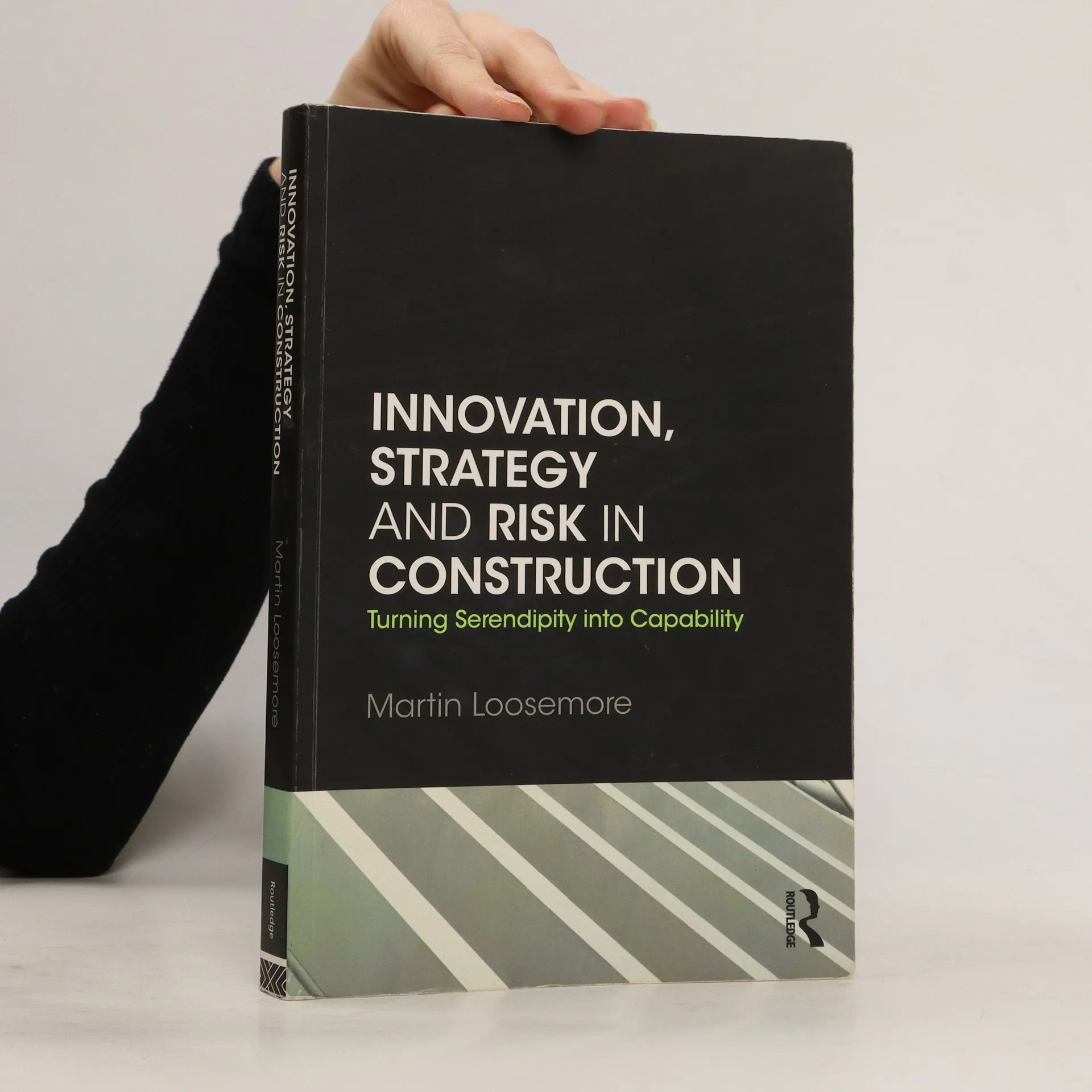
Innovation, Strategy and Risk in Construction integrates insights from business and government leaders with contemporary research, to help built environment professionals turn serendipity to their own advantage by building greater innovative and adaptive capacity into their operations. Accessible and full of practical examples, the book argues that traditional business strategies which seek to systematise innovation and eliminate uncertainty need to be balanced with more flexible approaches which acknowledge and harness uncertainty. The missing key to innovation, it is argued, is to turn serendipity into capability. The author proposes a simple model which allows managers to tap into the increasingly dynamic and interconnected nature of the construction industry. Innovation does not occur in isolation within individual firms, but through collaboration. Each stakeholder in the construction industry has a responsibility to drive innovation, and this book will be key reading for consultants, contractors, subcontractors, suppliers and clients, as well as policy makers and all serious students of construction management.
Nákup knihy
Innovation, Strategy and Risk in Construction, Martin Loosemore
- Jazyk

- Rok vydania
- 2014
- Väzba
- (mäkká)
Doručenie
Platobné metódy
Nikto zatiaľ neohodnotil.
- Titul
- Innovation, Strategy and Risk in Construction
- Jazyk
- anglicky
- Autori
- Martin Loosemore
- Vydavateľ
- Routledge
- Rok vydania
- 2014
- Väzba
- mäkká
- Počet strán
- 288
- ISBN10
- 0415675995
- ISBN13
- 9780415675994
- Série
- Kategórie
- Štítky
- Byznys
- Anotácia
- Innovation, Strategy and Risk in Construction integrates insights from business and government leaders with contemporary research, to help built environment professionals turn serendipity to their own advantage by building greater innovative and adaptive capacity into their operations. Accessible and full of practical examples, the book argues that traditional business strategies which seek to systematise innovation and eliminate uncertainty need to be balanced with more flexible approaches which acknowledge and harness uncertainty. The missing key to innovation, it is argued, is to turn serendipity into capability. The author proposes a simple model which allows managers to tap into the increasingly dynamic and interconnected nature of the construction industry. Innovation does not occur in isolation within individual firms, but through collaboration. Each stakeholder in the construction industry has a responsibility to drive innovation, and this book will be key reading for consultants, contractors, subcontractors, suppliers and clients, as well as policy makers and all serious students of construction management.