



Viac o knihe
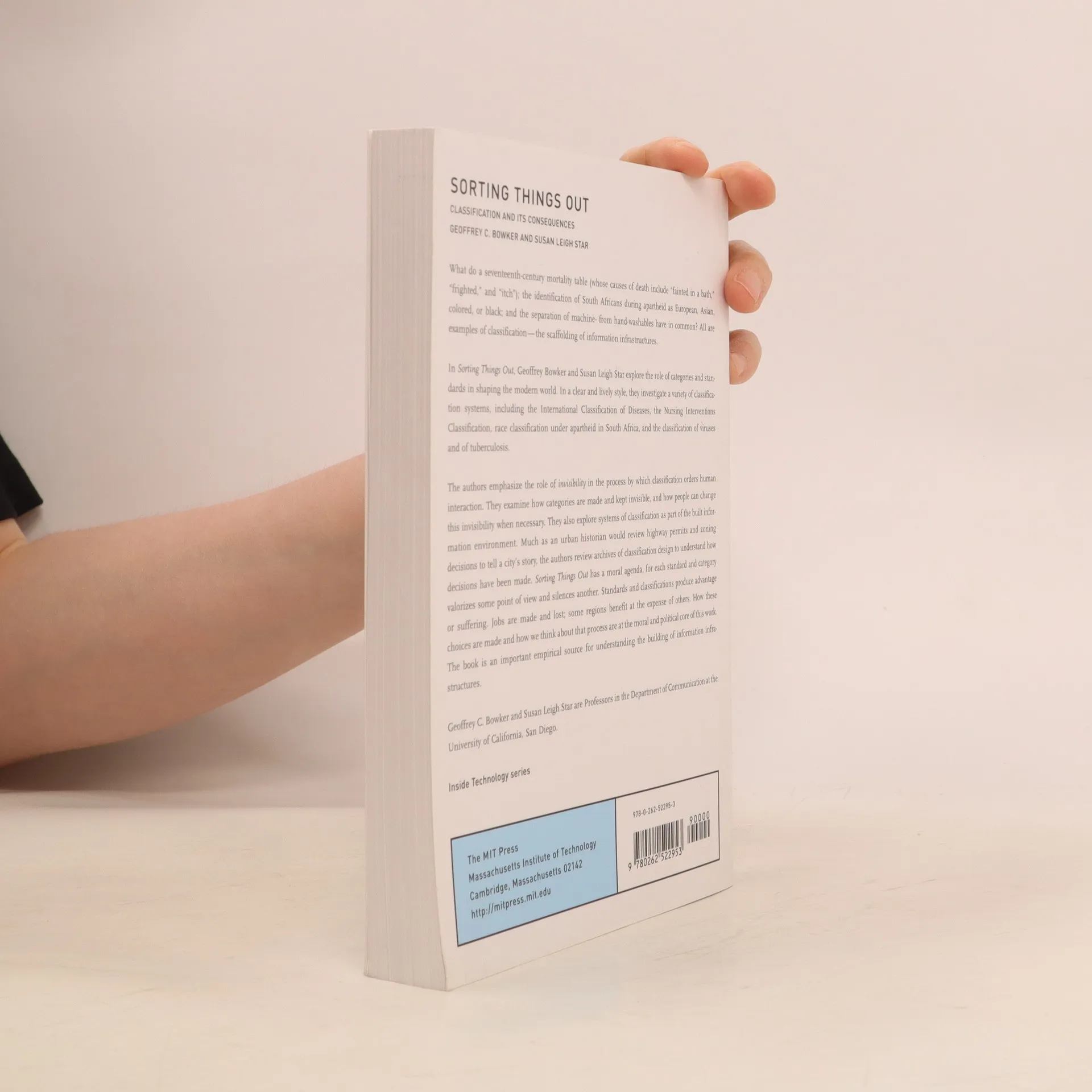
What do a seventeenth-century mortality table, apartheid classifications in South Africa, and the separation of machine-washables from hand-washables have in common? They exemplify classification—the foundation of information infrastructures. The authors delve into how categories and standards shape the modern world, examining various classification systems such as the International Classification of Diseases, Nursing Interventions Classification, and race classifications during apartheid. They highlight the role of invisibility in how classification influences human interaction, exploring how categories can be rendered invisible and how individuals can challenge this invisibility. The authors treat classification systems as part of the constructed information environment, akin to how urban historians analyze zoning decisions to narrate a city's history. This work carries a moral agenda, as each standard and category reflects a particular viewpoint while silencing others. Classifications can create advantages or hardships, impacting job availability and regional benefits. The authors investigate how these choices are made and encourage reflection on the moral and political implications of classification processes.
Nákup knihy
Sorting Things Out, Susan Leigh Star, Geoffrey C. Bowker
- Jazyk

- Rok vydania
- 2000
- Väzba
- (mäkká)
Tu nám chýba tvoja recenzia
- Titul
- Sorting Things Out
- Jazyk
- anglicky
- Vydavateľ
- MIT Press
- Rok vydania
- 2000
- Väzba
- mäkká
- Počet strán
- 389
- ISBN10
- 0262522950
- ISBN13
- 9780262522953
- Série
- Kategórie
- Hodnotenie
- 3,95 z 5
- Anotácia
- What do a seventeenth-century mortality table, apartheid classifications in South Africa, and the separation of machine-washables from hand-washables have in common? They exemplify classification—the foundation of information infrastructures. The authors delve into how categories and standards shape the modern world, examining various classification systems such as the International Classification of Diseases, Nursing Interventions Classification, and race classifications during apartheid. They highlight the role of invisibility in how classification influences human interaction, exploring how categories can be rendered invisible and how individuals can challenge this invisibility. The authors treat classification systems as part of the constructed information environment, akin to how urban historians analyze zoning decisions to narrate a city's history. This work carries a moral agenda, as each standard and category reflects a particular viewpoint while silencing others. Classifications can create advantages or hardships, impacting job availability and regional benefits. The authors investigate how these choices are made and encourage reflection on the moral and political implications of classification processes.