



Viac o knihe
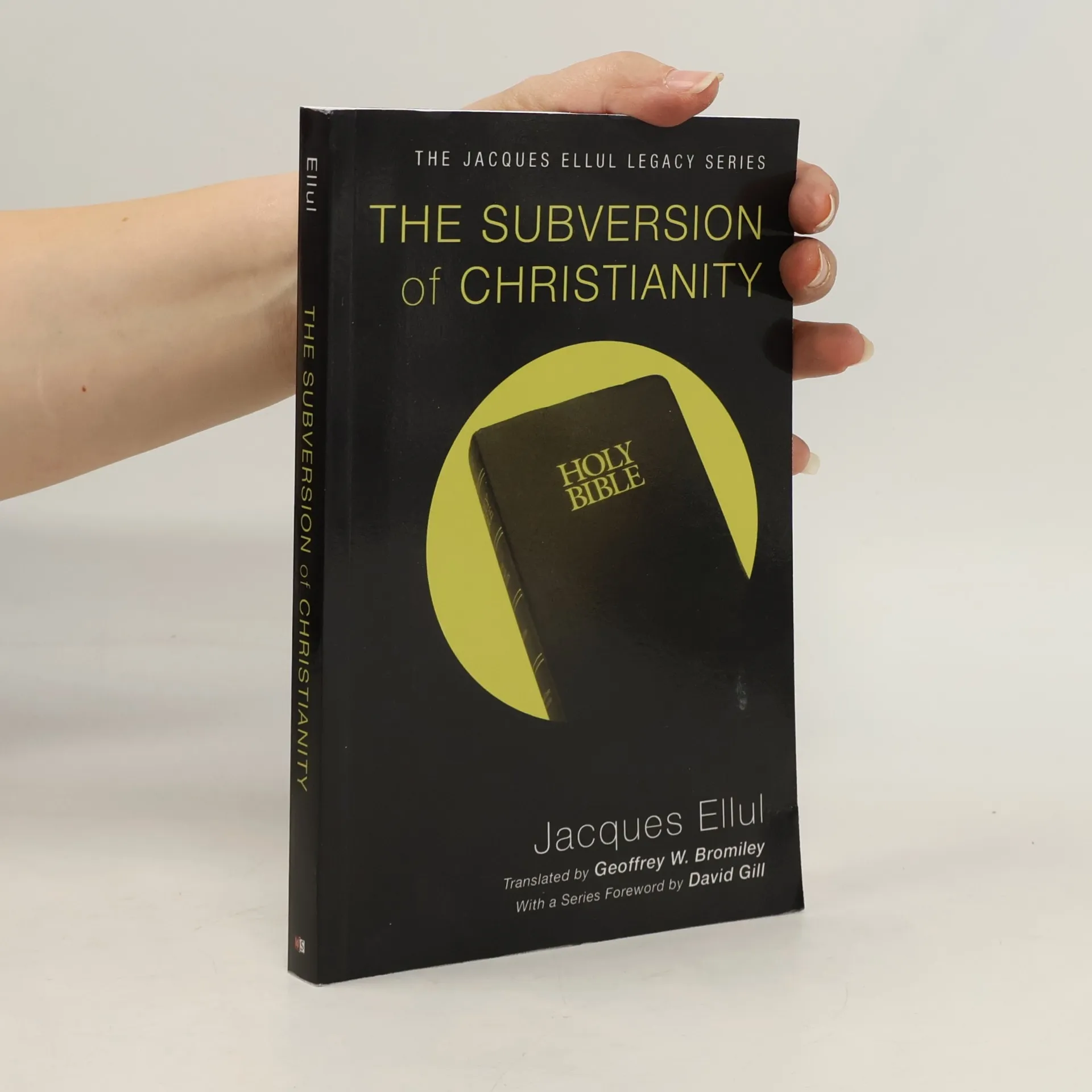
Pointing to the many contradictions between the Bible and the practice of the church, Jacques Ellul asserts in this provocative and stimulating book that what we today call Christianity is actually far removed from the revelation of God. Successive generations have reinterpreted Scripture and modeled it after their own cultures, thus moving society further from the truth of the original gospel. The church also perverted the gospel message, for instead of simply doing away with pagan practice and belief, it reconstituted the sacred, set up its own religious forms, and thus resacralized the world. Ellul develops several areas in which this perversion is most obvious, including the church's emphasis on moralism and its teaching in the political sphere. The heart of the problem, he says, is that we have not accepted the fact that Christianity is a scandal; we attempt to make it acceptable and easy--and thus pervert its true message. Ultimately, however, Ellul remains hopeful. For, in spite of all that has been done to subvert the message of God, the Holy Spirit continues to move in the world. Christianity, writes Ellul, never carries the day decisively against Christ.
Nákup knihy
The Subversion of Christianity, Jacques Ellul
- Jazyk

- Rok vydania
- 2011
- Väzba
- (mäkká),
- Stav knihy
- Dobrá
- Cena
- 18,49 €
Doručenie
Platobné metódy
Tu nám chýba tvoja recenzia
- Titul
- The Subversion of Christianity
- Jazyk
- anglicky
- Autori
- Jacques Ellul
- Vydavateľ
- Wipf and Stock
- Rok vydania
- 2011
- Väzba
- mäkká
- Počet strán
- 216
- ISBN10
- 1606089749
- ISBN13
- 9781606089743
- Série
- Kategórie
- Hodnotenie
- 4,4 z 5
- Anotácia
- Pointing to the many contradictions between the Bible and the practice of the church, Jacques Ellul asserts in this provocative and stimulating book that what we today call Christianity is actually far removed from the revelation of God. Successive generations have reinterpreted Scripture and modeled it after their own cultures, thus moving society further from the truth of the original gospel. The church also perverted the gospel message, for instead of simply doing away with pagan practice and belief, it reconstituted the sacred, set up its own religious forms, and thus resacralized the world. Ellul develops several areas in which this perversion is most obvious, including the church's emphasis on moralism and its teaching in the political sphere. The heart of the problem, he says, is that we have not accepted the fact that Christianity is a scandal; we attempt to make it acceptable and easy--and thus pervert its true message. Ultimately, however, Ellul remains hopeful. For, in spite of all that has been done to subvert the message of God, the Holy Spirit continues to move in the world. Christianity, writes Ellul, never carries the day decisively against Christ.