

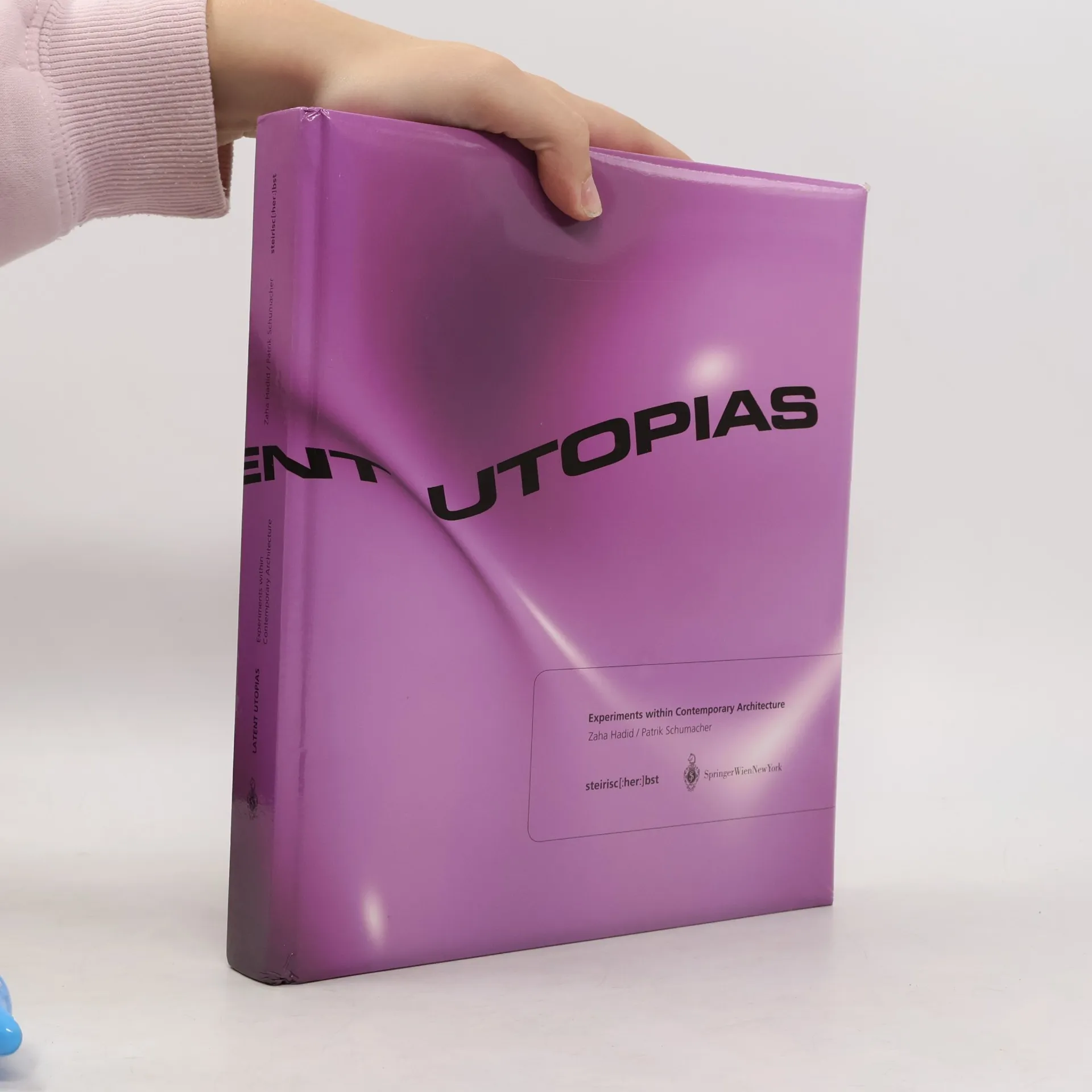



Latent Utopias
Parametre
Viac o knihe
Every age has a " and needs a " its utopias. The grand social drafts of the past century, their demands and impacts in terms of real history, however, have aroused suspicions of the utopia being a naive and perilous hubris. And yet the radical concepts of Le Corbusier and Frank Lloyd Wrights initially displayed an anticipative force and rationality that a " with almost fifty years of success worldwide a " can hardly be seen as a mistake. "Latent Utopias" features experimental architectural projects both by established and up-and-coming architects. The projects are characterised by radical abstraction and strangeness. But what is the hidden meaning of these experiments? How does this "Neo-Avantgarde" relate itself to the historical Avantgarde, and what is its stance on the idea of progress? Contrary to first appearances is there still utopian potential?
Nákup knihy
Latent Utopias, Zaha Hadidová, Patrik Schumacher
- Jazyk

- Rok vydania
- 2002
- Väzba
- (pevná)
Doručenie
Platobné metódy
Nikto zatiaľ neohodnotil.
- Titul
- Latent Utopias
- Jazyk
- anglicky
- Autori
- Zaha Hadidová, Patrik Schumacher
- Vydavateľ
- Springer
- Rok vydania
- 2002
- Väzba
- pevná
- ISBN10
- 3211838651
- ISBN13
- 9783211838655
- Série
- Anotácia
- Every age has a " and needs a " its utopias. The grand social drafts of the past century, their demands and impacts in terms of real history, however, have aroused suspicions of the utopia being a naive and perilous hubris. And yet the radical concepts of Le Corbusier and Frank Lloyd Wrights initially displayed an anticipative force and rationality that a " with almost fifty years of success worldwide a " can hardly be seen as a mistake. "Latent Utopias" features experimental architectural projects both by established and up-and-coming architects. The projects are characterised by radical abstraction and strangeness. But what is the hidden meaning of these experiments? How does this "Neo-Avantgarde" relate itself to the historical Avantgarde, and what is its stance on the idea of progress? Contrary to first appearances is there still utopian potential?