



Parametre
Viac o knihe
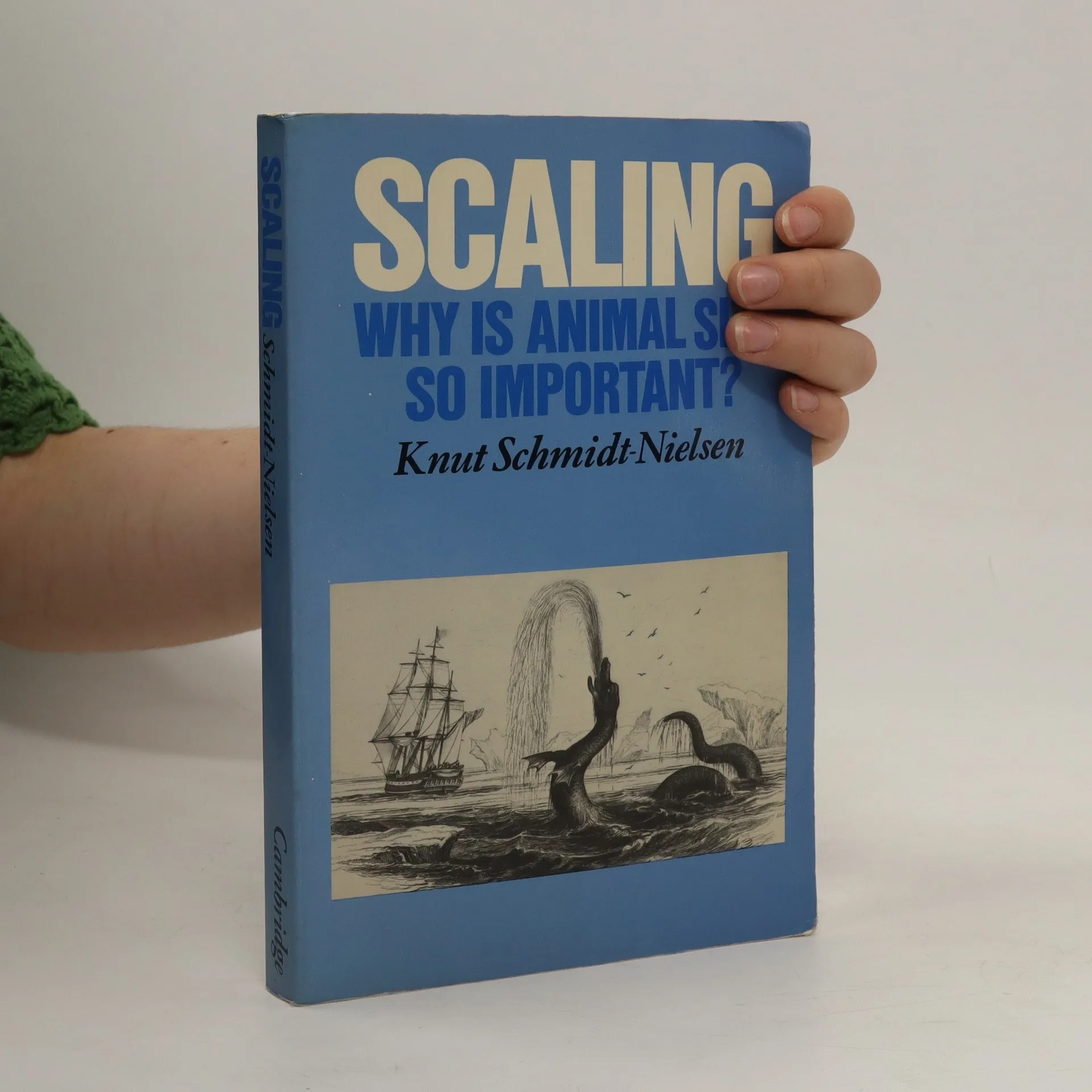
This book is about the importance of animal size. We tend to think of animal function in chemical terms and talk of water, salts, proteins, enzymes, oxygen, energy, and so on. We should not forget, however, that physical laws are equally important, for they determine rates of diffusion and heat transfer, transfer of force and momentum, the strength of structures, the dynamics of locomotion, and other aspects of the functioning of animal bodies. Physical laws provide possibilities and opportunities for an organism, yet they also impose constraints, setting limits to what is physically possible. This book aims to give an understanding of these rules because of their profound implications when we deal with animals of widely different size and scale. The reader will find that the book raises many questions. Remarkable and puzzling information makes it read a little like a detective story, but the last chapter, instead of giving the final solution, neither answers all questions nor provides one great unifying principle.
Nákup knihy
Scaling : why is animal size so important ?, Knut Schmidt-Nielsen
- Jazyk

- Rok vydania
- 1984
- Väzba
- (mäkká)
Tu nám chýba tvoja recenzia
- Titul
- Scaling : why is animal size so important ?
- Jazyk
- anglicky
- Autori
- Knut Schmidt-Nielsen
- Vydavateľ
- Cambridge University Press
- Rok vydania
- 1984
- Väzba
- mäkká
- ISBN10
- 0521319870
- ISBN13
- 9780521319874
- Série
- Štítky
- Prírodné vedy, Veda
- Hodnotenie
- 4,3 z 5
- Anotácia
- This book is about the importance of animal size. We tend to think of animal function in chemical terms and talk of water, salts, proteins, enzymes, oxygen, energy, and so on. We should not forget, however, that physical laws are equally important, for they determine rates of diffusion and heat transfer, transfer of force and momentum, the strength of structures, the dynamics of locomotion, and other aspects of the functioning of animal bodies. Physical laws provide possibilities and opportunities for an organism, yet they also impose constraints, setting limits to what is physically possible. This book aims to give an understanding of these rules because of their profound implications when we deal with animals of widely different size and scale. The reader will find that the book raises many questions. Remarkable and puzzling information makes it read a little like a detective story, but the last chapter, instead of giving the final solution, neither answers all questions nor provides one great unifying principle.