



Parametre
Viac o knihe
Microfinance is not simply banking; it is a development tool. It has been estimated that there are 500 million economically active poor people in the world operating microenterprises and small businesses. Most of them do not have access to adequate financial services. The purpose of this Handbook is to bring together in a single source guiding principles and tools that will promote sustainable microfinance and create viable institutions. The Handbook takes a global perspective, drawing on lessons learned from the experiences of microfinance practitioners, donors, and others throughout the world.This volume covers extensively matters pertaining to the regulatory and policy framework and the essential components of institutional capacity building, such as product design, performance measuring and monitoring, and management of microfinance institutions.The handbook has three parts. 'Issues in Microfinance Provision' - Part I, takes a macroeconomic perspective toward general microfinance issues and is primarily nontechnical. 'Designing and Monitoring Financial Products and Services' - Part II, narrows its focus to the provision of financial intermediation, taking a more technical approach and moving progressively toward more specific (or micro) issues. 'Measuring Performance and Managing Viability' - Part III, is the most technical part of the handbook, focusing primarily on assessing the viability of microfinance institutions.
Nákup knihy
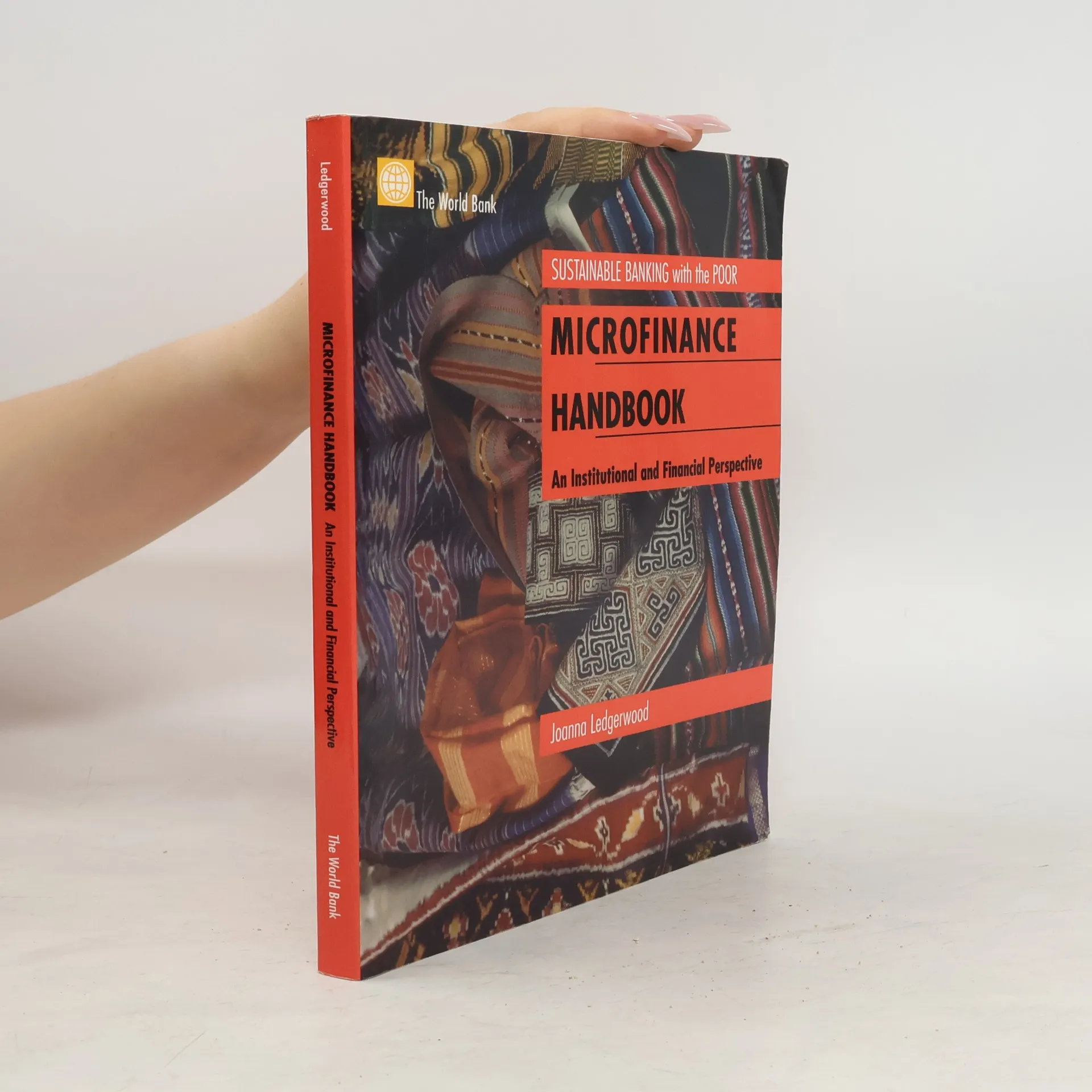
Microfinance handbook. An institutional and financial perspective, Joanna Ledgerwood
- Jazyk

- Rok vydania
- 2000
- Väzba
- (mäkká)
Doručenie
Platobné metódy
Tu nám chýba tvoja recenzia
- Titul
- Microfinance handbook. An institutional and financial perspective
- Jazyk
- anglicky
- Autori
- Joanna Ledgerwood
- Vydavateľ
- The World Bank
- Rok vydania
- 2000
- Väzba
- mäkká
- ISBN10
- 0821343068
- ISBN13
- 9780821343067
- Série
- Kategórie
- Štítky
- Hodnotenie
- 3,8 z 5
- Anotácia
- Microfinance is not simply banking; it is a development tool. It has been estimated that there are 500 million economically active poor people in the world operating microenterprises and small businesses. Most of them do not have access to adequate financial services. The purpose of this Handbook is to bring together in a single source guiding principles and tools that will promote sustainable microfinance and create viable institutions. The Handbook takes a global perspective, drawing on lessons learned from the experiences of microfinance practitioners, donors, and others throughout the world.This volume covers extensively matters pertaining to the regulatory and policy framework and the essential components of institutional capacity building, such as product design, performance measuring and monitoring, and management of microfinance institutions.The handbook has three parts. 'Issues in Microfinance Provision' - Part I, takes a macroeconomic perspective toward general microfinance issues and is primarily nontechnical. 'Designing and Monitoring Financial Products and Services' - Part II, narrows its focus to the provision of financial intermediation, taking a more technical approach and moving progressively toward more specific (or micro) issues. 'Measuring Performance and Managing Viability' - Part III, is the most technical part of the handbook, focusing primarily on assessing the viability of microfinance institutions.