

Viac o knihe
Although few of Charles Sanders Peirce's writings were devoted explicitly to religious topics, Michael L. Raposa demonstrates that religious ideas played a central role in shaping Peirce's philosophy and are manifest throughout his corpus, in scientific and mathematical papers as well as in his writings on metaphysics, cosmology, and the normative sciences. Because Peirce's religious ideas are continuous with and integral to his reflections on these and other issues, they must be identified and understood if his work as a whole is to be interpreted properly. An organizing perspective for Raposa's study and the subject of extended commentary is Peirce's most famous essay in the philosophy of religion, "A Neglected Argument for the Reality of God." Although very few of Peirce's commentators have devoted serious attention to the religious dimension of his thought, Raposa concludes that Peirce's writings are an important resource for contemporary scholars of religion and points to those of his ideas that might be most fruitfully entertained and developed.
Nákup knihy
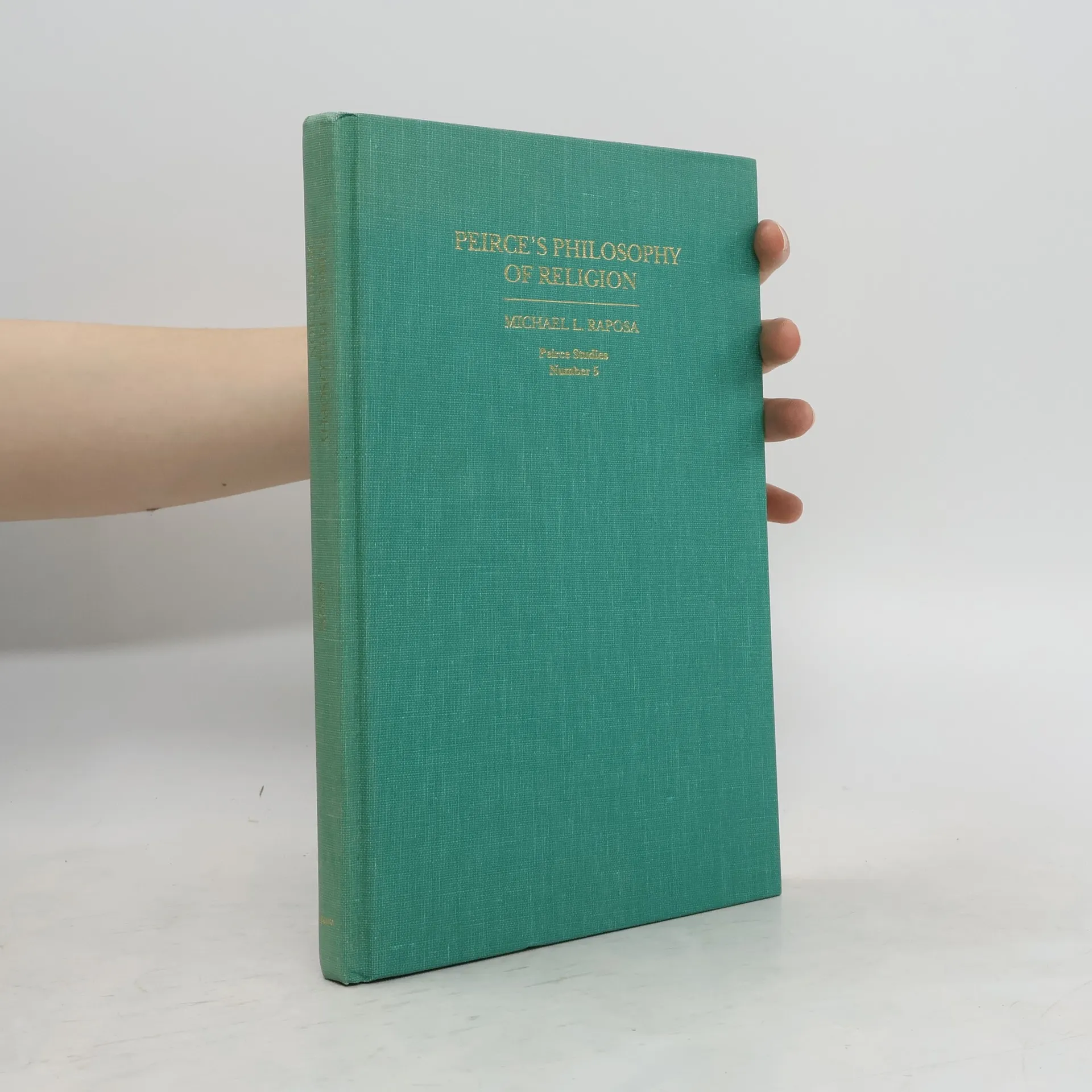
Peirce's Philosophy of Religion, Michael L. Raposa
- Jazyk

- Rok vydania
- 1989
- Väzba
- (pevná)
Doručenie
Platobné metódy
Tu nám chýba tvoja recenzia
- Titul
- Peirce's Philosophy of Religion
- Jazyk
- anglicky
- Autori
- Michael L. Raposa
- Vydavateľ
- Indiana University Press
- Rok vydania
- 1989
- Väzba
- pevná
- Počet strán
- 180
- ISBN10
- 0253348331
- ISBN13
- 9780253348333
- Série
- Štítky
- Filozofická tematika
- Hodnotenie
- 4 z 5
- Anotácia
- Although few of Charles Sanders Peirce's writings were devoted explicitly to religious topics, Michael L. Raposa demonstrates that religious ideas played a central role in shaping Peirce's philosophy and are manifest throughout his corpus, in scientific and mathematical papers as well as in his writings on metaphysics, cosmology, and the normative sciences. Because Peirce's religious ideas are continuous with and integral to his reflections on these and other issues, they must be identified and understood if his work as a whole is to be interpreted properly. An organizing perspective for Raposa's study and the subject of extended commentary is Peirce's most famous essay in the philosophy of religion, "A Neglected Argument for the Reality of God." Although very few of Peirce's commentators have devoted serious attention to the religious dimension of his thought, Raposa concludes that Peirce's writings are an important resource for contemporary scholars of religion and points to those of his ideas that might be most fruitfully entertained and developed.