

Viac o knihe
Preemption and prevention are different concepts. To preempt is to attempt to strike first against an enemy who is in the process of preparing, or is actually launching, an attack against you. Preemption is not controversial. The decision for war has been taken out of your hands. Prevention, however, is a decision to wage war, or conduct a strike, so as to prevent a far more dangerous context maturing in the future. To decide on preventive war is to elect to prevent a particular, very threatening strategic future from coming to pass. Despite much legal argument, there is no legal difficulty with either concept. The UN Charter, with its recognition of the inherent right of sovereign states to self-defense, as generally interpreted around the world does not require a victim or target state to suffer the first blow. To strike preventively in self-defense is legal, though it will usually be controversial. Preventive war is simply war, distinguishable only by its timing, and possibly its motivation.
Nákup knihy
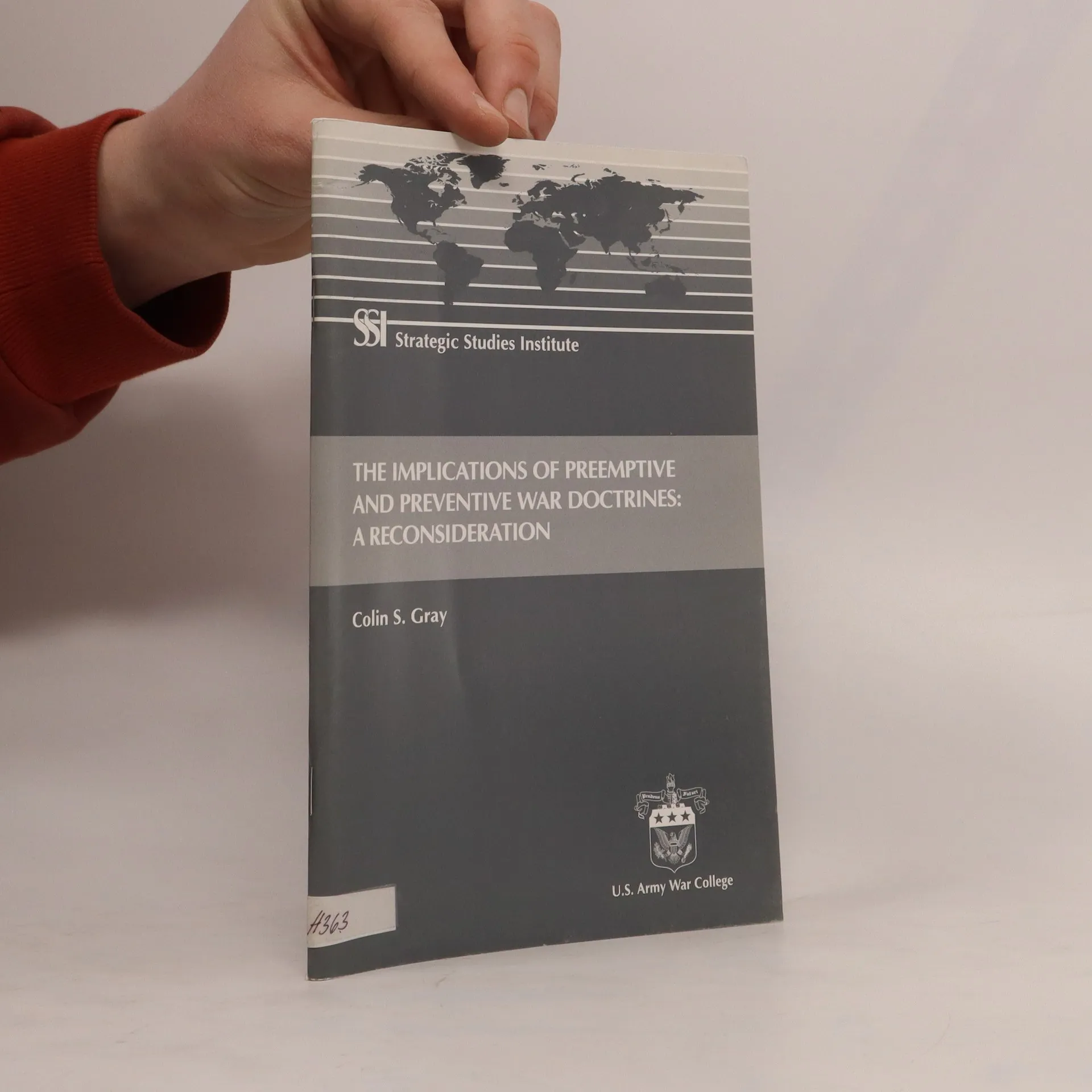
The Implications of Preemptive and Preventive War Doctrines, Colin S. Gray
- Jazyk

- Rok vydania
- 2007
- Väzba
- (mäkká)
Doručenie
Platobné metódy
Nikto zatiaľ neohodnotil.
- Titul
- The Implications of Preemptive and Preventive War Doctrines
- Jazyk
- anglicky
- Autori
- Colin S. Gray
- Rok vydania
- 2007
- Väzba
- mäkká
- Počet strán
- 60
- ISBN10
- 1584872985
- ISBN13
- 9781584872986
- Série
- Kategórie
- Štítky
- Ostatné učebnice
- Anotácia
- Preemption and prevention are different concepts. To preempt is to attempt to strike first against an enemy who is in the process of preparing, or is actually launching, an attack against you. Preemption is not controversial. The decision for war has been taken out of your hands. Prevention, however, is a decision to wage war, or conduct a strike, so as to prevent a far more dangerous context maturing in the future. To decide on preventive war is to elect to prevent a particular, very threatening strategic future from coming to pass. Despite much legal argument, there is no legal difficulty with either concept. The UN Charter, with its recognition of the inherent right of sovereign states to self-defense, as generally interpreted around the world does not require a victim or target state to suffer the first blow. To strike preventively in self-defense is legal, though it will usually be controversial. Preventive war is simply war, distinguishable only by its timing, and possibly its motivation.