


The Rule of Law in Central Europe
Viac o knihe
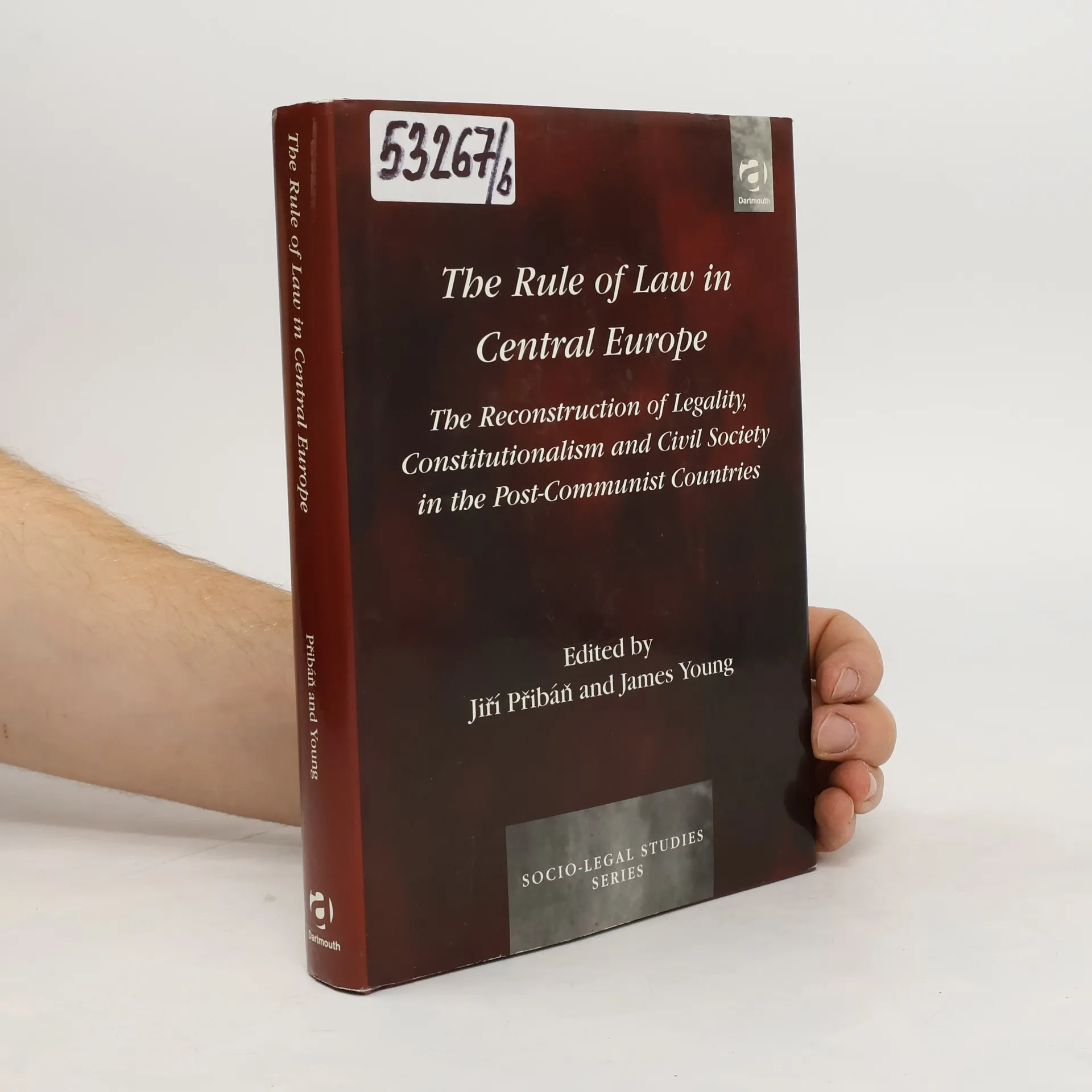
First published in 1999, this volume is a series of essays on the countries of Central Europe. The essays explore the post-1989 establishment of the rule of law and civil society. It brings together analysis and perceptions from social scientists, political scientists and lawyers, seeking through particular issues to explore the similarities and differences between different countries. While other books have explored the changes in former Soviet Block countries since 1989, the book’s distinctiveness lies in three its concentration on Central Europe a concept explored in the book; giving fuller attention to the Czech Republic and Slovakia than other post-communist studies often do; providing perceptions of scholars from different disciplines.
Nákup knihy
The Rule of Law in Central Europe, Jiří Přibáň, James E. Young
- Jazyk

- Rok vydania
- 1999
- Väzba
- (pevná)
Doručenie
Platobné metódy
Nikto zatiaľ neohodnotil.
- Titul
- The Rule of Law in Central Europe
- Jazyk
- anglicky
- Autori
- Jiří Přibáň, James E. Young
- Vydavateľ
- Ashgate
- Rok vydania
- 1999
- Väzba
- pevná
- Počet strán
- 277
- ISBN10
- 1840147199
- ISBN13
- 9781840147193
- Série
- Kategórie
- Anotácia
- First published in 1999, this volume is a series of essays on the countries of Central Europe. The essays explore the post-1989 establishment of the rule of law and civil society. It brings together analysis and perceptions from social scientists, political scientists and lawyers, seeking through particular issues to explore the similarities and differences between different countries. While other books have explored the changes in former Soviet Block countries since 1989, the book’s distinctiveness lies in three its concentration on Central Europe a concept explored in the book; giving fuller attention to the Czech Republic and Slovakia than other post-communist studies often do; providing perceptions of scholars from different disciplines.