

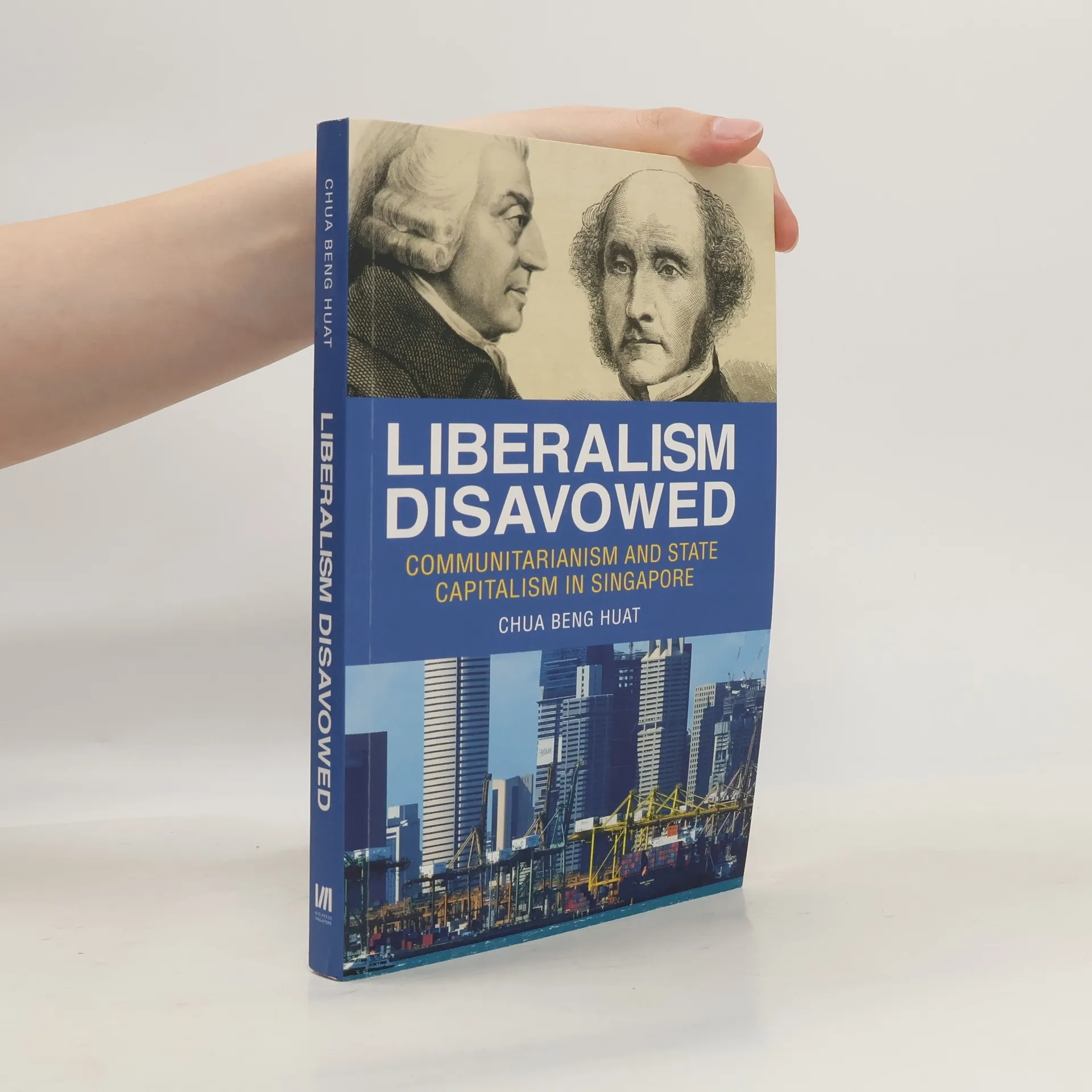
Liberalism Disavowed
Communitarianism and State Capitalism in Singapore
Autori
Viac o knihe
In Liberalism Disavowed, Chua Beng Huat examines the rejection of Western-style liberalism in Singapore and the way the People's Action Party has forged an independent non-Western ideology.This book explains the evolution of this communitarian ideology, with focus on three public housing, multiracialism and state capitalism, each of which poses different challenges to liberal approaches. With the passing of the first Prime Minister, Lee Kuan Yew and the end of the Cold War, the party is facing greater challenges from an educated populace that demands greater voice. This has led to liberalization of the cultural sphere, greater responsiveness and shifts in political rhetoric, but all without disrupting the continuing hegemony of the PAP in government.
Nákup knihy
Liberalism Disavowed, Beng-Huat Chua
- Jazyk

- Rok vydania
- 2017
- Väzba
- (mäkká)
Doručenie
Platobné metódy
Nikto zatiaľ neohodnotil.
- Titul
- Liberalism Disavowed
- Podtitul
- Communitarianism and State Capitalism in Singapore
- Jazyk
- anglicky
- Autori
- Beng-Huat Chua
- Vydavateľ
- NUS Press
- Rok vydania
- 2017
- Väzba
- mäkká
- Počet strán
- 248
- ISBN10
- 9814722502
- ISBN13
- 9789814722506
- Série
- Štítky
- Darčeky pre dedka
- Anotácia
- In Liberalism Disavowed, Chua Beng Huat examines the rejection of Western-style liberalism in Singapore and the way the People's Action Party has forged an independent non-Western ideology.This book explains the evolution of this communitarian ideology, with focus on three public housing, multiracialism and state capitalism, each of which poses different challenges to liberal approaches. With the passing of the first Prime Minister, Lee Kuan Yew and the end of the Cold War, the party is facing greater challenges from an educated populace that demands greater voice. This has led to liberalization of the cultural sphere, greater responsiveness and shifts in political rhetoric, but all without disrupting the continuing hegemony of the PAP in government.