

Viac o knihe
High altitude physiology and medicine has again become important. The excep tional achievements of mountaineers who have climbed nearly all peaks over 8,000 m without breathing equipment raise the question of maximal adaptation ca pacity of man to low oxygen pressures. More importantly, the increase in tourism in the Andes and the Himalayas brings over 10,000 people to sites at altitudes above 4,000 and 5,000 m each year. At such heights several kinds of high alti tude diseases are likely to occur, and these complications require detailed medical investigations. Medical authorities need to inform both mountaineers and tourists as to how great a physical burden can be taken in the mountain environment without risk to health. Physicians need to know what kind of prophylaxis is to be employed at high altitudes to prevent the development of diseases and what therapeutic measures should be used once high altitude diseases have occurred. Moreover, the physical condition of the indigenous population living at higher altitudes such as the Andes and the Himalayas, who are exposed continuously to the stress of high altitude, requires our attention. We have become familiar with symptoms characteristic of chronic high-altitude under special conditions this popu lation has a tendency to develop pulmonary hypertension, which is associated with pulmonary edema, pulmonary congestion, and right heart failure."
Nákup knihy
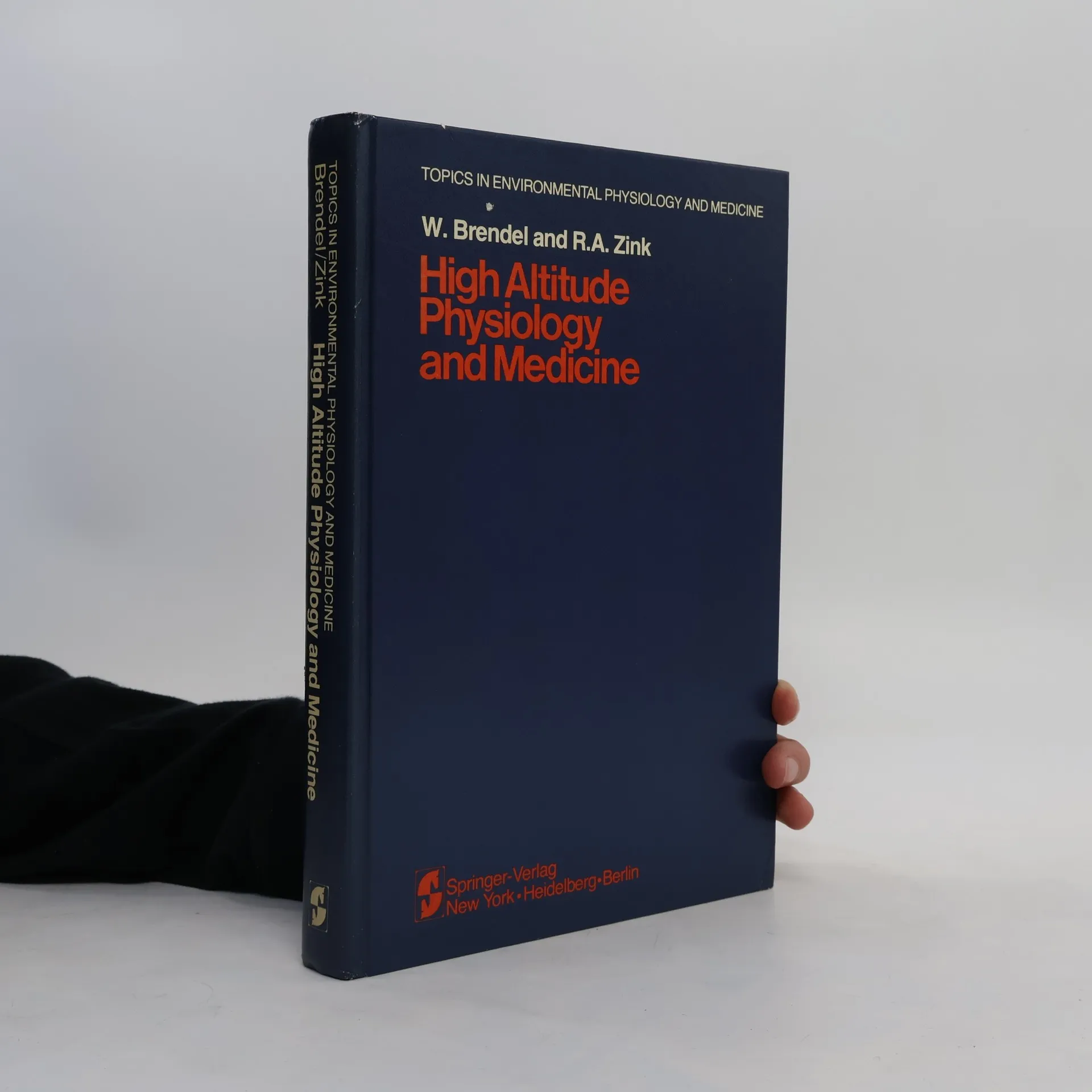
High Altitude Physiology and Medicine, Walter L. Brendel, R. A. Zink
- Jazyk

- Rok vydania
- 1982
- Väzba
- (pevná)
Doručenie
Platobné metódy
Nikto zatiaľ neohodnotil.
- Titul
- High Altitude Physiology and Medicine
- Jazyk
- anglicky
- Autori
- Walter L. Brendel, R. A. Zink
- Vydavateľ
- Springer
- Rok vydania
- 1982
- Väzba
- pevná
- Počet strán
- 316
- ISBN10
- 0387904824
- ISBN13
- 9780387904825
- Série
- Kategórie
- Anotácia
- High altitude physiology and medicine has again become important. The excep tional achievements of mountaineers who have climbed nearly all peaks over 8,000 m without breathing equipment raise the question of maximal adaptation ca pacity of man to low oxygen pressures. More importantly, the increase in tourism in the Andes and the Himalayas brings over 10,000 people to sites at altitudes above 4,000 and 5,000 m each year. At such heights several kinds of high alti tude diseases are likely to occur, and these complications require detailed medical investigations. Medical authorities need to inform both mountaineers and tourists as to how great a physical burden can be taken in the mountain environment without risk to health. Physicians need to know what kind of prophylaxis is to be employed at high altitudes to prevent the development of diseases and what therapeutic measures should be used once high altitude diseases have occurred. Moreover, the physical condition of the indigenous population living at higher altitudes such as the Andes and the Himalayas, who are exposed continuously to the stress of high altitude, requires our attention. We have become familiar with symptoms characteristic of chronic high-altitude under special conditions this popu lation has a tendency to develop pulmonary hypertension, which is associated with pulmonary edema, pulmonary congestion, and right heart failure."