



Controlling Technocracy
Citizen Rationality and the NIMBY Syndrome
Autori
Hodnotenie knihy
Viac o knihe
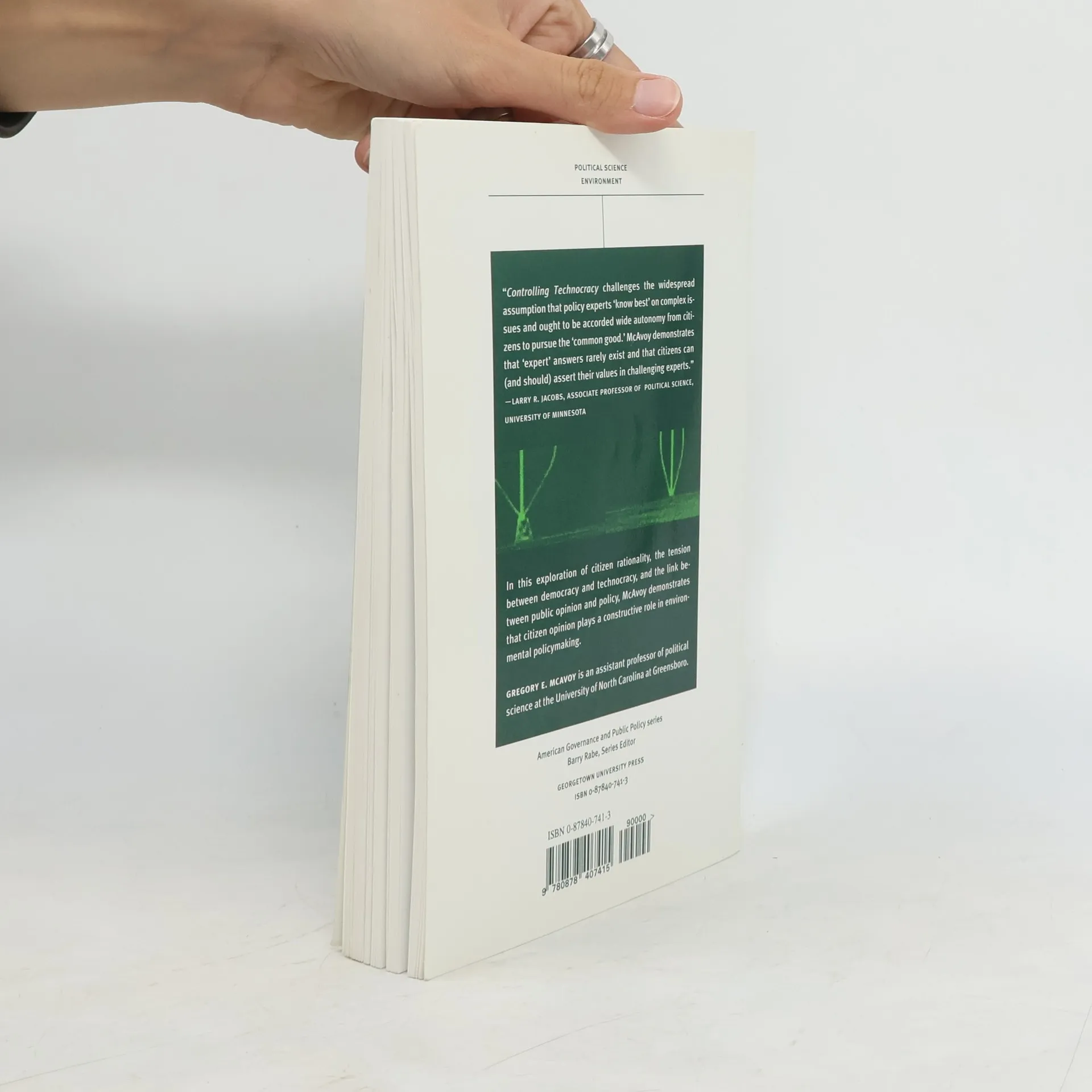
Disputes over hazardous waste sites usually are resolved by giving greater weight to expert opinion over public "not-in-my-back-yard" reactions. Challenging the assumption that policy experts are better able to discern the general welfare, Gregory E. McAvoy here proposes that citizen opinion and democratic dissent occupy a vital, constructive place in environmental policymaking.McAvoy explores the issues of citizen rationality, the tension between democracy and technocracy, and the link between public opinion and policy in the case of an unsuccessful attempt to site a hazardous waste facility in Minnesota. He shows how the site was defeated by citizens who had reasonable doubts over the need for the facility.Offering a comprehensive look at the policymaking process, McAvoy examines the motivations of public officials, the resources they have for shaping opinion, the influence of interest groups, and the evolution of waste reduction programs in Minnesota and other states. Integrating archival material, interviews, and quantitative survey data, he argues that NIMBY movements can bring miscalculations to light and provide an essential check on policy experts' often partisan views.This book will be of value to those who work or study in the fields of hazardous waste policy, facility siting, environmental policy, public policy, public administration, and political science.
Nákup knihy
Controlling Technocracy, Gregory E. McAvoy
- Jazyk

- Rok vydania
- 1999
- Väzba
- (mäkká)
Doručenie
Platobné metódy
Tu nám chýba tvoja recenzia
- Titul
- Controlling Technocracy
- Podtitul
- Citizen Rationality and the NIMBY Syndrome
- Jazyk
- anglicky
- Autori
- Gregory E. McAvoy
- Vydavateľ
- Georgetown University Press
- Rok vydania
- 1999
- Väzba
- mäkká
- Počet strán
- 184
- ISBN10
- 0878407413
- ISBN13
- 9780878407415
- Série
- Kategórie
- Štítky
- Sociálne problémy, Demokracia
- Hodnotenie
- 3 z 5
- Anotácia
- Disputes over hazardous waste sites usually are resolved by giving greater weight to expert opinion over public "not-in-my-back-yard" reactions. Challenging the assumption that policy experts are better able to discern the general welfare, Gregory E. McAvoy here proposes that citizen opinion and democratic dissent occupy a vital, constructive place in environmental policymaking.McAvoy explores the issues of citizen rationality, the tension between democracy and technocracy, and the link between public opinion and policy in the case of an unsuccessful attempt to site a hazardous waste facility in Minnesota. He shows how the site was defeated by citizens who had reasonable doubts over the need for the facility.Offering a comprehensive look at the policymaking process, McAvoy examines the motivations of public officials, the resources they have for shaping opinion, the influence of interest groups, and the evolution of waste reduction programs in Minnesota and other states. Integrating archival material, interviews, and quantitative survey data, he argues that NIMBY movements can bring miscalculations to light and provide an essential check on policy experts' often partisan views.This book will be of value to those who work or study in the fields of hazardous waste policy, facility siting, environmental policy, public policy, public administration, and political science.