

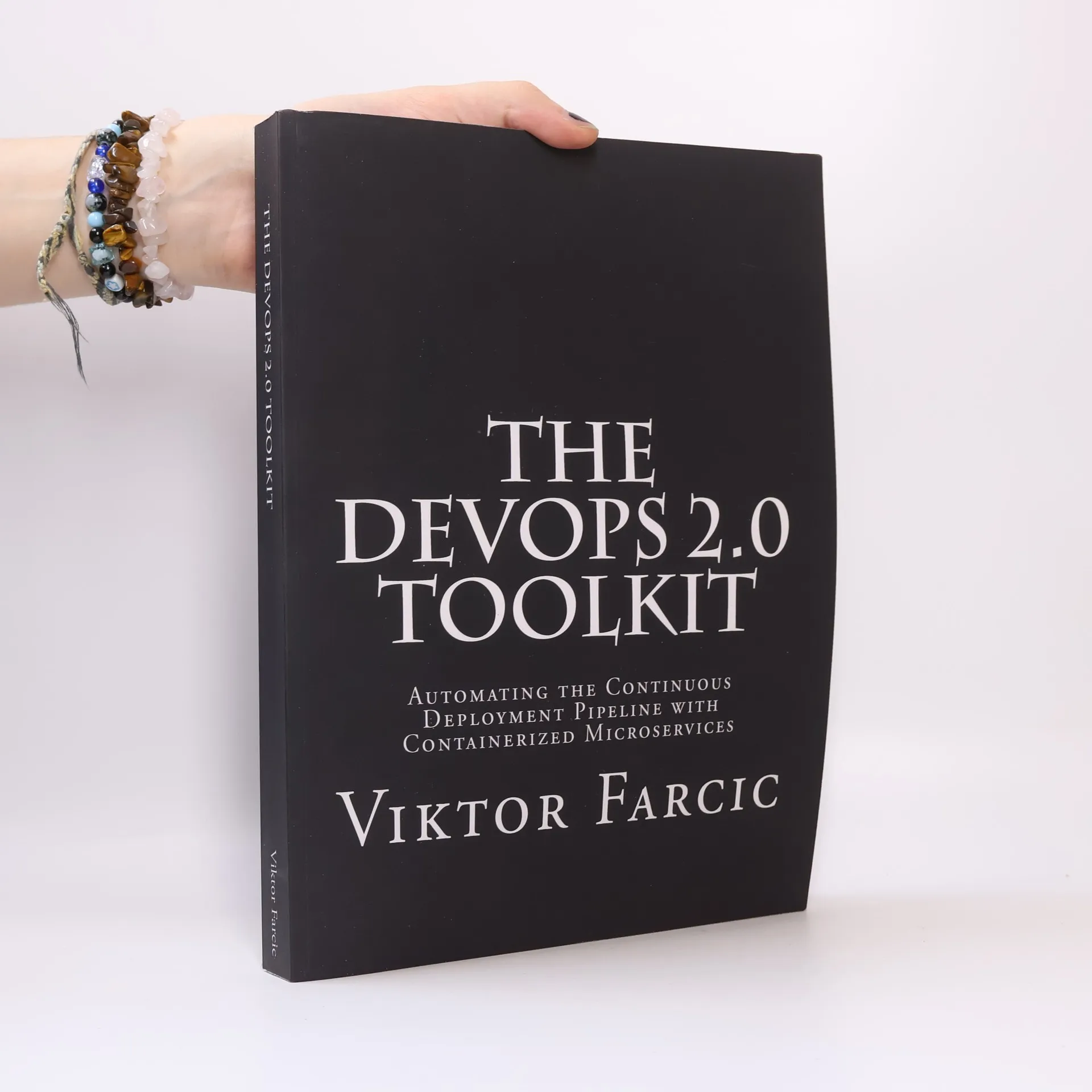


The DevOps 2.0 Toolkit
Automating the Continuous Deployment Pipeline with Containerized Microservices
Autori
Hodnotenie knihy
Viac o knihe
"This book is about techniques that help us architect software in a better and more efficient way: With microservices packed as immutable containers, then tested and deployed continuously to servers that are automatically provisioned with configuration management tools. It's about fast, reliable and continuous deployments with zero-downtime and the ability to roll-back. It's about scaling to any number of servers, designing self-healing systems capable of recovering from both hardware and software failures, and about centralized logging and monitoring of a cluster. We will cover some of the latest and greatest practices and a variety of tools such as: Docker, Kubernetes, Ansible, Ubuntu, Docker Swarm, Docker Compose, and Consul."--Back cover.
Nákup knihy
The DevOps 2.0 Toolkit, Farcic Viktor
- Jazyk

- Rok vydania
- 2016
- Väzba
- (mäkká)
Doručenie
Platobné metódy
Tu nám chýba tvoja recenzia
- Titul
- The DevOps 2.0 Toolkit
- Podtitul
- Automating the Continuous Deployment Pipeline with Containerized Microservices
- Jazyk
- anglicky
- Autori
- Farcic Viktor
- Rok vydania
- 2016
- Väzba
- mäkká
- Počet strán
- 414
- ISBN10
- 152391744X
- ISBN13
- 9781523917440
- Série
- Štítky
- Technológia
- Hodnotenie
- 3,35 z 5
- Anotácia
- "This book is about techniques that help us architect software in a better and more efficient way: With microservices packed as immutable containers, then tested and deployed continuously to servers that are automatically provisioned with configuration management tools. It's about fast, reliable and continuous deployments with zero-downtime and the ability to roll-back. It's about scaling to any number of servers, designing self-healing systems capable of recovering from both hardware and software failures, and about centralized logging and monitoring of a cluster. We will cover some of the latest and greatest practices and a variety of tools such as: Docker, Kubernetes, Ansible, Ubuntu, Docker Swarm, Docker Compose, and Consul."--Back cover.