

Parametre
Viac o knihe
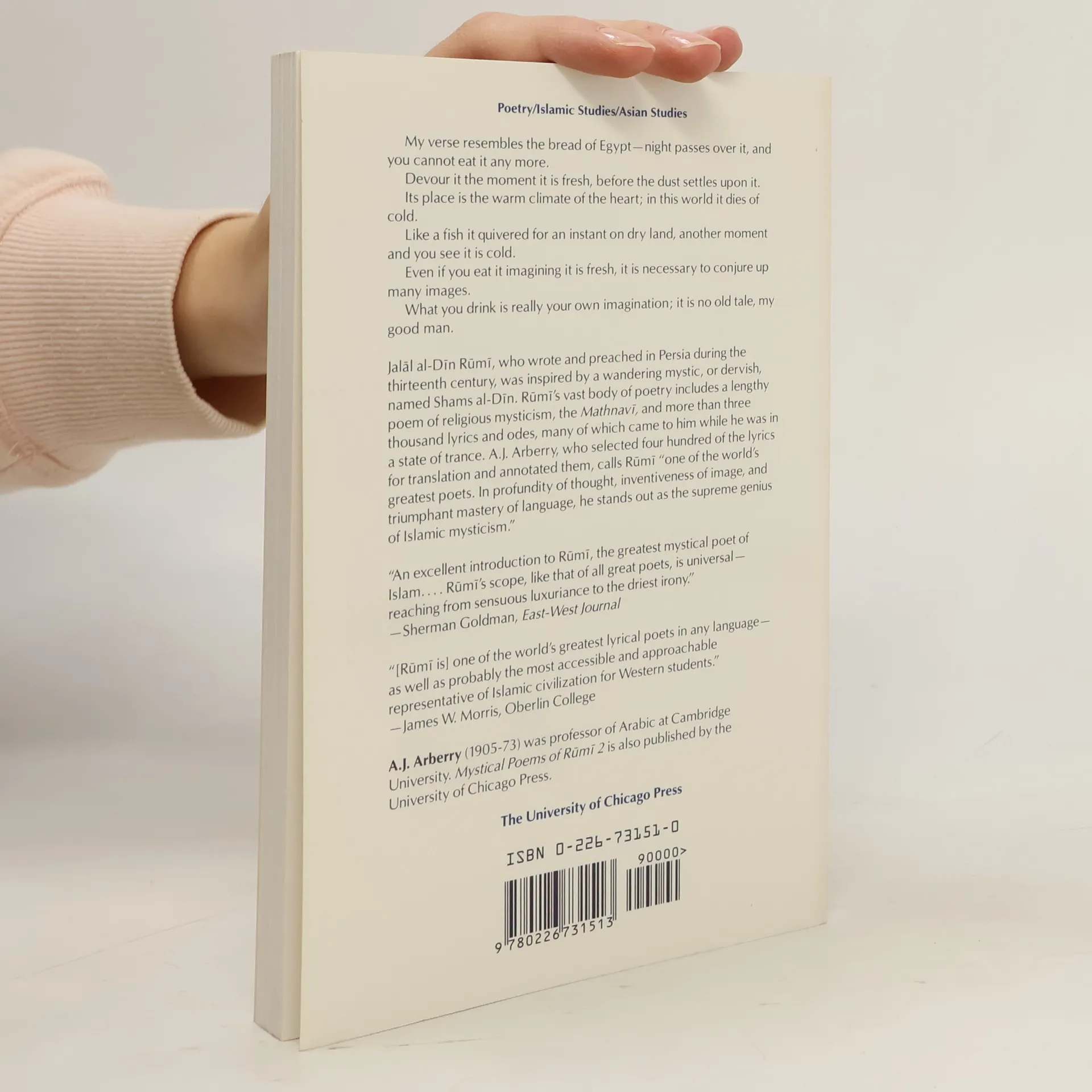
Rumi, who wrote and preached in Persia during the thirteenth century, was inspired by a wandering mystic, or dervish, named Shams al-Din. Rumi's vast body of poetry includes a lengthy poem of religious mysticism, the Mathnavi, and more than three thousand lyrics and odes. A.J. Arberry, who selected four hundred of the lyrics for translation, calls Rumi "one of the world's greatest poets. In profundity of thought, inventiveness of image, and triumphant mastery of language, he stands out as the supreme genius of Islamic mysticism.""An excellent introduction to Rumi, the greatest mystical poet of Islam. . . . Rumi's scope, like that of all great poets, is universal—reaching from sensuous luxuriance to the driest irony."—Sherman Goldman, East-West Journal
Nákup knihy
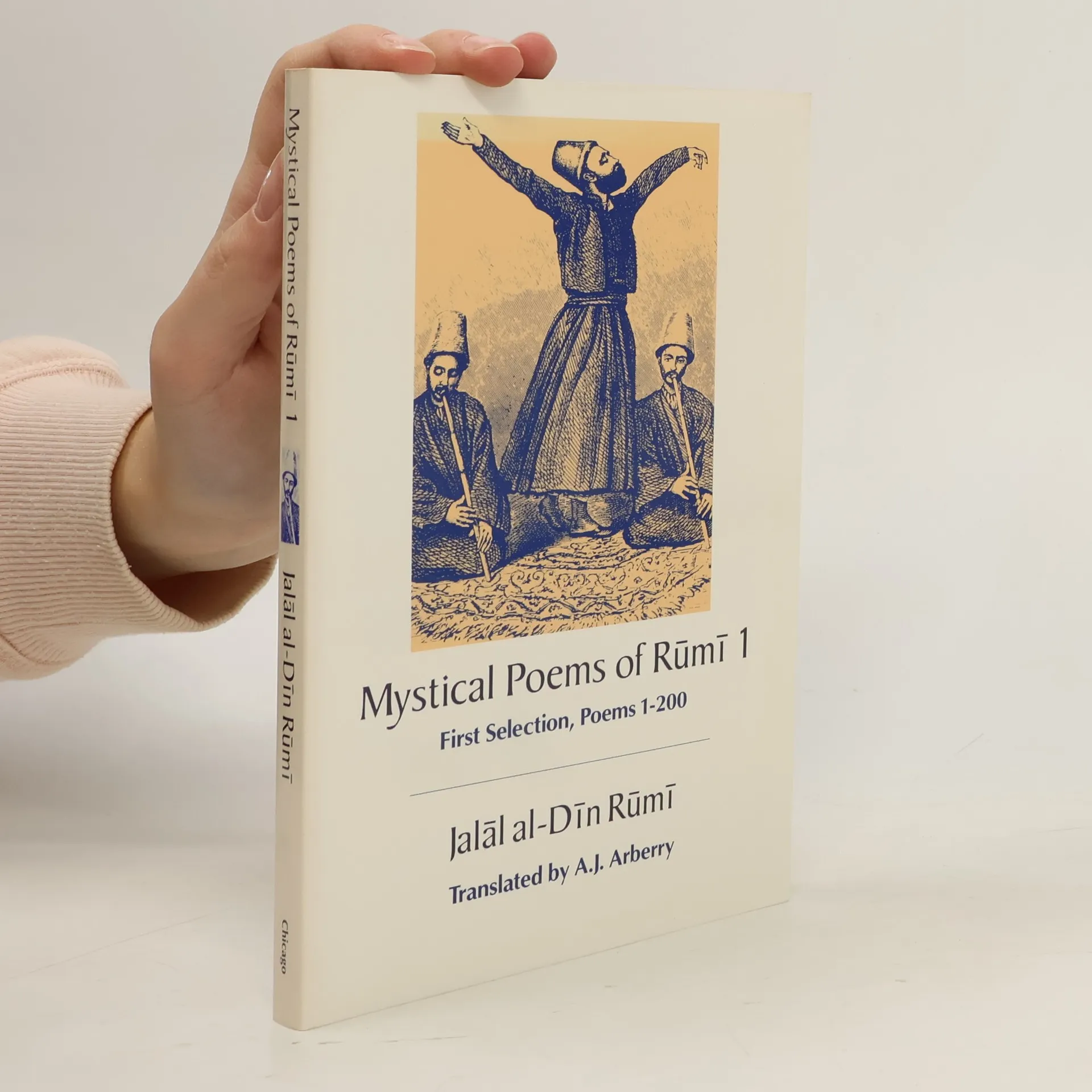
Mystical poems of Rūmī 1, Maulana Jalal Al-Din Rumi
- Jazyk

- Rok vydania
- 1974
- Väzba
- (mäkká)
Tu nám chýba tvoja recenzia
- Titul
- Mystical poems of Rūmī 1
- Jazyk
- anglicky
- Vydavateľ
- The University of Chicago Press
- Rok vydania
- 1974
- Väzba
- mäkká
- ISBN10
- 0226731510
- ISBN13
- 9780226731513
- Série
- Hodnotenie
- 4,3 z 5
- Anotácia
- Rumi, who wrote and preached in Persia during the thirteenth century, was inspired by a wandering mystic, or dervish, named Shams al-Din. Rumi's vast body of poetry includes a lengthy poem of religious mysticism, the Mathnavi, and more than three thousand lyrics and odes. A.J. Arberry, who selected four hundred of the lyrics for translation, calls Rumi "one of the world's greatest poets. In profundity of thought, inventiveness of image, and triumphant mastery of language, he stands out as the supreme genius of Islamic mysticism.""An excellent introduction to Rumi, the greatest mystical poet of Islam. . . . Rumi's scope, like that of all great poets, is universal—reaching from sensuous luxuriance to the driest irony."—Sherman Goldman, East-West Journal