



Viac o knihe
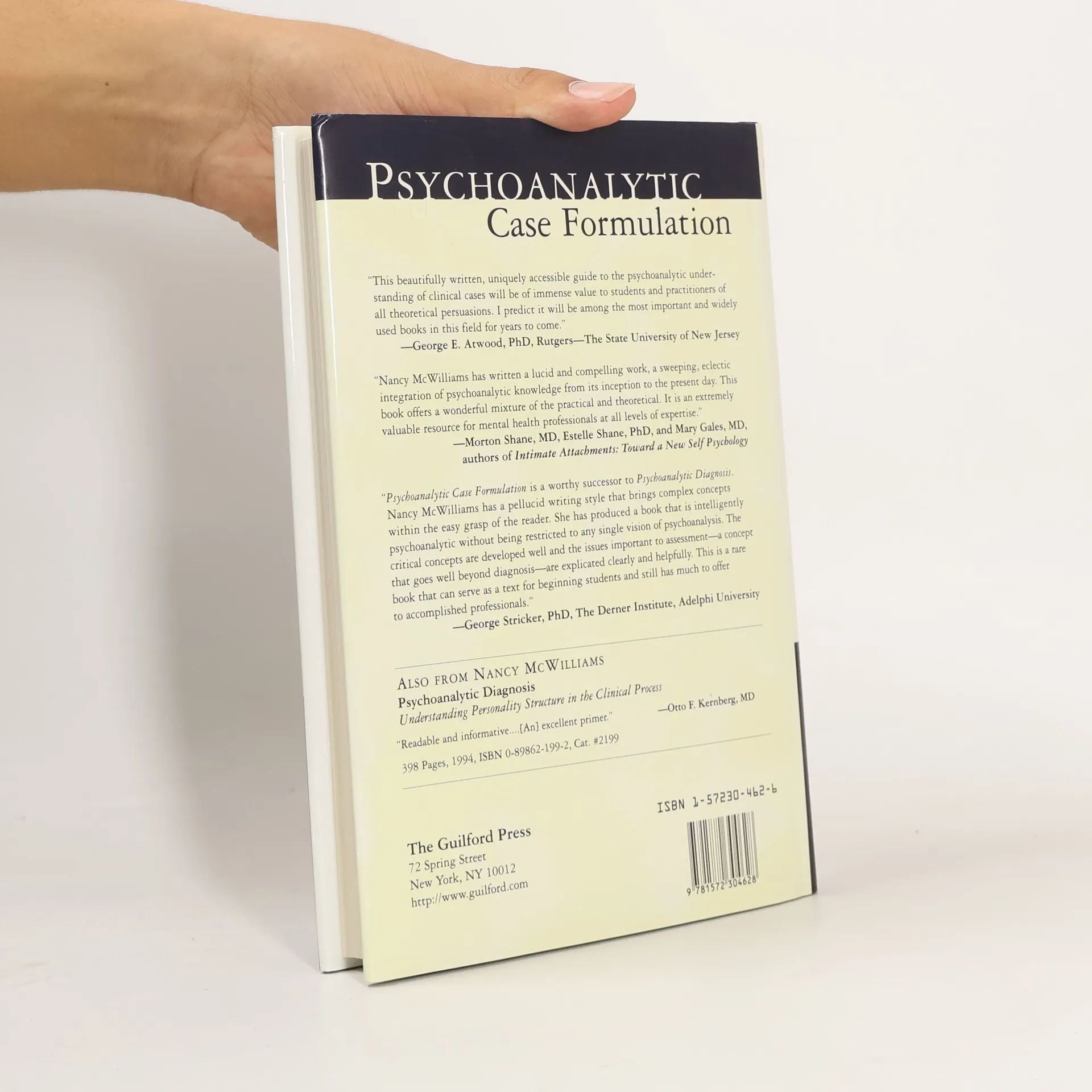
What kinds of questions do experienced therapists ask themselves when facing a new client? How can clinical expertise be taught? From the author of the landmark Psychoanalytic Diagnosis , this book takes clinicians step-by- step through developing an understanding of each client's unique psychology and using this information to guide and inform treatment decisions. McWilliams shows that while seasoned practitioners rely upon established diagnostic categories for record-keeping and insurance purposes, their actual clinical concepts and practices reflect more inferential, subjective, and intuitive processes. Interweaving illustrative case examples with theoretical insights and clinically significant research, chapters cover assessment of client temperament, developmental issues, defenses, affects, identifications, relational patterns, self-esteem needs, and pathogenic beliefs.Winner--Gradiva Award, National Association for the Advancement of Psychoanalysis
Nákup knihy
Psychoanalytic Case Formulation, Nancy McWilliams
- Jazyk

- Rok vydania
- 1999
- Väzba
- (pevná)
Doručenie
Platobné metódy
Tu nám chýba tvoja recenzia
- Titul
- Psychoanalytic Case Formulation
- Jazyk
- anglicky
- Autori
- Nancy McWilliams
- Vydavateľ
- Guilford Press
- Rok vydania
- 1999
- Väzba
- pevná
- Počet strán
- 240
- ISBN10
- 1572304626
- ISBN13
- 9781572304628
- Série
- Štítky
- Príručky a návody, Medicína, Odborná literatúra, Psychoterapia, Psychoanalýza, Psychiatria, Sociálna práca, Klinická psychológia
- Hodnotenie
- 4,5 z 5
- Anotácia
- What kinds of questions do experienced therapists ask themselves when facing a new client? How can clinical expertise be taught? From the author of the landmark Psychoanalytic Diagnosis , this book takes clinicians step-by- step through developing an understanding of each client's unique psychology and using this information to guide and inform treatment decisions. McWilliams shows that while seasoned practitioners rely upon established diagnostic categories for record-keeping and insurance purposes, their actual clinical concepts and practices reflect more inferential, subjective, and intuitive processes. Interweaving illustrative case examples with theoretical insights and clinically significant research, chapters cover assessment of client temperament, developmental issues, defenses, affects, identifications, relational patterns, self-esteem needs, and pathogenic beliefs.Winner--Gradiva Award, National Association for the Advancement of Psychoanalysis