

Viac o knihe
Why should there be a handbook of sensory physiology, and if so, why now? The editors have explored this question and found that the arguments against their project actually support it: there is a clear need for such a work at this time. No complete overview of sensory physiology has been attempted since Bethe's "Handbuch der normalen und pathologischen Physiologie," nearly forty years ago. Since then, the field has evolved rapidly. Although electric probing of single peripheral nerve fibers began in 1926 and was extended to single optic nerve fibers in 1932, the significant increase in single-unit studies has occurred in the last two decades. Single-cell electrophysiology has now been applied to all sensory modalities and across various phylogenetic levels. This has clarified peripheral receptor action and enhanced our understanding of the central processing of sensory information. Concurrently, fundamental studies of the physics and chemistry of the receptors are providing insights into the mechanisms of energy transduction and nerve impulse initiation.
Nákup knihy
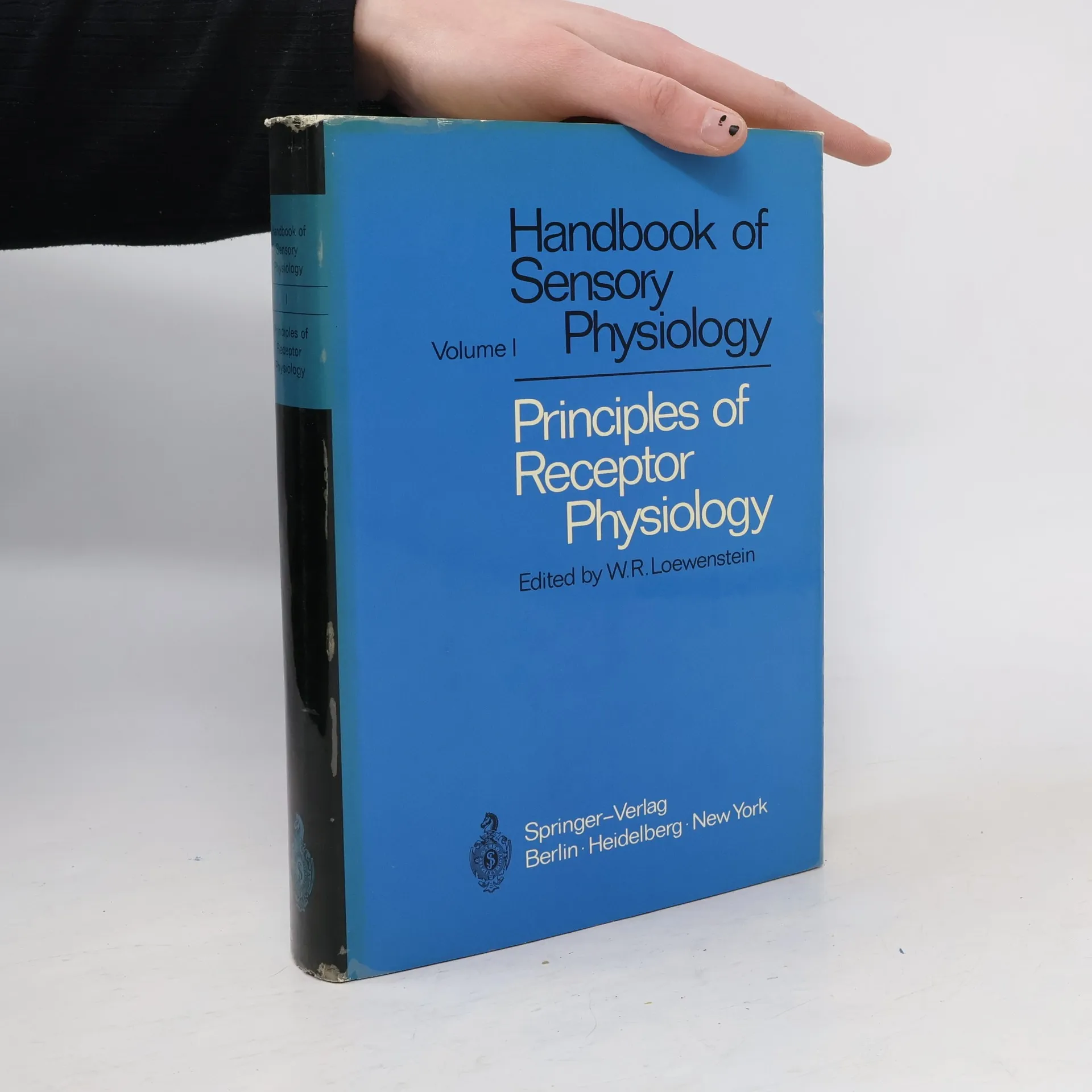
Handbook of Sensory Physiology I, W. R. Loewenstein
- Jazyk

- Rok vydania
- 1977
Nikto zatiaľ neohodnotil.
- Titul
- Handbook of Sensory Physiology I
- Jazyk
- anglicky
- Autori
- W. R. Loewenstein
- Vydavateľ
- Springer-Verlag
- Rok vydania
- 1977
- Počet strán
- 600
- ISBN10
- 0387051449
- ISBN13
- 9780387051444
- Série
- Štítky
- Prírodné vedy, Fyziológia, Zmyslové vnímanie
- Anotácia
- Why should there be a handbook of sensory physiology, and if so, why now? The editors have explored this question and found that the arguments against their project actually support it: there is a clear need for such a work at this time. No complete overview of sensory physiology has been attempted since Bethe's "Handbuch der normalen und pathologischen Physiologie," nearly forty years ago. Since then, the field has evolved rapidly. Although electric probing of single peripheral nerve fibers began in 1926 and was extended to single optic nerve fibers in 1932, the significant increase in single-unit studies has occurred in the last two decades. Single-cell electrophysiology has now been applied to all sensory modalities and across various phylogenetic levels. This has clarified peripheral receptor action and enhanced our understanding of the central processing of sensory information. Concurrently, fundamental studies of the physics and chemistry of the receptors are providing insights into the mechanisms of energy transduction and nerve impulse initiation.