



Parametre
- 272 stránok
- 10 hodin čítania
Viac o knihe
Financial markets are intricate systems where regulators aim to foresee potential malfunctions and establish preventive rules. However, the influence of behavioral factors is frequently neglected. This work delves into the synergy between behavioral finance and traditional methodologies, aiding banks and regulators in formulating improved policies. It highlights how the behavioral finance movement fosters a more holistic approach to understanding economic phenomena. The text promotes a forward-thinking agenda that incorporates behavioral science into current practices, emphasizing the importance of fairness in financial markets for enhancing societal well-being. It investigates how concepts like bounded rationality, heuristic decision-making, loss aversion, endowment effects, and social preferences can shape financial choices, revealing the limitations of conventional forecasting methods that oversimplify individual behavior. Featuring insights from both scholars and industry professionals, this book is essential for researchers in finance and behavioral economics. Regulators interested in implementing behavioral policymaking will also find it invaluable.
Nákup knihy
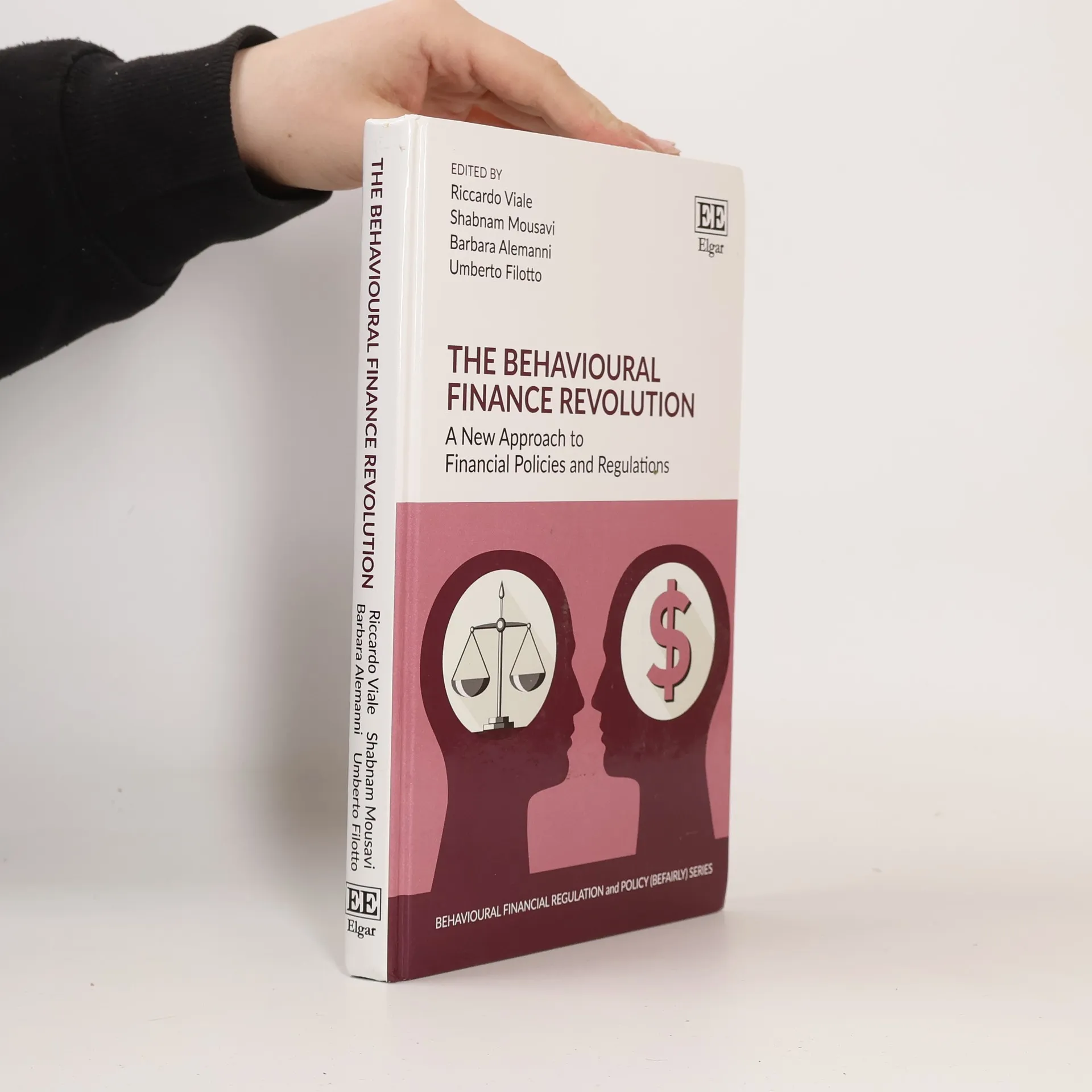
Behavioural Financial Regulation and Policy (BEFAIRLY) series: The Behavioural Finance Revolution, Riccardo Viale, Shabnam Mousavi, Barbara Alemanni, Umberto Filotto
- Jazyk

- Rok vydania
- 2018
- Väzba
- (pevná)
Nikto zatiaľ neohodnotil.
- Titul
- Behavioural Financial Regulation and Policy (BEFAIRLY) series: The Behavioural Finance Revolution
- Podtitul
- A New Approach to Financial Policies and Regulations
- Jazyk
- anglicky
- Vydavateľ
- Edward Elgar Publishing Ltd
- Rok vydania
- 2018
- Väzba
- pevná
- Počet strán
- 272
- ISBN10
- 1788973054
- ISBN13
- 9781788973052
- Série
- Kategórie
- Štítky
- Byznys, Financie, Zbierka spisov, Vedecké teórie, Investovanie, Psychologické aspekty, Prognostika
- Anotácia
- Financial markets are intricate systems where regulators aim to foresee potential malfunctions and establish preventive rules. However, the influence of behavioral factors is frequently neglected. This work delves into the synergy between behavioral finance and traditional methodologies, aiding banks and regulators in formulating improved policies. It highlights how the behavioral finance movement fosters a more holistic approach to understanding economic phenomena. The text promotes a forward-thinking agenda that incorporates behavioral science into current practices, emphasizing the importance of fairness in financial markets for enhancing societal well-being. It investigates how concepts like bounded rationality, heuristic decision-making, loss aversion, endowment effects, and social preferences can shape financial choices, revealing the limitations of conventional forecasting methods that oversimplify individual behavior. Featuring insights from both scholars and industry professionals, this book is essential for researchers in finance and behavioral economics. Regulators interested in implementing behavioral policymaking will also find it invaluable.