

Parametre
Viac o knihe
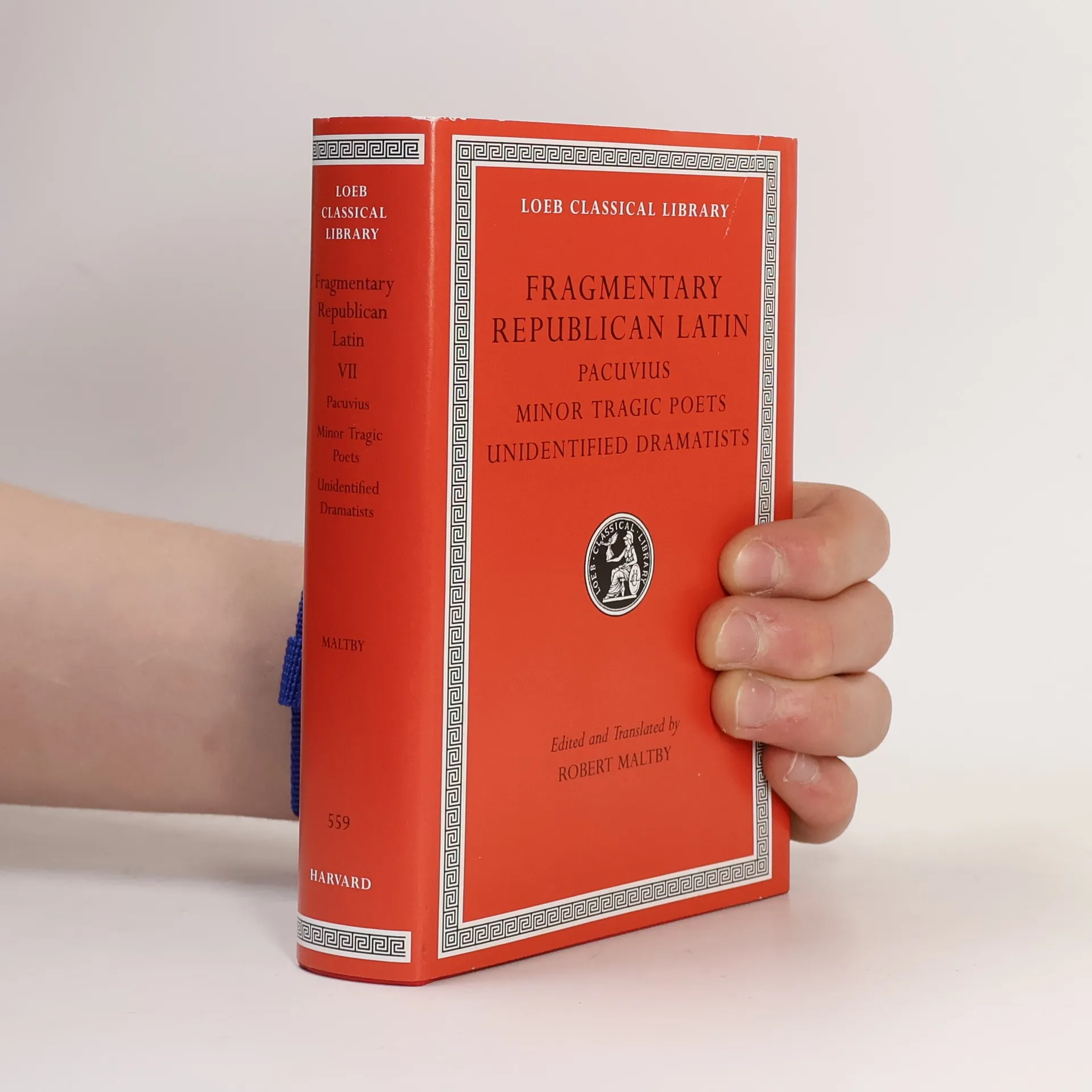
The Loeb Classical Library series Fragmentary Republican Latin continues with Marcus Pacuvius (ca. 220-130), recognized by Cicero as Rome's greatest tragic poet, alongside fragments from other tragedians with limited surviving works. The collection includes fragments distinguished by their meter, though their genre may be uncertain. Pacuvius, possibly a pupil of Ennius and a contemporary of Accius, had ties to influential politicians and intellectuals like Laelius and Scipio, who championed Hellenistic culture in Rome. He was remembered as a learned poet, with notable compositions including a fabula praetexta on L. Aemilius Paulus' victory at Pydna in 168. His originality is evident in his treatment of less conventional aspects of mythology, allowing for deep exploration of themes like mistaken identity and noble characters in adversity. His works also delve into philosophical and cosmological themes, featuring characters who unite to overthrow unjust rulers, raising questions about justice, power, and good governance. Pacuvius' influence extended to later poets such as Plautus, Terence, Virgil, and Ovid. The texts are based on the latest editions and have been revised, translated, and annotated in accordance with current scholarship.
Nákup knihy
Loeb Classical Library - 7: Fragmentary Republican Latin, Pacuvius, Robert Maltby
- Jazyk

- Rok vydania
- 2026
- Väzba
- (pevná)
Doručenie
Platobné metódy
Nikto zatiaľ neohodnotil.
- Titul
- Loeb Classical Library - 7: Fragmentary Republican Latin
- Podtitul
- Pacuvius. Minor Tragic Poets. Unidentified Dramatists
- Jazyk
- anglicky
- Autori
- Pacuvius, Robert Maltby
- Vydavateľ
- Harvard University Press
- Rok vydania
- 2026
- Väzba
- pevná
- ISBN10
- 0674997735
- ISBN13
- 9780674997738
- Série
- Štítky
- Literárna kritika
- Anotácia
- The Loeb Classical Library series Fragmentary Republican Latin continues with Marcus Pacuvius (ca. 220-130), recognized by Cicero as Rome's greatest tragic poet, alongside fragments from other tragedians with limited surviving works. The collection includes fragments distinguished by their meter, though their genre may be uncertain. Pacuvius, possibly a pupil of Ennius and a contemporary of Accius, had ties to influential politicians and intellectuals like Laelius and Scipio, who championed Hellenistic culture in Rome. He was remembered as a learned poet, with notable compositions including a fabula praetexta on L. Aemilius Paulus' victory at Pydna in 168. His originality is evident in his treatment of less conventional aspects of mythology, allowing for deep exploration of themes like mistaken identity and noble characters in adversity. His works also delve into philosophical and cosmological themes, featuring characters who unite to overthrow unjust rulers, raising questions about justice, power, and good governance. Pacuvius' influence extended to later poets such as Plautus, Terence, Virgil, and Ovid. The texts are based on the latest editions and have been revised, translated, and annotated in accordance with current scholarship.