


Viac o knihe
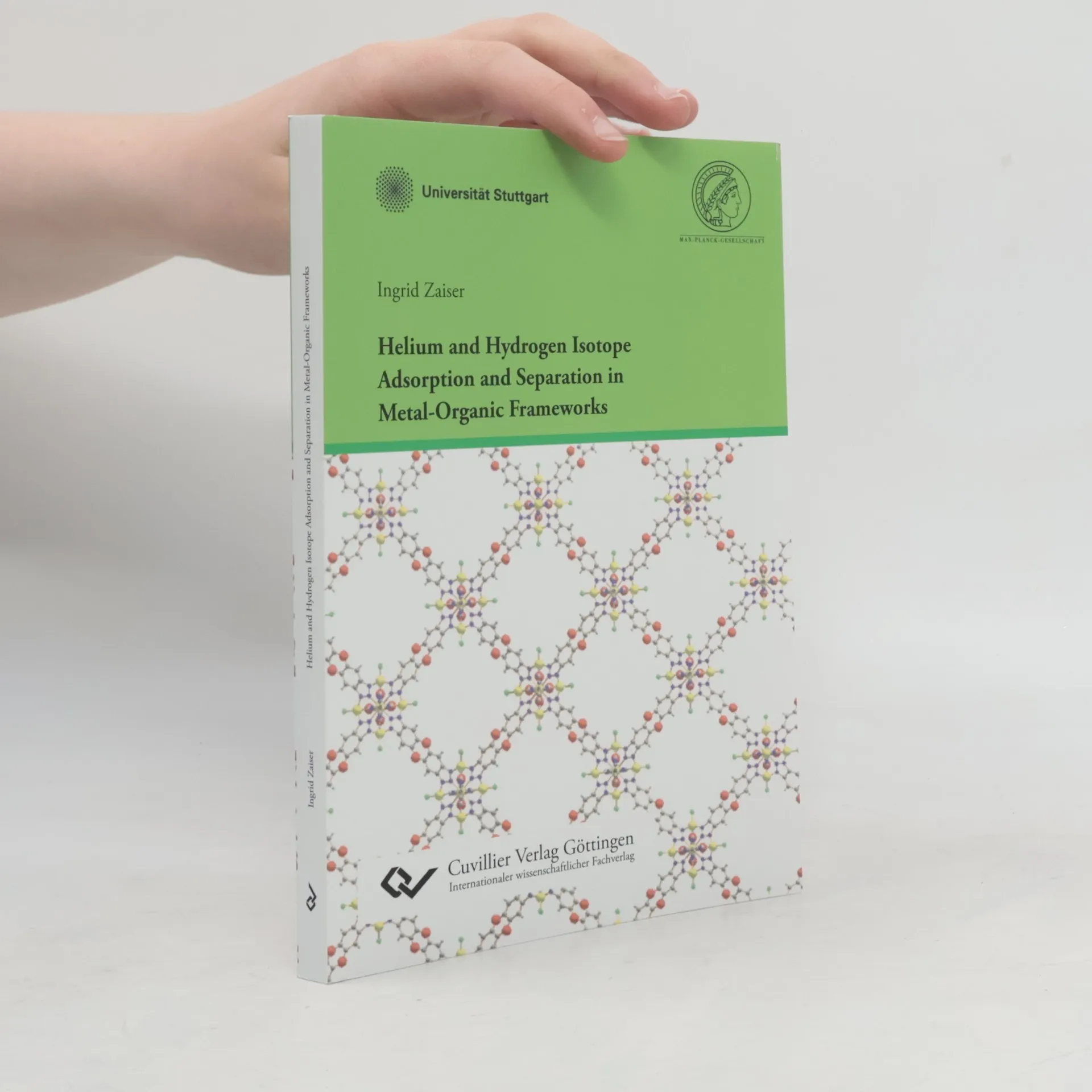
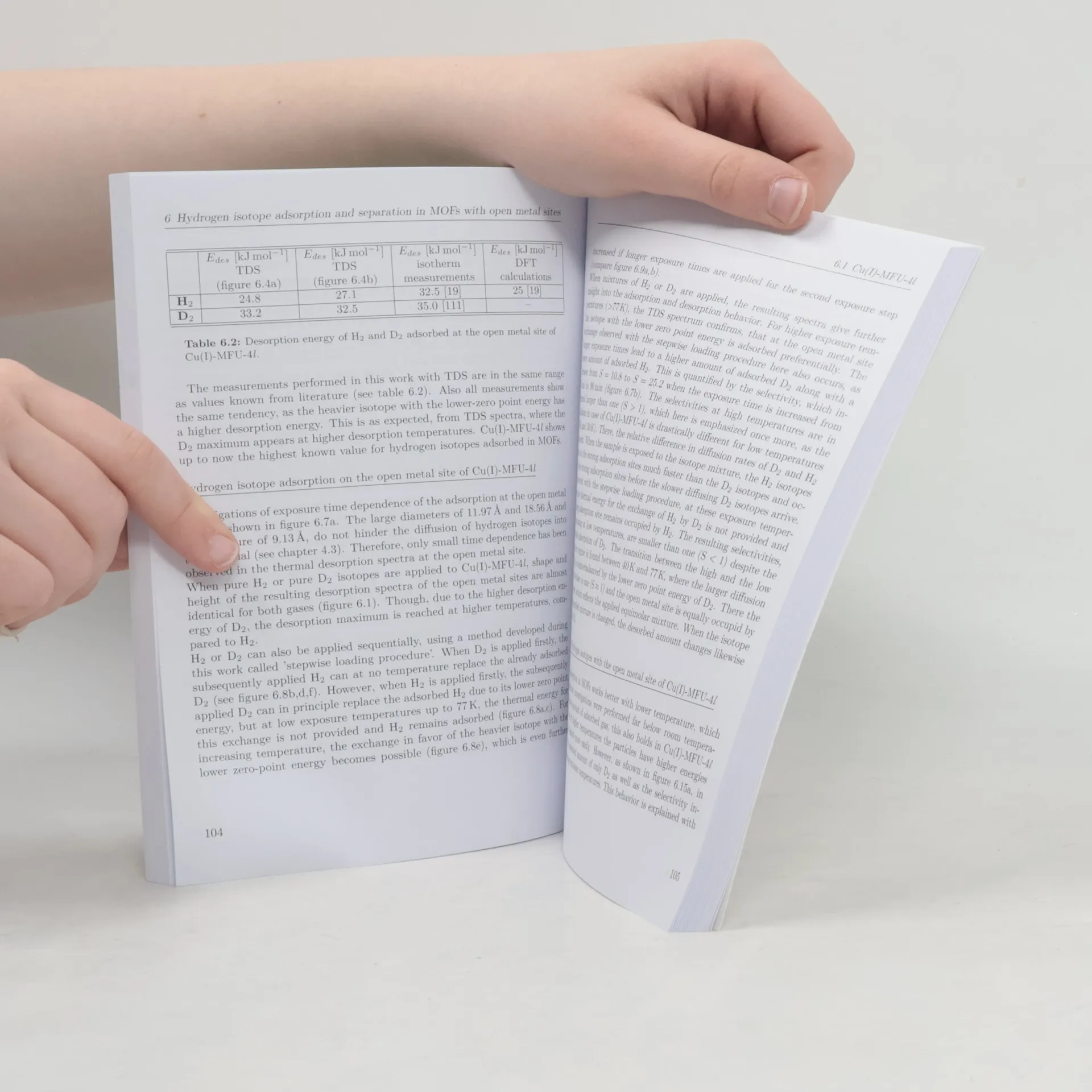
The separation of isotopes poses significant challenges due to their identical size, shape, and thermodynamic properties. Current methods for deuterium extraction, such as the Girdler Sulfid process and cryogenic distillation, yield low separation factors (below 2.5) and incur high energy costs. Helium-3 is typically produced as a byproduct of radioactive tritium decay. This research explores two alternative methods for separating light isotopes: Quantum Sieving and Chemical Affinity Sieving. Quantum Sieving utilizes confinement in small pores, while Chemical Affinity Sieving depends on strong adsorption sites, both leveraging the mass difference of isotopes linked to their zero-point energy. Microporous metal-organic frameworks serve as ideal candidates for these studies, given their defined pore structures and the ability to incorporate strong adsorption sites. Isotope mixtures were exposed to these frameworks, and the quantities of adsorbed isotopes were measured using low-temperature thermal desorption spectroscopy (TDS). The ratio of desorbed isotopes directly determines the selectivity (separation factor), which varies with exposure time and temperature. Notably, a maximum selectivity of 25 was achieved for hydrogen isotopes at temperatures significantly above the boiling point of liquid nitrogen.
Nákup knihy
Helium And Hydrogen Isotope Adsorption And Separation In Metal-Organic Frameworks, Ingrid Zaiser
- Jazyk

- Rok vydania
- 2016
- Väzba
- (mäkká),
- Stav knihy
- Poškodená
- Cena
- 2,87 €
Nikto zatiaľ neohodnotil.
- Titul
- Helium And Hydrogen Isotope Adsorption And Separation In Metal-Organic Frameworks
- Jazyk
- anglicky
- Autori
- Ingrid Zaiser
- Vydavateľ
- Cuvillier
- Rok vydania
- 2016
- Väzba
- mäkká
- Počet strán
- 200
- ISBN10
- 3736993773
- ISBN13
- 9783736993778
- Série
- Anotácia
- The separation of isotopes poses significant challenges due to their identical size, shape, and thermodynamic properties. Current methods for deuterium extraction, such as the Girdler Sulfid process and cryogenic distillation, yield low separation factors (below 2.5) and incur high energy costs. Helium-3 is typically produced as a byproduct of radioactive tritium decay. This research explores two alternative methods for separating light isotopes: Quantum Sieving and Chemical Affinity Sieving. Quantum Sieving utilizes confinement in small pores, while Chemical Affinity Sieving depends on strong adsorption sites, both leveraging the mass difference of isotopes linked to their zero-point energy. Microporous metal-organic frameworks serve as ideal candidates for these studies, given their defined pore structures and the ability to incorporate strong adsorption sites. Isotope mixtures were exposed to these frameworks, and the quantities of adsorbed isotopes were measured using low-temperature thermal desorption spectroscopy (TDS). The ratio of desorbed isotopes directly determines the selectivity (separation factor), which varies with exposure time and temperature. Notably, a maximum selectivity of 25 was achieved for hydrogen isotopes at temperatures significantly above the boiling point of liquid nitrogen.