

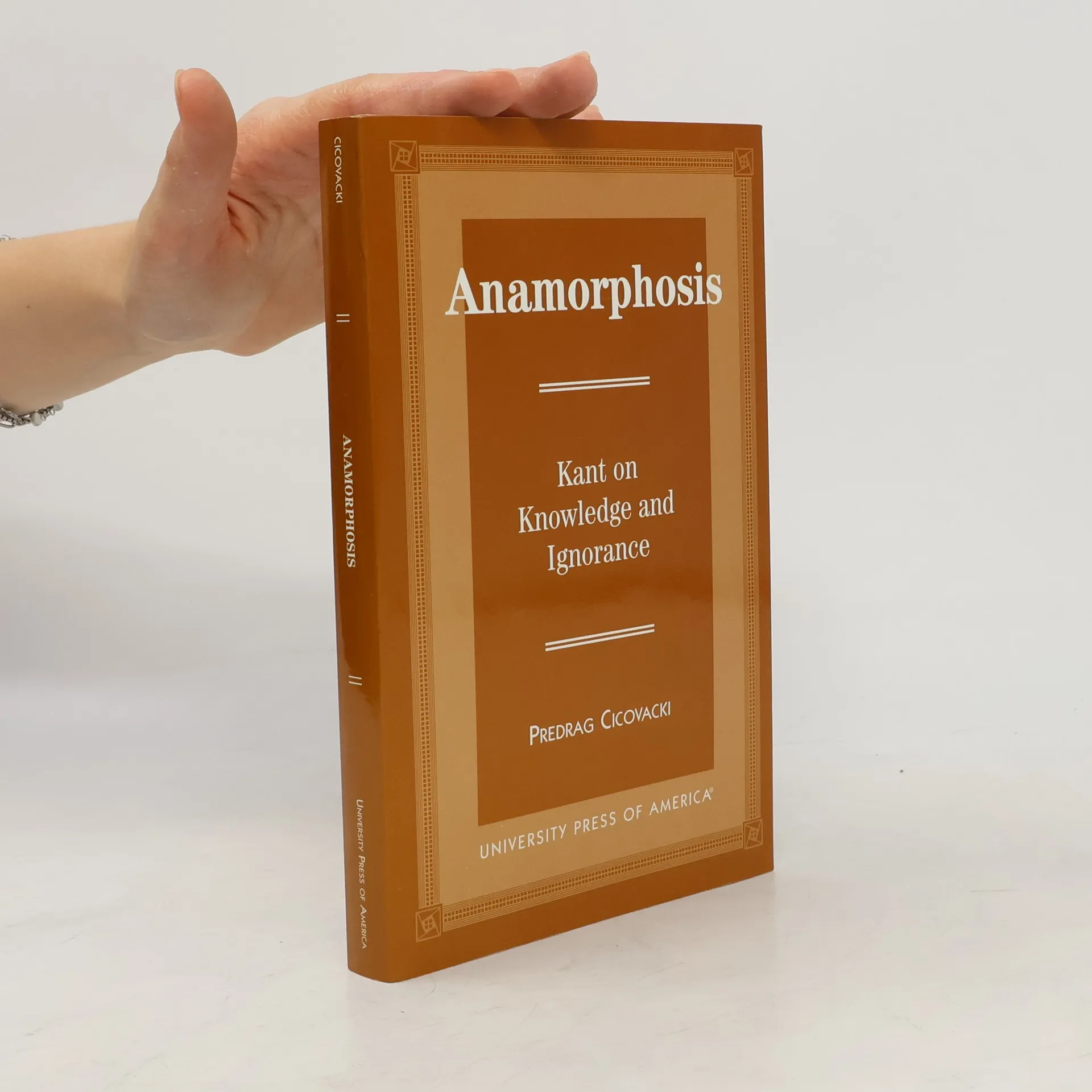
Anamorphosis
Kant and Knowledge and Ignorance
Autori
Viac o knihe
This book intends to show that we should re-think and re-evaluate our dogmatic commitment to a cognitivistic attitude. Our high regard for knowledge is due to the fact that we expect that it will help us satisfy not only our practical needs but also guide us toward a meaningful and fulfilled life. A careful examination of the nature and limits of knowledge reveals that both expectations cannot be satisfied. Following Kant, Cicovacki comes to the conclusion that, although our knowledge of reality seems to be reliable and true, at the same time it seems to be one-sided and very narrowly oriented. Our practical purposes seem to be served quite well, but it is dubious whether our knowledge helps us understand and find our own place and role in reality. Those pursuing science and analytic philosophy do not seem to realize that our knowledge of reality is at the same time reliable and true, and yet distorting and damaging. Cicovacki focuses on Kant's question: ^D
Nákup knihy
Anamorphosis, Predrag Cicovacki
- Jazyk

- Rok vydania
- 1997
- Väzba
- (mäkká)
Doručenie
Platobné metódy
Nikto zatiaľ neohodnotil.
- Titul
- Anamorphosis
- Podtitul
- Kant and Knowledge and Ignorance
- Jazyk
- anglicky
- Autori
- Predrag Cicovacki
- Vydavateľ
- University Press of America
- Rok vydania
- 1997
- Väzba
- mäkká
- Počet strán
- 336
- ISBN10
- 076180790X
- ISBN13
- 9780761807902
- Série
- Anotácia
- This book intends to show that we should re-think and re-evaluate our dogmatic commitment to a cognitivistic attitude. Our high regard for knowledge is due to the fact that we expect that it will help us satisfy not only our practical needs but also guide us toward a meaningful and fulfilled life. A careful examination of the nature and limits of knowledge reveals that both expectations cannot be satisfied. Following Kant, Cicovacki comes to the conclusion that, although our knowledge of reality seems to be reliable and true, at the same time it seems to be one-sided and very narrowly oriented. Our practical purposes seem to be served quite well, but it is dubious whether our knowledge helps us understand and find our own place and role in reality. Those pursuing science and analytic philosophy do not seem to realize that our knowledge of reality is at the same time reliable and true, and yet distorting and damaging. Cicovacki focuses on Kant's question: ^D