

Viac o knihe
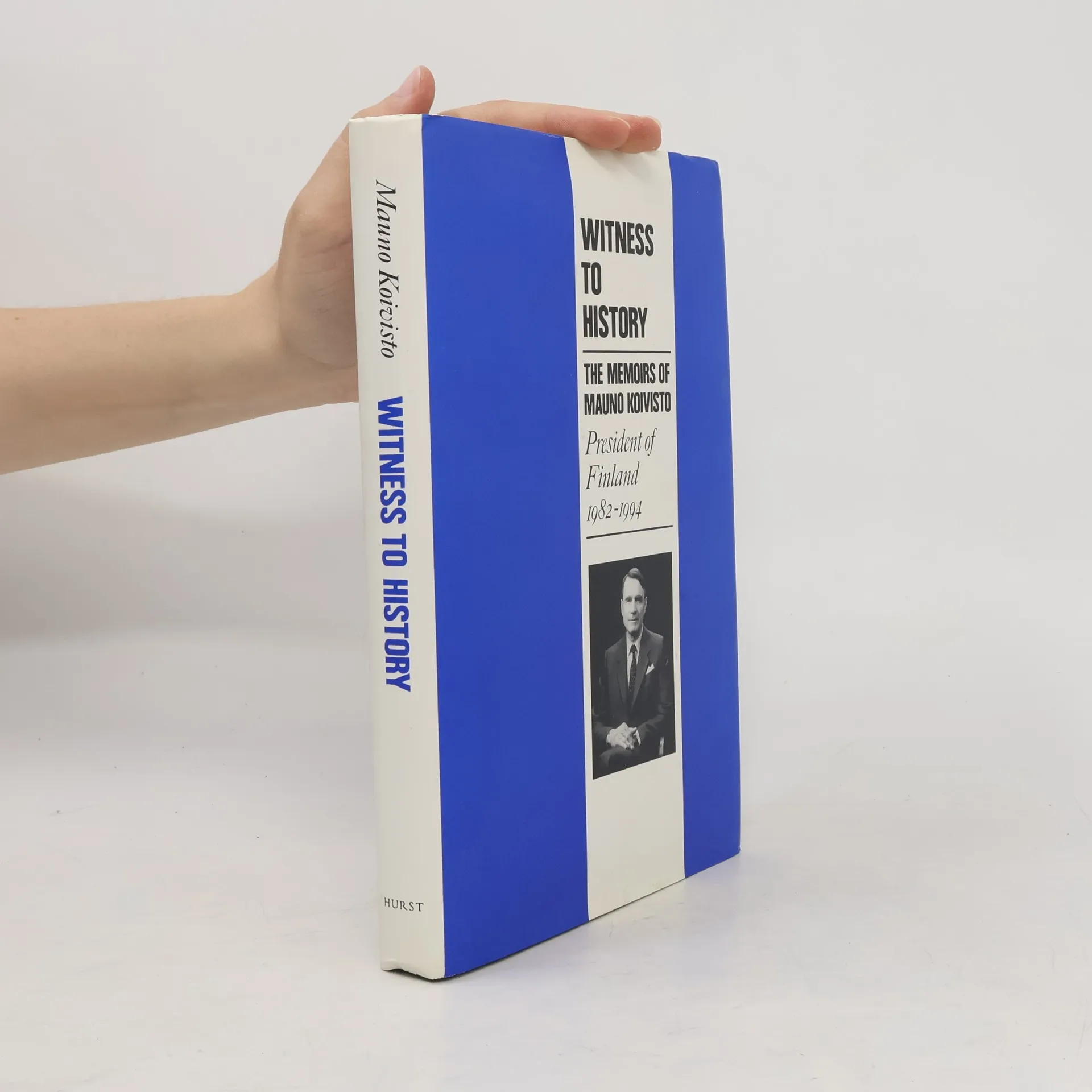
When Mauno Koivisto was elected president of Finland in 1982, Leonid Brezhnev was still in the Kremlin and Ronald Reagan had been the US president for a year. Relations between the superpowers were at a low ebb, and there seemed little prospect of improvement. A "Treaty on Friendship, Co-operation and Mutual Assistance" with the Soviet Union had been signed by a weakened Finland in 1948, and its military provisions led to talk of "Finlandisation." The Soviets would not accept the concept of Finnish neutrality, to which the Finns adhered strongly. When Koivisto left office in 1994, the Soviet Union no longer existed, the 1948 treaty had been replaced, and Finland was about to become a member of the European Union, something unthinkable a few years earlier. Koivisto's account is partly a historical record. As events unfold, we follow his thinking as we become privy to his conversations and correspondence with his own ministers as well as with his foreign counterparts. As such, this book is a case history of statecraft in a small country involved in great events, but it is much more than that, for Koivisto does not miss the human element or overlook the ironies of power politics among nations.
Nákup knihy
Witness To History, Mauno Koivisto
- Jazyk

- Rok vydania
- 1997
- Väzba
- (pevná)
Doručenie
Platobné metódy
Nikto zatiaľ neohodnotil.
- Titul
- Witness To History
- Podtitul
- Memoirs Of President Mauno Koivisto
- Jazyk
- anglicky
- Autori
- Mauno Koivisto
- Vydavateľ
- C Hurst & Co Publishers Ltd
- Rok vydania
- 1997
- Väzba
- pevná
- Počet strán
- 320
- ISBN10
- 1850653232
- ISBN13
- 9781850653233
- Série
- Anotácia
- When Mauno Koivisto was elected president of Finland in 1982, Leonid Brezhnev was still in the Kremlin and Ronald Reagan had been the US president for a year. Relations between the superpowers were at a low ebb, and there seemed little prospect of improvement. A "Treaty on Friendship, Co-operation and Mutual Assistance" with the Soviet Union had been signed by a weakened Finland in 1948, and its military provisions led to talk of "Finlandisation." The Soviets would not accept the concept of Finnish neutrality, to which the Finns adhered strongly. When Koivisto left office in 1994, the Soviet Union no longer existed, the 1948 treaty had been replaced, and Finland was about to become a member of the European Union, something unthinkable a few years earlier. Koivisto's account is partly a historical record. As events unfold, we follow his thinking as we become privy to his conversations and correspondence with his own ministers as well as with his foreign counterparts. As such, this book is a case history of statecraft in a small country involved in great events, but it is much more than that, for Koivisto does not miss the human element or overlook the ironies of power politics among nations.