

Parametre
- 352 stránok
- 13 hodin čítania
Viac o knihe
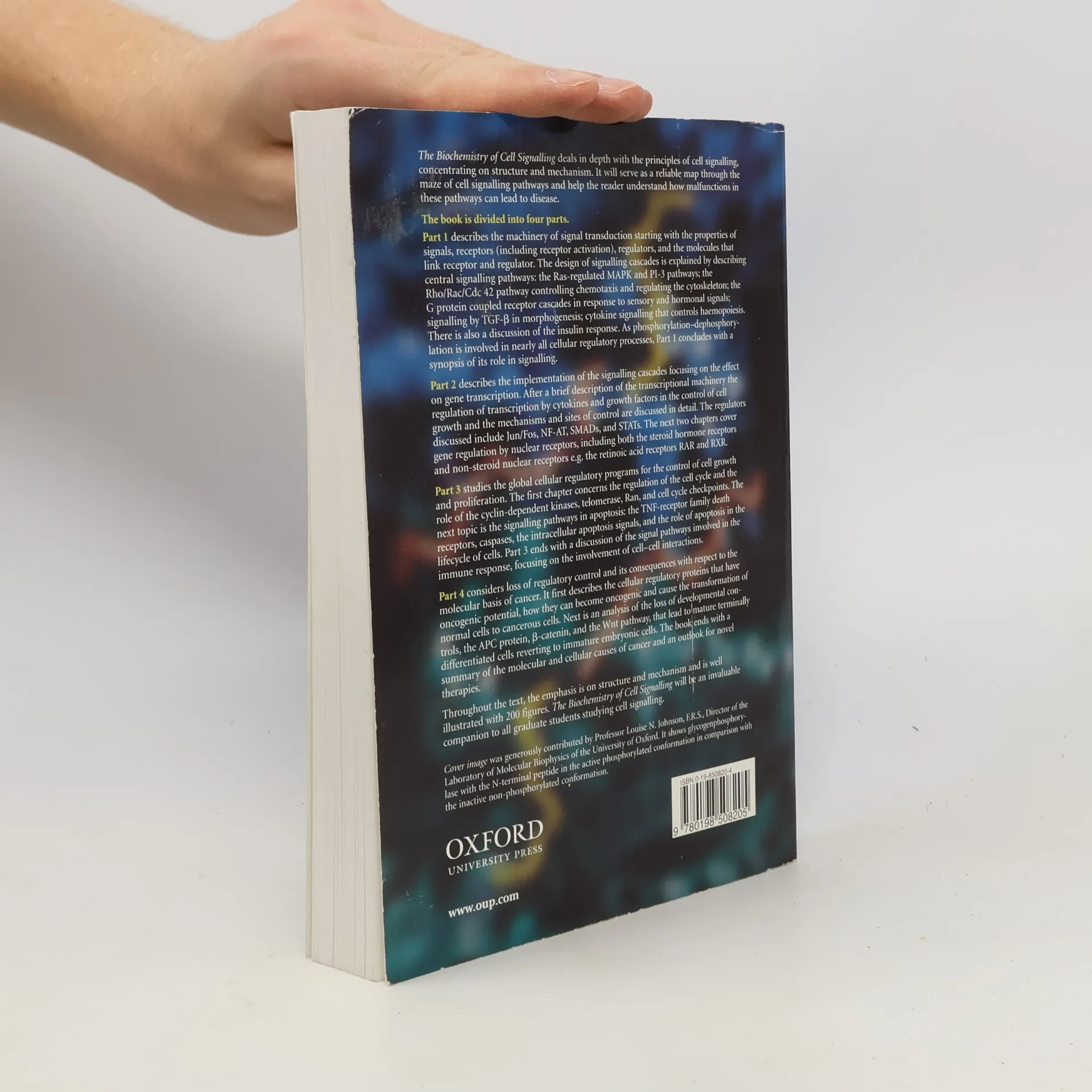
This comprehensive work delves into the principles of cell signalling, emphasizing structure and mechanism to navigate the complexities of signalling pathways and their implications in disease. The text is organized into four parts. Part 1 covers the machinery of signal transduction, detailing signal properties, receptor activation, regulators, and linking molecules. It explains key signalling cascades, including the Ras-regulated MAPK and PI-3 pathways, the Rho/Rac/Cdc42 pathway for chemotaxis, G protein-coupled receptor cascades, TGF-ß signalling in morphogenesis, and cytokine signalling in haemopoiesis, concluding with the role of phosphorylation-dephosphorylation in cellular regulation. Part 2 focuses on the implementation of signalling cascades and their effects on gene transcription, discussing the transcriptional machinery and the regulation by cytokines and growth factors, including key regulators like Jun/Fos and NF-AT. Part 3 examines global regulatory programs for cell growth, covering the cell cycle, cyclin-dependent kinases, apoptosis signals, and immune response pathways. Part 4 addresses the loss of regulatory control in cancer, detailing oncogenic proteins, developmental control loss, and the implications for therapy. With a strong emphasis on structure and mechanism, supported by 200 figures, this text is an essential resource for graduate students in cell signalling.
Nákup knihy
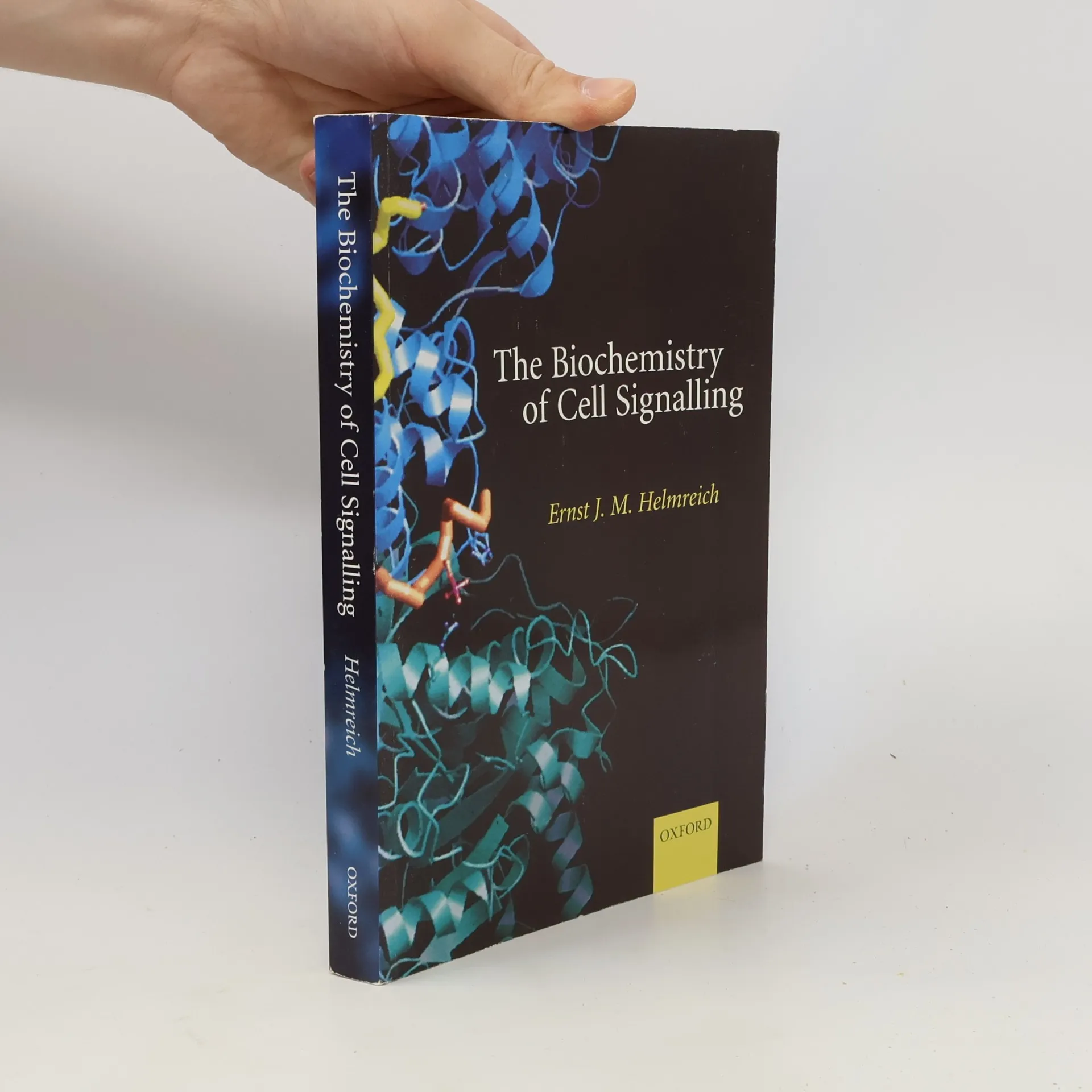
The Biochemistry of Cell Signalling, Ernst J. M. Helmreich
- Jazyk

- Rok vydania
- 2001
- Väzba
- (mäkká)
Doručenie
Platobné metódy
Nikto zatiaľ neohodnotil.
- Titul
- The Biochemistry of Cell Signalling
- Jazyk
- anglicky
- Autori
- Ernst J. M. Helmreich
- Vydavateľ
- Oxford University Press
- Rok vydania
- 2001
- Väzba
- mäkká
- Počet strán
- 352
- ISBN10
- 0198508204
- ISBN13
- 9780198508205
- Série
- Štítky
- Prírodné vedy, Vysokoškolské učebnice, Veda, Učebnice biólogie, Biochemia, Molekulárna biológia
- Anotácia
- This comprehensive work delves into the principles of cell signalling, emphasizing structure and mechanism to navigate the complexities of signalling pathways and their implications in disease. The text is organized into four parts. Part 1 covers the machinery of signal transduction, detailing signal properties, receptor activation, regulators, and linking molecules. It explains key signalling cascades, including the Ras-regulated MAPK and PI-3 pathways, the Rho/Rac/Cdc42 pathway for chemotaxis, G protein-coupled receptor cascades, TGF-ß signalling in morphogenesis, and cytokine signalling in haemopoiesis, concluding with the role of phosphorylation-dephosphorylation in cellular regulation. Part 2 focuses on the implementation of signalling cascades and their effects on gene transcription, discussing the transcriptional machinery and the regulation by cytokines and growth factors, including key regulators like Jun/Fos and NF-AT. Part 3 examines global regulatory programs for cell growth, covering the cell cycle, cyclin-dependent kinases, apoptosis signals, and immune response pathways. Part 4 addresses the loss of regulatory control in cancer, detailing oncogenic proteins, developmental control loss, and the implications for therapy. With a strong emphasis on structure and mechanism, supported by 200 figures, this text is an essential resource for graduate students in cell signalling.