

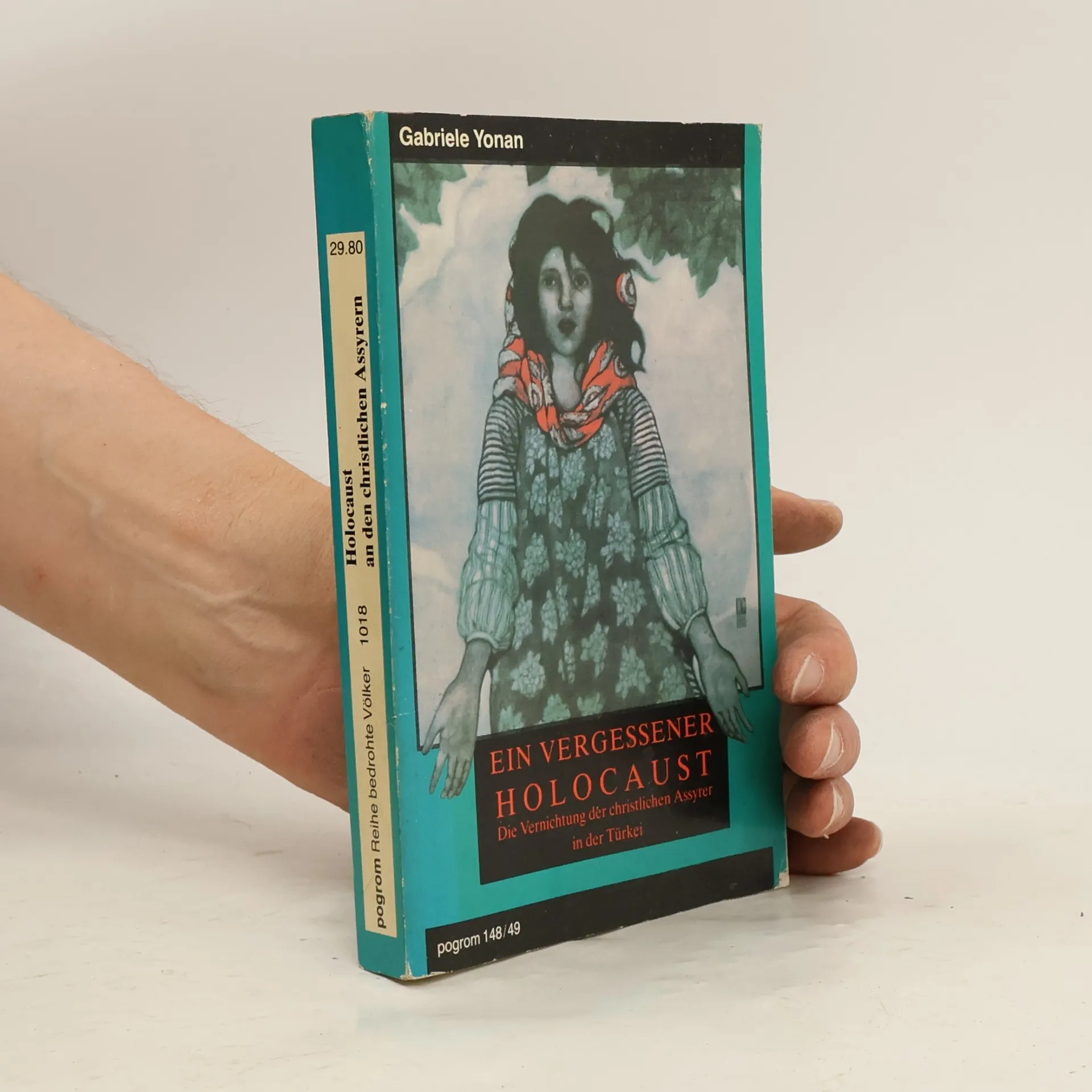
Ein vergessener Holocaust
Die Vernichtung der christlichen Assyrer in der Türkei
Autori
Viac o knihe
The Assyrian people trace their lineage to ancient Assyrians, Chaldeans, and Aramaeans, who lived in Syria and Mesopotamia for millennia. Today, they are dispersed across the Middle East, particularly in Iran, Iraq, Syria, Lebanon, and Turkey, as well as in Western Europe, the Americas, and Australia due to emigration. Following the fragmentation of their empire, many Assyrians underwent assimilation, adapting their religion, language, and culture to that of their new rulers. Over centuries, various empires, including the Persian, Parthian, Sassanid, Byzantine, Arab, Seljuk, Mongol, and Ottoman, influenced their fate, subjecting them to shifting sovereignty. Despite these pressures, a minority maintained their identity until 1915, forming a cohesive linguistic and religious community primarily in Upper Mesopotamia, which included parts of the Mosul and Urmia plateaus. This area remained within the Ottoman Empire and Persia until the aftermath of World War I, when it was divided once more. The narrative of these peoples is compelling, particularly their early embrace of the Gospel of Jesus Christ and their efforts to spread their faith as far as China and India, making their history significant and worthy of documentation.
Nákup knihy
Ein vergessener Holocaust, Gabriele Yonan
- Jazyk

- Rok vydania
- 1989
- Väzba
- (mäkká)
Doručenie
Platobné metódy
Nikto zatiaľ neohodnotil.
- Titul
- Ein vergessener Holocaust
- Podtitul
- Die Vernichtung der christlichen Assyrer in der Türkei
- Jazyk
- nemecky
- Autori
- Gabriele Yonan
- Vydavateľ
- Ges. für Bedrohte Völker
- Rok vydania
- 1989
- Väzba
- mäkká
- Počet strán
- 421
- ISBN10
- 3922197256
- ISBN13
- 9783922197256
- Série
- Anotácia
- The Assyrian people trace their lineage to ancient Assyrians, Chaldeans, and Aramaeans, who lived in Syria and Mesopotamia for millennia. Today, they are dispersed across the Middle East, particularly in Iran, Iraq, Syria, Lebanon, and Turkey, as well as in Western Europe, the Americas, and Australia due to emigration. Following the fragmentation of their empire, many Assyrians underwent assimilation, adapting their religion, language, and culture to that of their new rulers. Over centuries, various empires, including the Persian, Parthian, Sassanid, Byzantine, Arab, Seljuk, Mongol, and Ottoman, influenced their fate, subjecting them to shifting sovereignty. Despite these pressures, a minority maintained their identity until 1915, forming a cohesive linguistic and religious community primarily in Upper Mesopotamia, which included parts of the Mosul and Urmia plateaus. This area remained within the Ottoman Empire and Persia until the aftermath of World War I, when it was divided once more. The narrative of these peoples is compelling, particularly their early embrace of the Gospel of Jesus Christ and their efforts to spread their faith as far as China and India, making their history significant and worthy of documentation.