

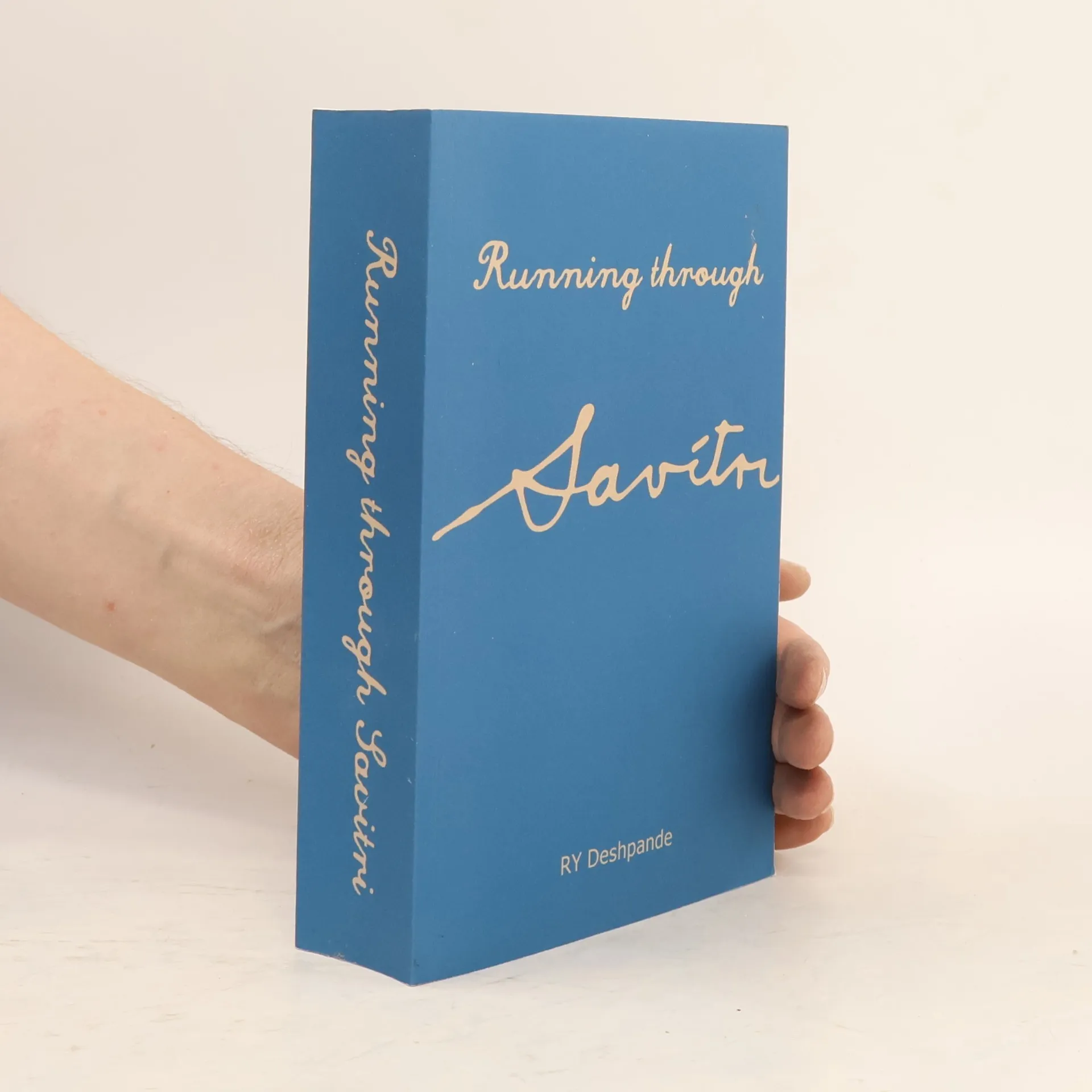
Running Through Savitri
Autori
Viac o knihe
Sri Aurobindo regarded Savitri as his "main work," dedicating two and a half hours daily to its composition during the late 1940s, amidst a period of intensified creativity. Over nearly fifty years, he crafted a poem in pentametric blank verse, spanning almost twenty-four thousand lines, divided into twelve Books with forty-eight Cantos and an Epilogue. The first twenty-four Cantos were published in September 1950, shortly before his passing, while Parts II and III were released in May 1951. Aurobindo viewed Savitri as a means of spiritual ascension, rewriting it as he reached higher levels of consciousness. He considered it not merely a poem but an experimental field exploring poetry from yogic consciousness. The poem serves as a spiritual record of his realizations, born from the Tapas-Shakti of his quest for transformative Word. The Mother described Savitri as a supreme revelation of Aurobindo's vision, emphasizing its immense importance and universal subject matter. She noted that it contains lived experiences and profound truths, reflecting his unique journey through suffering to attain union with the Supreme. Savitri embodies the Yoga of Transformation, revealing prophetic possibilities for the Divine and the soul of creation. The Mother asserted its realism, stating it is an exact description, transcending mere literature or poetry.
Nákup knihy
Running Through Savitri, R. Y. Deshpande
- Jazyk

- Rok vydania
- 2014
- Väzba
- (mäkká)
Doručenie
Platobné metódy
Nikto zatiaľ neohodnotil.
- Titul
- Running Through Savitri
- Jazyk
- anglicky
- Autori
- R. Y. Deshpande
- Rok vydania
- 2014
- Väzba
- mäkká
- Počet strán
- 740
- ISBN10
- 1499774125
- ISBN13
- 9781499774122
- Série
- Štítky
- Náboženské témy, Spiritualita, Epos
- Anotácia
- Sri Aurobindo regarded Savitri as his "main work," dedicating two and a half hours daily to its composition during the late 1940s, amidst a period of intensified creativity. Over nearly fifty years, he crafted a poem in pentametric blank verse, spanning almost twenty-four thousand lines, divided into twelve Books with forty-eight Cantos and an Epilogue. The first twenty-four Cantos were published in September 1950, shortly before his passing, while Parts II and III were released in May 1951. Aurobindo viewed Savitri as a means of spiritual ascension, rewriting it as he reached higher levels of consciousness. He considered it not merely a poem but an experimental field exploring poetry from yogic consciousness. The poem serves as a spiritual record of his realizations, born from the Tapas-Shakti of his quest for transformative Word. The Mother described Savitri as a supreme revelation of Aurobindo's vision, emphasizing its immense importance and universal subject matter. She noted that it contains lived experiences and profound truths, reflecting his unique journey through suffering to attain union with the Supreme. Savitri embodies the Yoga of Transformation, revealing prophetic possibilities for the Divine and the soul of creation. The Mother asserted its realism, stating it is an exact description, transcending mere literature or poetry.