



Viac o knihe
Scientists, journalists, novelists, and filmmakers continue to create narratives around contagious diseases, rooted in a tradition that dates back to early Greco-Roman literature. In the mid-first century CE, Lucretius, Vergil, and Ovid established key conventions of the western plague narrative, responding to the decline of the Roman res publica and the stabilization under the Augustan Principate. They employed a metaphorical connection between the human body and the body politic, using fictive representations of epidemics to address societal collapse and propose remedies for recovery. Theorists like Susan Sontag and Rene Girard have noted how disease rhetoric often reflects social, psychological, or political issues, yet these insights have seldom been applied to Latin literature. This exploration reveals how Roman writers depicted the origins and spread of disease as a dramatic interplay between individual and collective concerns, set against a backdrop of both a mythical Golden Age and a post-apocalyptic devastation. These literary innovations have influenced representations in various forms, including Carlo Coppola's artwork from a seventeenth-century plague outbreak and Margaret Atwood's Maddaddam Trilogy. Analyzing how Latin writers articulated contagious disease offers insights into contemporary disease discourses and their implications for both creators and affected populations in modern media.
Nákup knihy
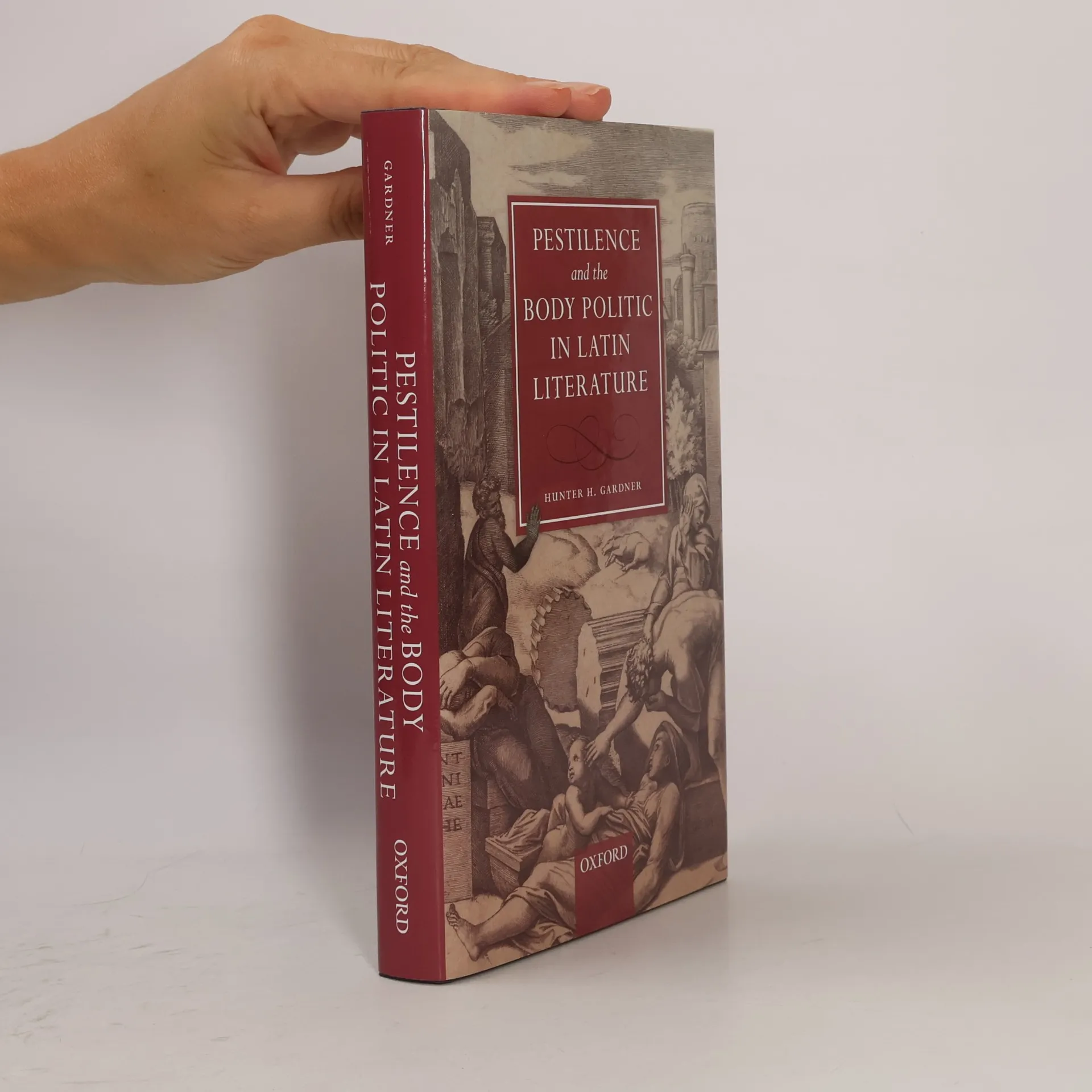
Pestilence and the Body Politic in Latin Literature, Hunter H. Gardner
- Jazyk

- Rok vydania
- 2019
- Väzba
- (pevná)
Nikto zatiaľ neohodnotil.
- Titul
- Pestilence and the Body Politic in Latin Literature
- Jazyk
- anglicky
- Autori
- Hunter H. Gardner
- Vydavateľ
- Oxford University Press
- Rok vydania
- 2019
- Väzba
- pevná
- Počet strán
- 316
- ISBN10
- 0198796420
- ISBN13
- 9780198796428
- Série
- Štítky
- Politika, Choroby, Latinská literatúra
- Anotácia
- Scientists, journalists, novelists, and filmmakers continue to create narratives around contagious diseases, rooted in a tradition that dates back to early Greco-Roman literature. In the mid-first century CE, Lucretius, Vergil, and Ovid established key conventions of the western plague narrative, responding to the decline of the Roman res publica and the stabilization under the Augustan Principate. They employed a metaphorical connection between the human body and the body politic, using fictive representations of epidemics to address societal collapse and propose remedies for recovery. Theorists like Susan Sontag and Rene Girard have noted how disease rhetoric often reflects social, psychological, or political issues, yet these insights have seldom been applied to Latin literature. This exploration reveals how Roman writers depicted the origins and spread of disease as a dramatic interplay between individual and collective concerns, set against a backdrop of both a mythical Golden Age and a post-apocalyptic devastation. These literary innovations have influenced representations in various forms, including Carlo Coppola's artwork from a seventeenth-century plague outbreak and Margaret Atwood's Maddaddam Trilogy. Analyzing how Latin writers articulated contagious disease offers insights into contemporary disease discourses and their implications for both creators and affected populations in modern media.