


Viac o knihe
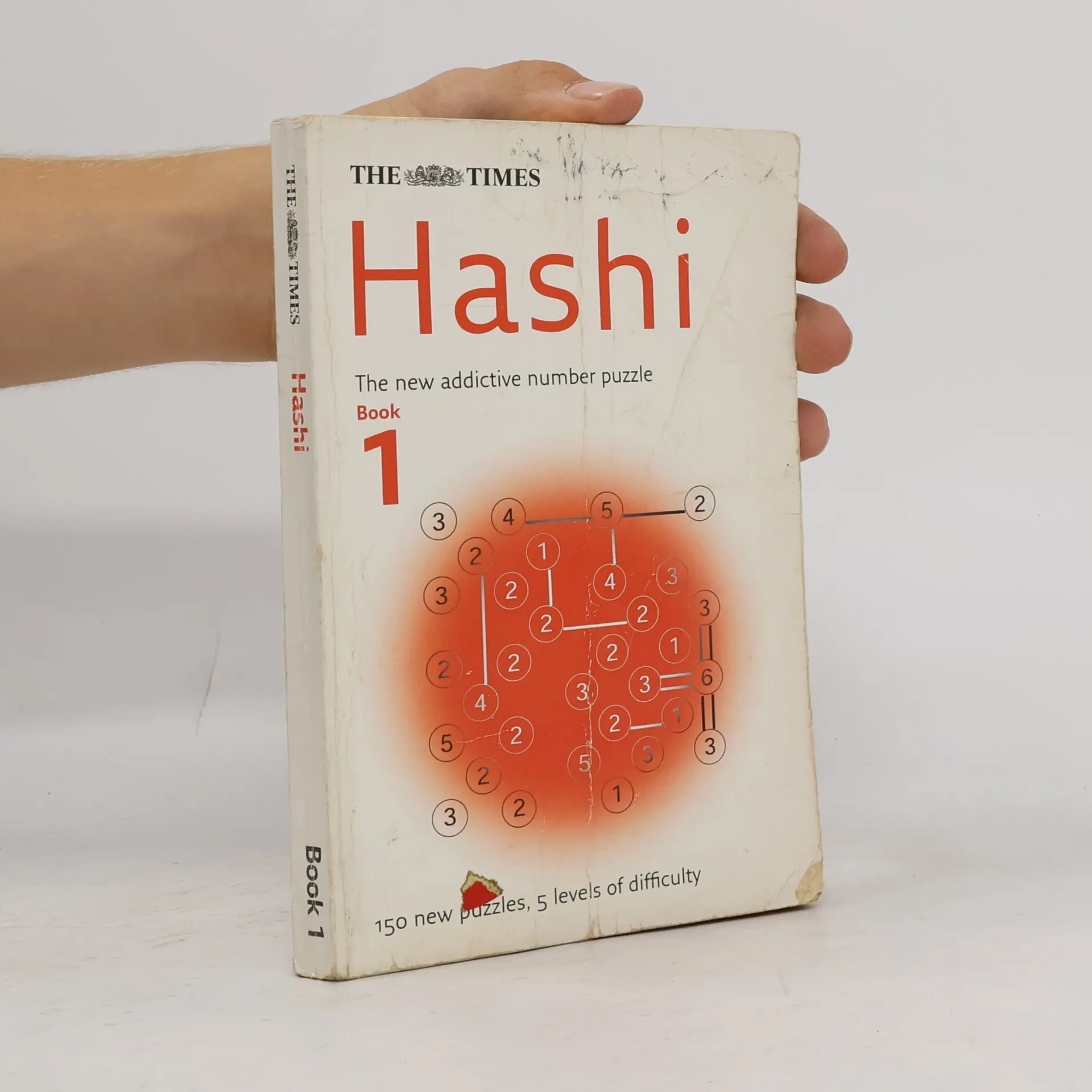
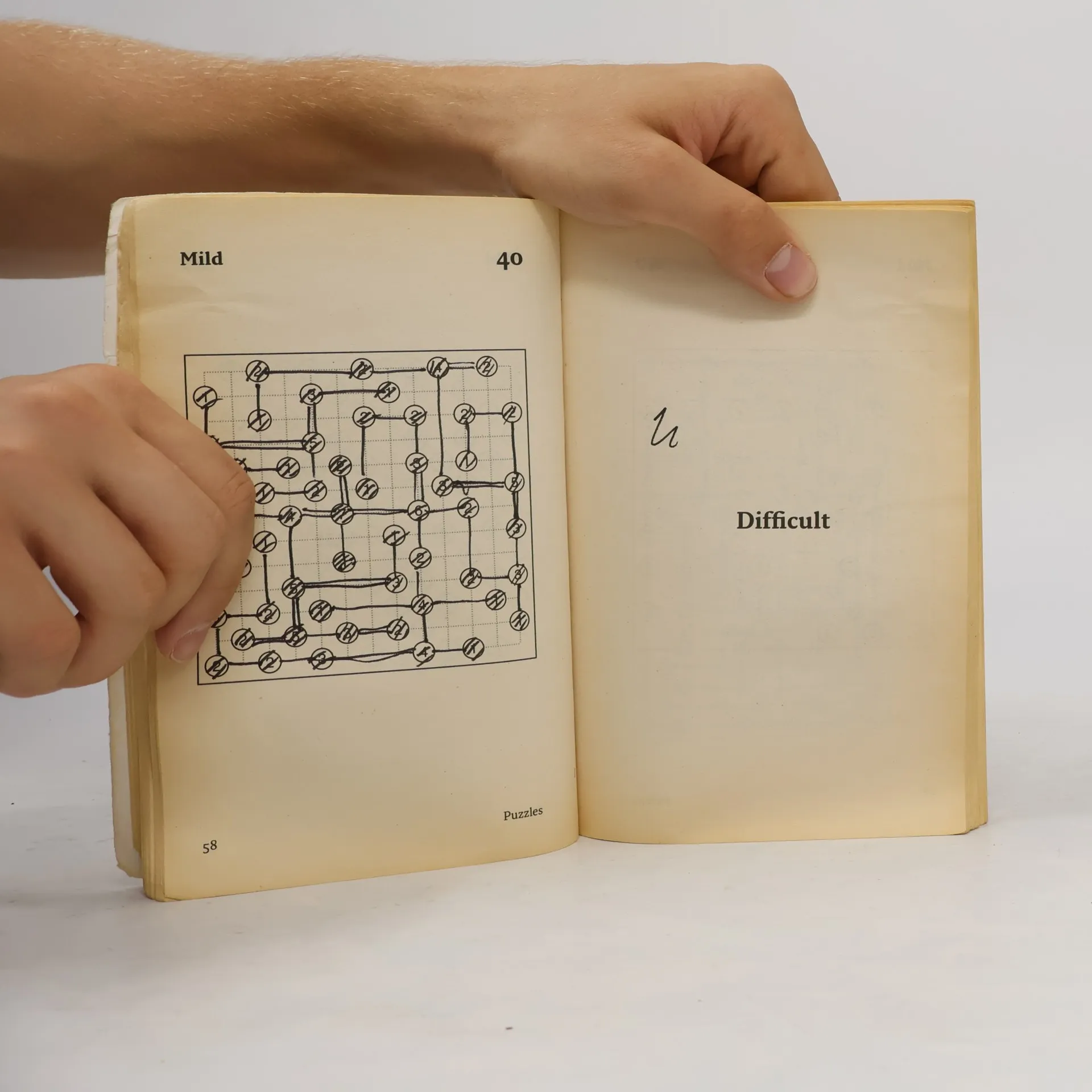
After Su Doku, Hashi is one of the most popular Japanese logic puzzles in Japan. Hashi requires logic and reasoning, not mathematical ability. If you think Su Doku is addictive, you'll certainly enjoy the challenge of Hashi. This is a collection of 150 new puzzles of varying degrees of 10 easy, 30 mild, 60 difficult, 40 super difficult, and 10 super super difficult. Hashi means 'Bridge' in Japanese. In Hashi you must connect a series of circles (islands) containing numbers by lines (bridges) so that the islands form one continuous connected path. Easy enough? Well there are naturally some extra rules to make life a little the bridges must be straight lines, running horizontally or vertically between the islands; they cannot run diagonally. The bridges cannot cross each other or any island. The number of bridges connected to each island is the same as the number inside the island and there can be a maximum of two bridges between any two islands.
Nákup knihy
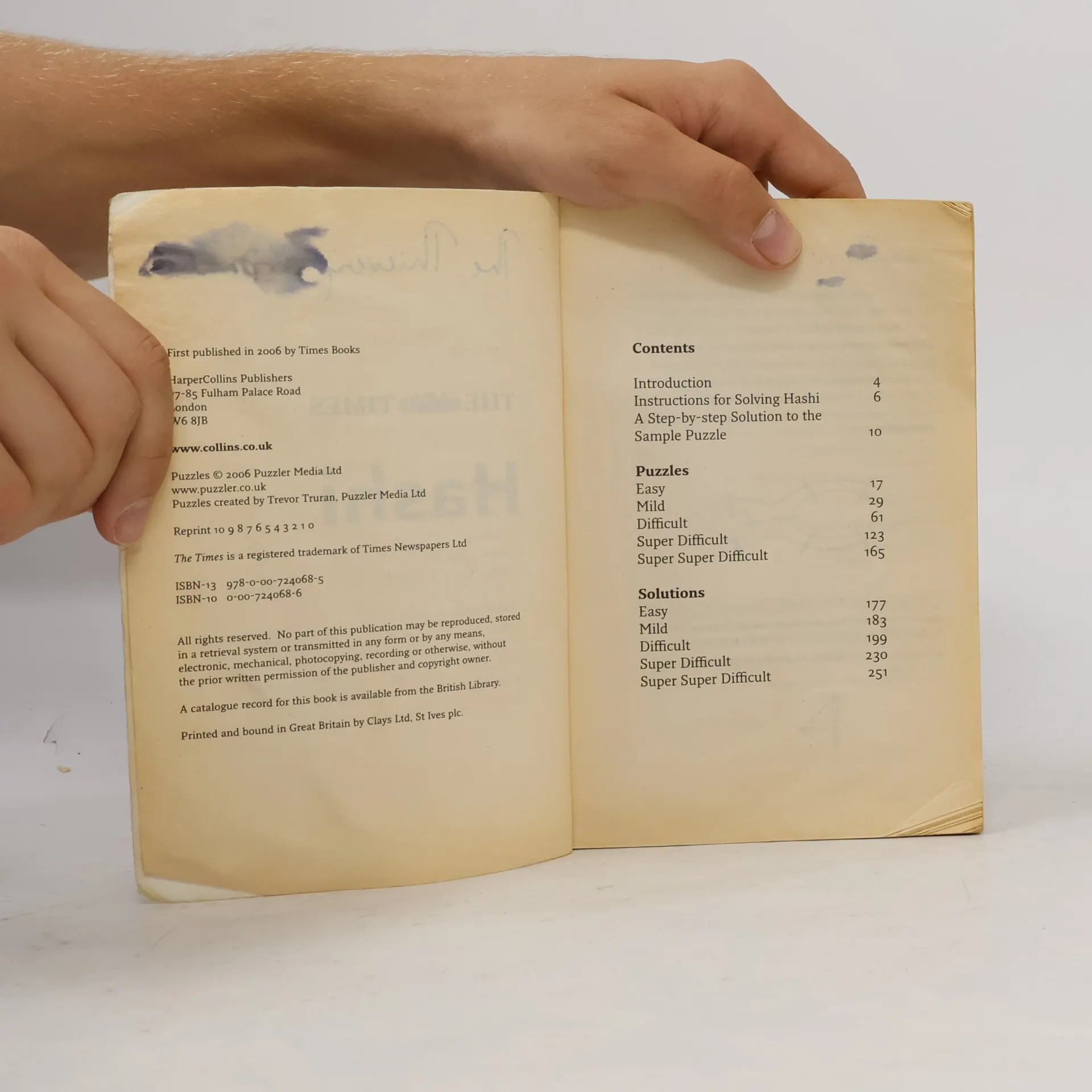
The Times Hashi, Puzzler Media, Puzzler Magazine Staff
- Jazyk

- Rok vydania
- 2006
- Väzba
- (mäkká),
- Stav knihy
- Poškodená
- Cena
- 5,34 €
Doručenie
Platobné metódy
Nikto zatiaľ neohodnotil.
- Titul
- The Times Hashi
- Jazyk
- anglicky
- Vydavateľ
- Times Books
- Rok vydania
- 2006
- Väzba
- mäkká
- Počet strán
- 256
- ISBN10
- 0007240686
- ISBN13
- 9780007240685
- Série
- Anotácia
- After Su Doku, Hashi is one of the most popular Japanese logic puzzles in Japan. Hashi requires logic and reasoning, not mathematical ability. If you think Su Doku is addictive, you'll certainly enjoy the challenge of Hashi. This is a collection of 150 new puzzles of varying degrees of 10 easy, 30 mild, 60 difficult, 40 super difficult, and 10 super super difficult. Hashi means 'Bridge' in Japanese. In Hashi you must connect a series of circles (islands) containing numbers by lines (bridges) so that the islands form one continuous connected path. Easy enough? Well there are naturally some extra rules to make life a little the bridges must be straight lines, running horizontally or vertically between the islands; they cannot run diagonally. The bridges cannot cross each other or any island. The number of bridges connected to each island is the same as the number inside the island and there can be a maximum of two bridges between any two islands.