






The Story of Western Architecture
Autori
Parametre
- 269 stránok
- 10 hodin čítania
Viac o knihe
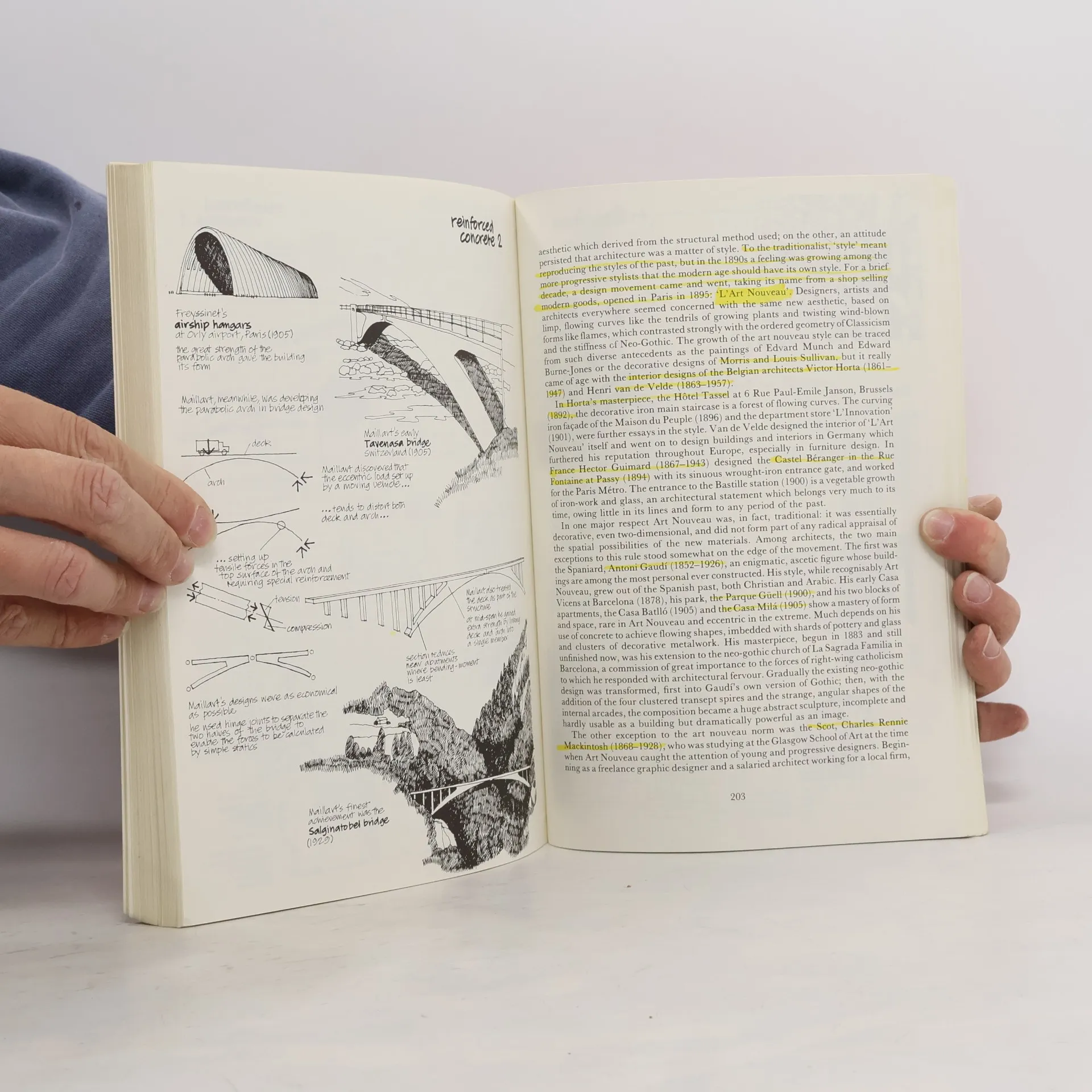
In this highly original introductory survey, British architect and planner, Bill Risebero covers the development of Western architecture from fifth century Europe to the present in terms of economic priorities, class relations, climate, natural resources, and other factors that affect our built environment. From the Gothic cathedrals to the White Towers in Los Angeles, Risebero discusses and illustrates architecture in the context of human affairs. He explains how the communtarian architecture of early societies afforded social satisfactions that compensated for their lack of technical sophistication, how the Greeks brought exquisite refinement to a simple structural system, and how grandiose Roman architecture attempted to impose security on a society plagued by inflation and unemployment. His own informal sketches and handwritten captions throughout the book provide helpful, visual outlines of each period. Bill Risebero is also the author of Modern Architecture and Design: An Alternative History, which is a sequel to this book and available in paperback from The MIT Press.
Nákup knihy
The Story of Western Architecture, Bill Risebero
- Jazyk

- Rok vydania
- 1979
- Väzba
- (mäkká),
- Stav knihy
- Poškodená
- Cena
- 3,19 €
Doručenie
Platobné metódy
Nikto zatiaľ neohodnotil.
- Titul
- The Story of Western Architecture
- Jazyk
- anglicky
- Autori
- Bill Risebero
- Vydavateľ
- MIT Press
- Rok vydania
- 1979
- Väzba
- mäkká
- Počet strán
- 269
- ISBN10
- 0262680475
- ISBN13
- 9780262680479
- Série
- Kategórie
- Anotácia
- In this highly original introductory survey, British architect and planner, Bill Risebero covers the development of Western architecture from fifth century Europe to the present in terms of economic priorities, class relations, climate, natural resources, and other factors that affect our built environment. From the Gothic cathedrals to the White Towers in Los Angeles, Risebero discusses and illustrates architecture in the context of human affairs. He explains how the communtarian architecture of early societies afforded social satisfactions that compensated for their lack of technical sophistication, how the Greeks brought exquisite refinement to a simple structural system, and how grandiose Roman architecture attempted to impose security on a society plagued by inflation and unemployment. His own informal sketches and handwritten captions throughout the book provide helpful, visual outlines of each period. Bill Risebero is also the author of Modern Architecture and Design: An Alternative History, which is a sequel to this book and available in paperback from The MIT Press.