

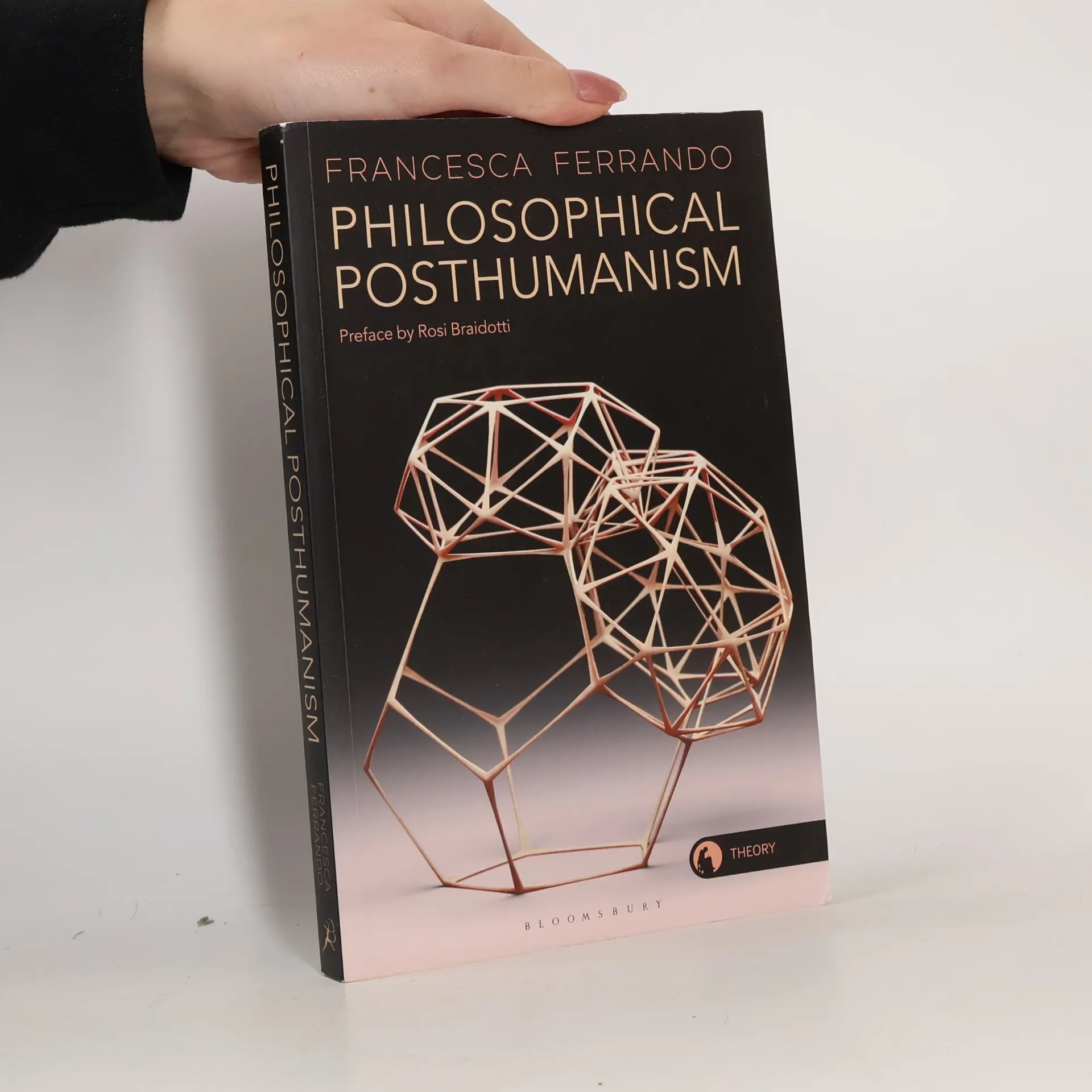

Theory in the New Humanities: Philosophical Posthumanism
Viac o knihe
Posthumanism is the philosophy of our time, a necessary perspective in the reflection about planet Earth and the future of humanity. The term 'posthuman' redefines the notion of 'the human' in tune with the scientific and bio-technological developments, and the socio-cultural, ethical and environmental imperatives of our age. The philosophical landscape, which has since developed, includes several movements and schools of thought, such as Posthumanism, Transhumanism, Anti-humanism and New Materialism. This book explains the similarities and differences between these various currents and offers an original contribution to Philosophical Posthumanism, uncovering its historical, theoretical, ontological and epistemological horizons. Philosophical Posthumanism is a philosophy of mediation which deconstructs any strict hierarchy by embracing an interdisciplinary approach, which merges critical thinking, evolutionary biology, quantum physics and the practice of awareness, among other related fields. Its impact goes beyond academia to encompass society as a whole, emerging in the global paradigm shifts towards coexistence.
Nákup knihy
Theory in the New Humanities: Philosophical Posthumanism, Rosi Braidotti, Francesca Ferrando
- Jazyk

- Rok vydania
- 2020
- Väzba
- (mäkká),
- Stav knihy
- Veľmi dobrá
- Cena
- 31,89 €
Doručenie
Platobné metódy
Nikto zatiaľ neohodnotil.
- Titul
- Theory in the New Humanities: Philosophical Posthumanism
- Jazyk
- anglicky
- Autori
- Rosi Braidotti, Francesca Ferrando
- Vydavateľ
- Bloomsbury Publishing PLC
- Rok vydania
- 2020
- Väzba
- mäkká
- Počet strán
- 296
- ISBN10
- 1350186015
- ISBN13
- 9781350186019
- Série
- Štítky
- Filozofická tematika, Veda, Technológia, Vedecké teórie, Estetika, Sociálne aspekty, Humanizmus, Filozofická antropológia
- Anotácia
- Posthumanism is the philosophy of our time, a necessary perspective in the reflection about planet Earth and the future of humanity. The term 'posthuman' redefines the notion of 'the human' in tune with the scientific and bio-technological developments, and the socio-cultural, ethical and environmental imperatives of our age. The philosophical landscape, which has since developed, includes several movements and schools of thought, such as Posthumanism, Transhumanism, Anti-humanism and New Materialism. This book explains the similarities and differences between these various currents and offers an original contribution to Philosophical Posthumanism, uncovering its historical, theoretical, ontological and epistemological horizons. Philosophical Posthumanism is a philosophy of mediation which deconstructs any strict hierarchy by embracing an interdisciplinary approach, which merges critical thinking, evolutionary biology, quantum physics and the practice of awareness, among other related fields. Its impact goes beyond academia to encompass society as a whole, emerging in the global paradigm shifts towards coexistence.