

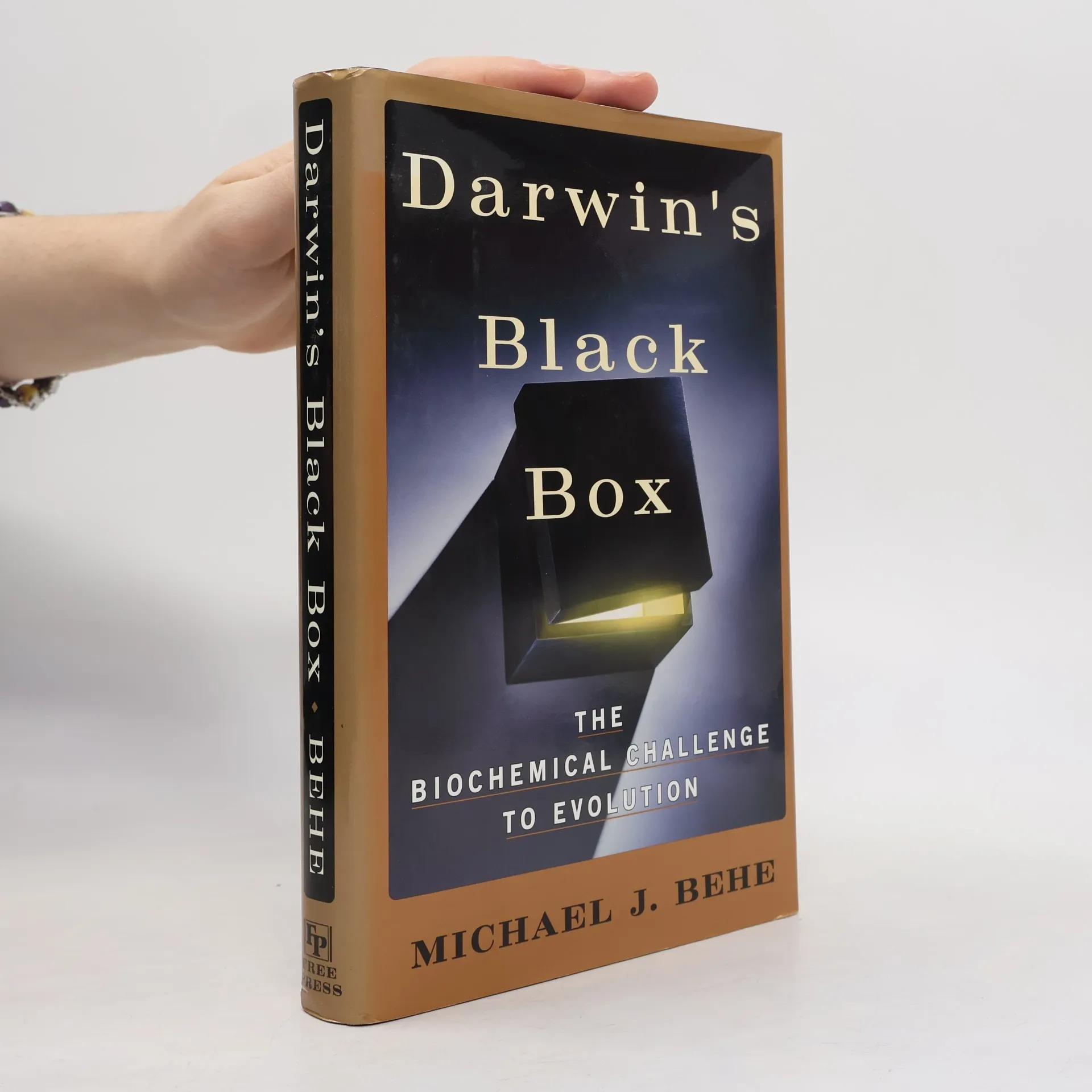
Virtually all serious scientists accept Darwin's theory of evolution, and after a century of struggle, biologists are confident that remaining questions about life's origins and the Cambrian explosion will yield Darwinian answers. However, Michael Behe challenges this consensus in "Darwin's Black Box," suggesting that evidence of evolution's limits has been overlooked. The field of biochemistry, which began with the discovery of DNA's structure, reveals a complex world within cells. Behe illustrates this complexity through examples like vision, blood clotting, and cellular transport, showing that these biochemical systems consist of intricately interdependent parts. For Darwinian evolution to hold true, a series of mutations must have produced each functional machine leading to the observed complexity. Behe argues that the more intricate these systems are, the more difficult it is to envision gradual evolutionary paths. He notes that the scientific literature remains silent on this issue, hinting at a possible greater force at work. Although not a creationist, Behe maintains that these biochemical machines imply design, whether by God or a higher intelligence. He calls for a reevaluation of the relationship between modern biochemistry and traditional evolutionary theory, urging scientists and the public to explore these new possibilities.
Michael J. Behe Knihy
Michael J. Behe sa zameriava na skúmanie zložitých biochemických systémov a ich dôsledkov pre teóriu prirodzeného výberu. Jeho práca sa hlboko zaoberá otázkami dizajnu a evolučných procesov na molekulárnej úrovni. Behe skúma, ako môžu biologické štruktúry naznačovať prítomnosť účelného návrhu, čím spochybňuje tradičné darwinovské vysvetlenie. Jeho analýzy vyvolali rozsiahlu diskusiu a sú považované za významný príspevok k debate o pôvode zložitosti v živých organizmoch.


Darwin Devolves: The New Science About DNA That Challenges Evolution
- 352 stránok
- 13 hodin čítania
In his controversial bestseller, a biochemist challenges Darwin's theory of evolution, arguing that science supports intelligent design as a better explanation for the origin of life. Advancing his argument, he presents new research that reconsiders how Darwin's mechanism operates, further undermining the theory's validity. He explains that while evolution can alter appearances and behaviors through natural selection acting on random mutation, it does not create life organically. Instead, he argues that Darwinism functions through a process of devolution, damaging DNA to produce new forms at the lowest biological levels. This insight is crucial, as it suggests that the Darwinian process cannot account for the creation of life itself. He emphasizes that a mechanism capable of dismantling complex systems cannot be responsible for building them. Additionally, he critiques Darwinism's methodology and its conflict with the concept of creation, highlighting that Intelligent Design uniquely acknowledges causation. While evolution suggests organisms are descended with modifications from ancient ancestors, Intelligent Design probes deeper, questioning the reasons and mechanisms behind such profound changes. For him, this inquiry underscores the significance of Intelligent Design.
The Edge of Evolution: The Search for the Limits of Darwinism
- 336 stránok
- 12 hodin čítania
The author of Darwin's Black Box draws on new findings in genetics to pose an argument for intelligent design that refutes Darwinian beliefs about evolution while offering alternative analyses of such factors as disease, random mutations, and the human struggle for survival. Reprint. 40,000 first printing.
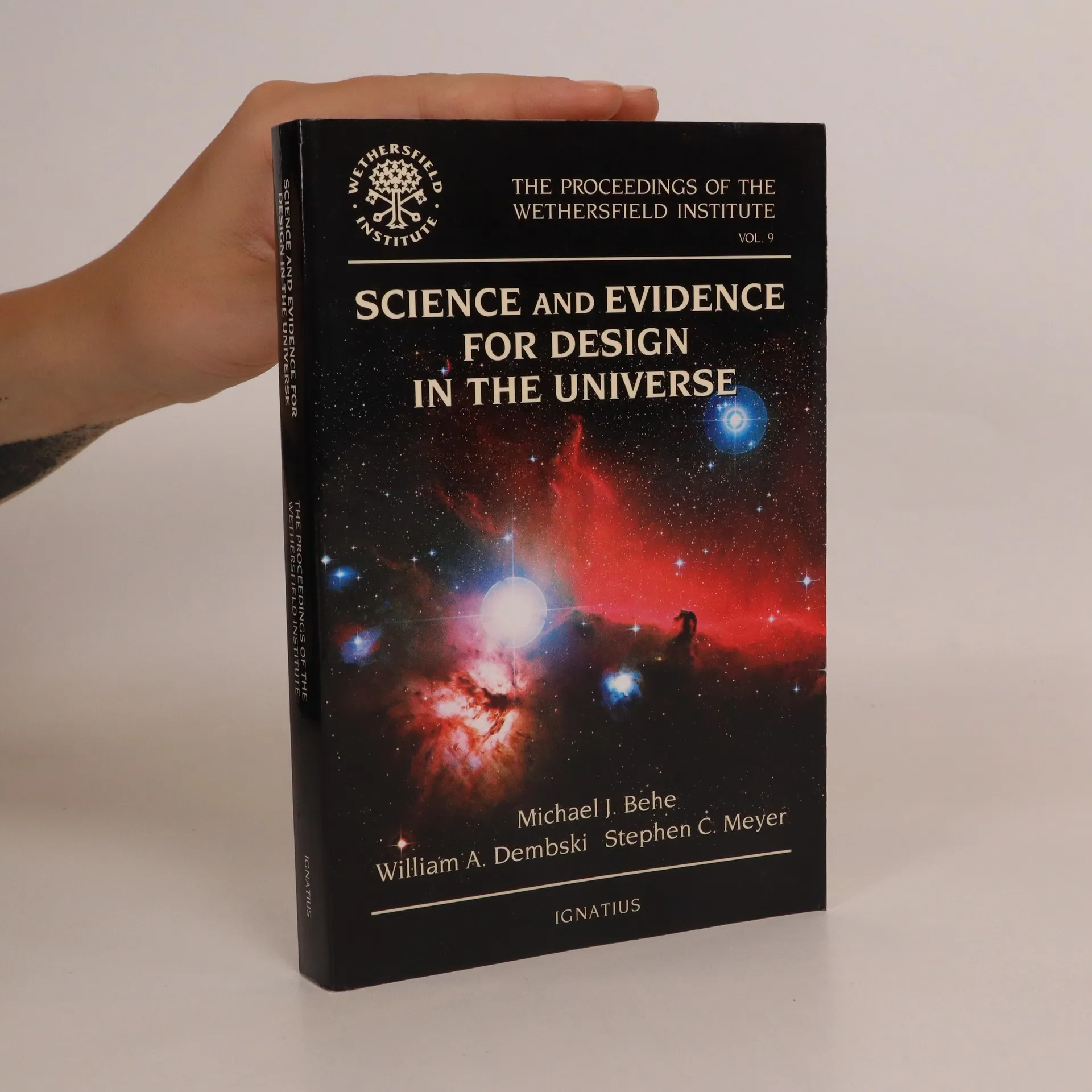
Science and Evidence for Design in the Universe
- 180 stránok
- 7 hodin čítania
As progress in science continues to reveal unimagined complexities, three scientists revisit the difficult and compelling question of the origin of our universe. As mathematician, biochemist, and philosopher of science, they explore the possibility of developing a reliable method for detecting an intelligent cause and evidence for design at the origin of life. In the process, they present a strong case for opening and pursuing a fruitful exchange between science and theology. Mathematician William Dembski, author of The Design Inference , first argues that new developments in the information sciences make intelligent design objectively and scientifically detectable―he identifies the signs of design. Next, philosopher of science, Stephen Meyer, and biochemist Michael Behe, author of Darwin's Black Box , argue that these signs are now clearly evident in both the architecture of the universe and the features of living systems. Other essays by the authors defend the scientific status of the theory of intelligent design and show how that theory supports traditional religious belief without necessarily "proving" the existence of God. In a concluding essay, Michael Behe responds to critics of his best selling book, Darwin's Black Box , thus bringing readers up-to-date on the status of the contemporary design argument in biology.