In the same delectable format as The Matisse Stories, this collection deals
with betrayal and loyalty, quests and longings, loneliness and passion - the
mysterious absences at the heart of the fullest lives.
Amsterdam of the 50s, 60s and 70s is viewed from the perspective of Inni Wintrop, a man who leads a capricious life, floating comfortably on open possibilities.
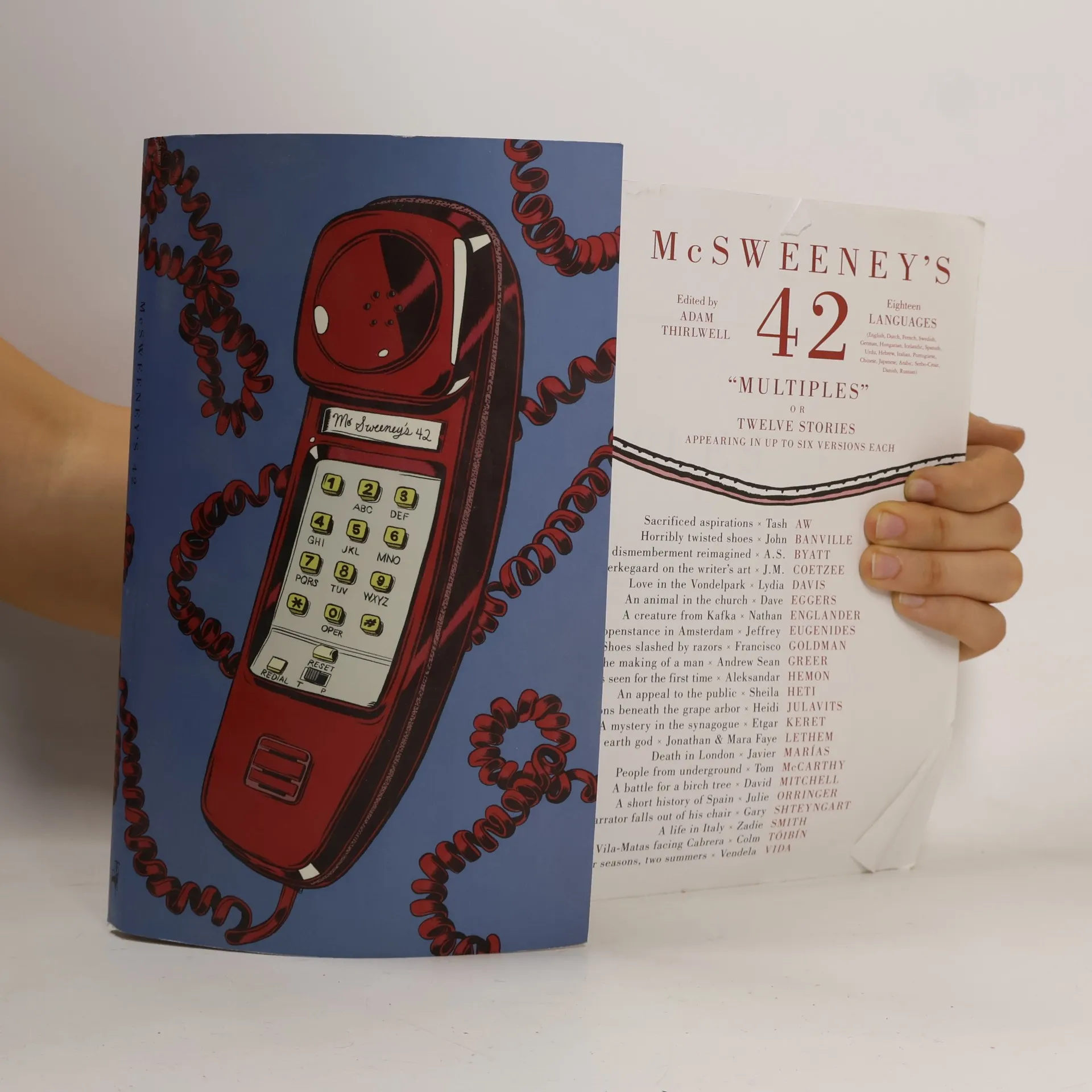
Or Twelve Stories Appearing in Up to Six Versions Each - Eighteen Languages: English, French, Czech, Dutch, German, Hungarian, Icelandic, Italian, Korean, Latin, Polish, Portuguese, Russian, Spanish, Swedish, Turkish
300 stránok
11 hodin čítania
With the help of guest editor Adam Thirlwell (author of Kapow!, Visual Editions), Issue 42 is a monumental experiment in translated literature—twelve stories taken through six translators apiece, weaving into English and then back out again, gaining new twists and textures each time, just as you'd expect a Kierkegaard story brought into English by Clancy Martin and then sent into Dutch by Cees Nooteboom before being made into English again by J. M. Coetzee to do. With original texts by Kafka and Kharms and Kenji Miyazawa, and translations by Lydia Davis and David Mitchell and Zadie Smith (along with others by John Banville and Tom McCarthy and Javier Marías, and even more by Shteyngart and Eugenides and A. S. Byatt), this will be an issue unlike anything you've seen before—altered, echoing narratives in the hands of the finest writers of our time, brought to you in a book that looks like nothing else we’ve ever done.
Contains interviews by critics and scholars with some of the foremost women writers, including Maya Angelou, A S Byatt, Luce Irigaray, Erica Jong, Jeanne Moreau, and Grace Paley.
Maria Tatar's The Annotated Brothers Grimm celebrates the powerful cultural legacy of the stories collected by Jacob and Wilhelm Grimm —tales that have enchanted children and adults alike for generations. The volume includes over forty of the Grimms' most beloved stories, including:Rapunzel * Hansel and Gretel * The Brave Little Tailor * Cinderella * Little Red Riding Hood * The Robber Bridegroom * Briar Rose * Snow White * Rumplestilskin * The Golden Goose * The Singing, Soaring Lark * The Frog King * The Juniper Tree * and Mother HolleWith over 150 paintings and drawings from the most celebrated fairy tale illustrators, including George Cruikshank, Paul Hey, Walter Crane, Warwick Goble, Kay Nielsen, and Arthur Rackham.
Winner of the 1990 Booker Prize, this novel describes the romance between two 19th century poets and the parallel relationship of their two biographers and includes passages of 'Victorian verse'
In The Conjugal Angel, curious individuals - some fictional, others drawn from
history - gather to connect with the spirit world. Throughout both, Byatt
examines the eccentricities of the Victorian era, weaving fact and fiction,
reality and romance, science and faith into a sumptuous, magical tapestry.
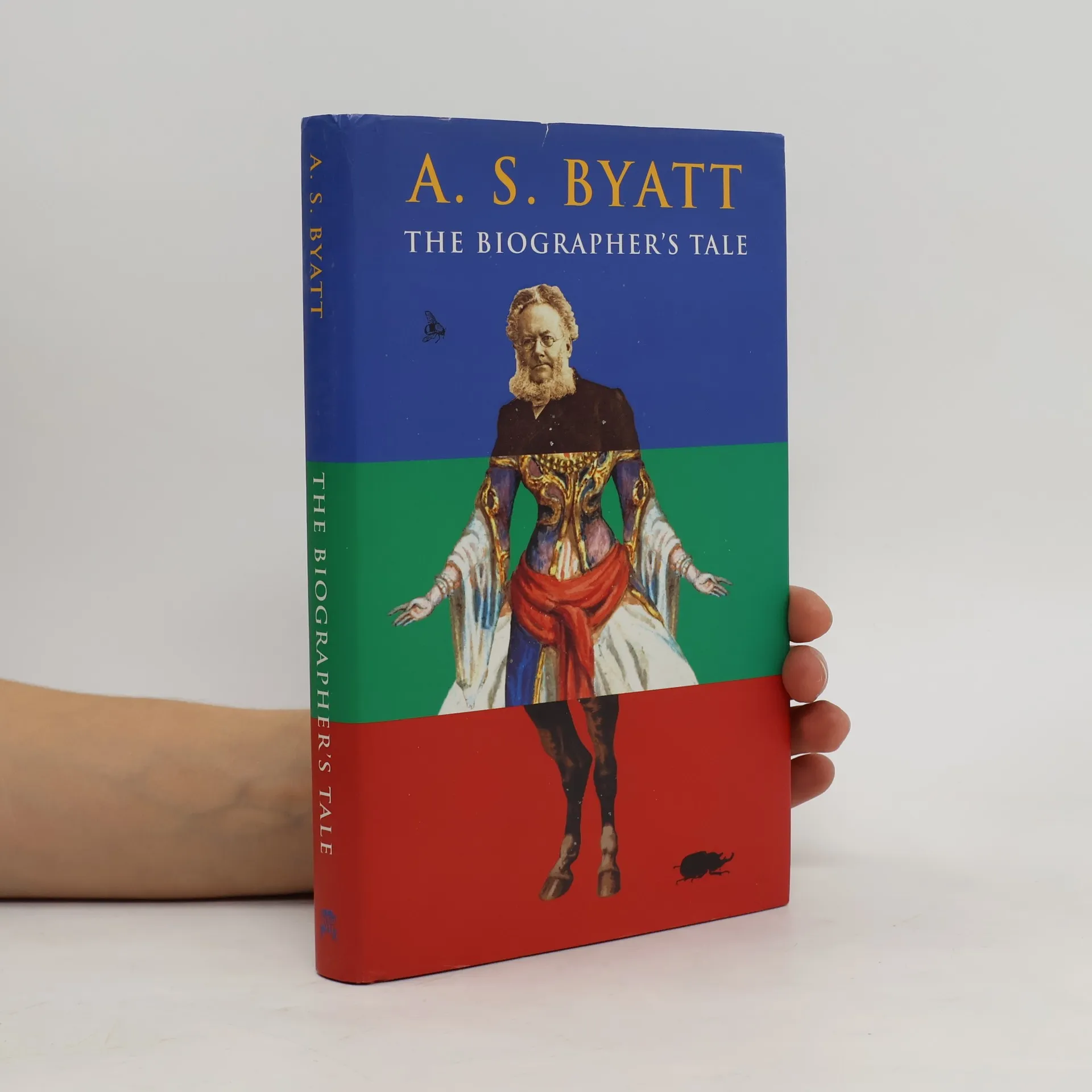
In this witty, Borges-like novel, A.S. Byatt weaves a dazzling fiction out of one man's search for fact. Fed up with stultifying criticism, Phineas G. decides to study the messiness of 'real things and facts.' Doing nothing by halves he sets out to write a biography of a great biographer. But a 'whole life' is hard to find. How do we put the idea of a person together? Everywhere he looks he finds fragments and gaps: bones and husks, boxes of marbles, collections of tools and randomly assorted photographs. Trails run cold and mysteries are unresolved. Phineas feels he is hunting shadows. Like a shaman flying across the globe, his mind tracks his subject to African deserts and Arctic maelstroms, where the shapes of myth meet the patterns of science. He meets others building wholes from bits and pieces: taxonomists, ecologists, even travel agents offering 'the trip of your dreams'. In the process he also puzzles out his own future - but what will guide him out of the labyrinth? Tantalizing, comic and rueful, The Biographer's Tale is a modern delight.
Bien qu'inclus dans la Septante, il n'est retenu dans le canon juif qu'au ier siècle de l’ère chrétienne. La Mishna évoque de vives discussions au sujet de son intégration dans ce canon. Il a pu y trouver sa place à la suite de l'interprétation allégorique de rabbi Akiba, qui voit dans le Cantique des cantiques une déclaration symbolique de l'amour entre Dieu (YHWH) et son peuple, Israël. Il est récité lors de Pessah, la Pâque juive. La tradition juive le classe parmi les cinq meguilloth, qui sont des rouleaux attachés à des fêtes liturgiques. Le nom de Dieu n'y apparaît pas, si ce n'est sous une forme abrégée, Flamme de Yah (Ct 8.6), Yah étant un diminutif de YHWH. Il fait partie des Ketouvim (autres écrits) dans le Tanakh — la Bible hébraïque — et des Livres poétiques dans l'Ancien Testament — la première partie de la Bible chrétienne. On considère qu'il fait partie de la littérature sapientiale (de sagesse), sans doute l'une des raisons qui font qu'on a voulu le relier au roi Salomon. Cependant, malgré la présence de certains archaïsmes dans le texte, la langue et le style sont assez tardifs et font penser à l'époque perse ou même hellénistique (IIIe s. av. J.C.). Comme pour tout livre vétéro-testamentaire, la rédaction du Cantique des Cantiques a probablement une très longue histoire.