

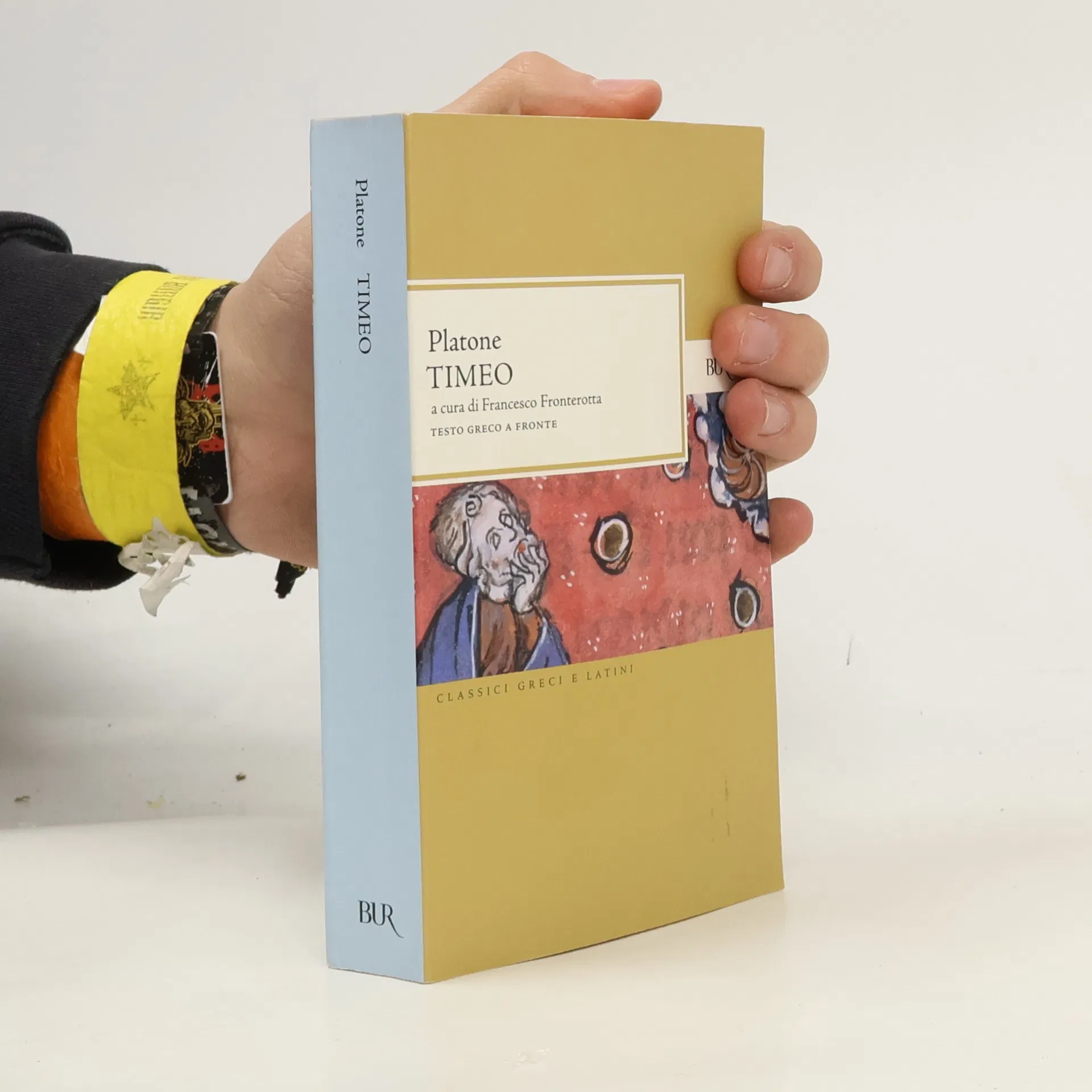
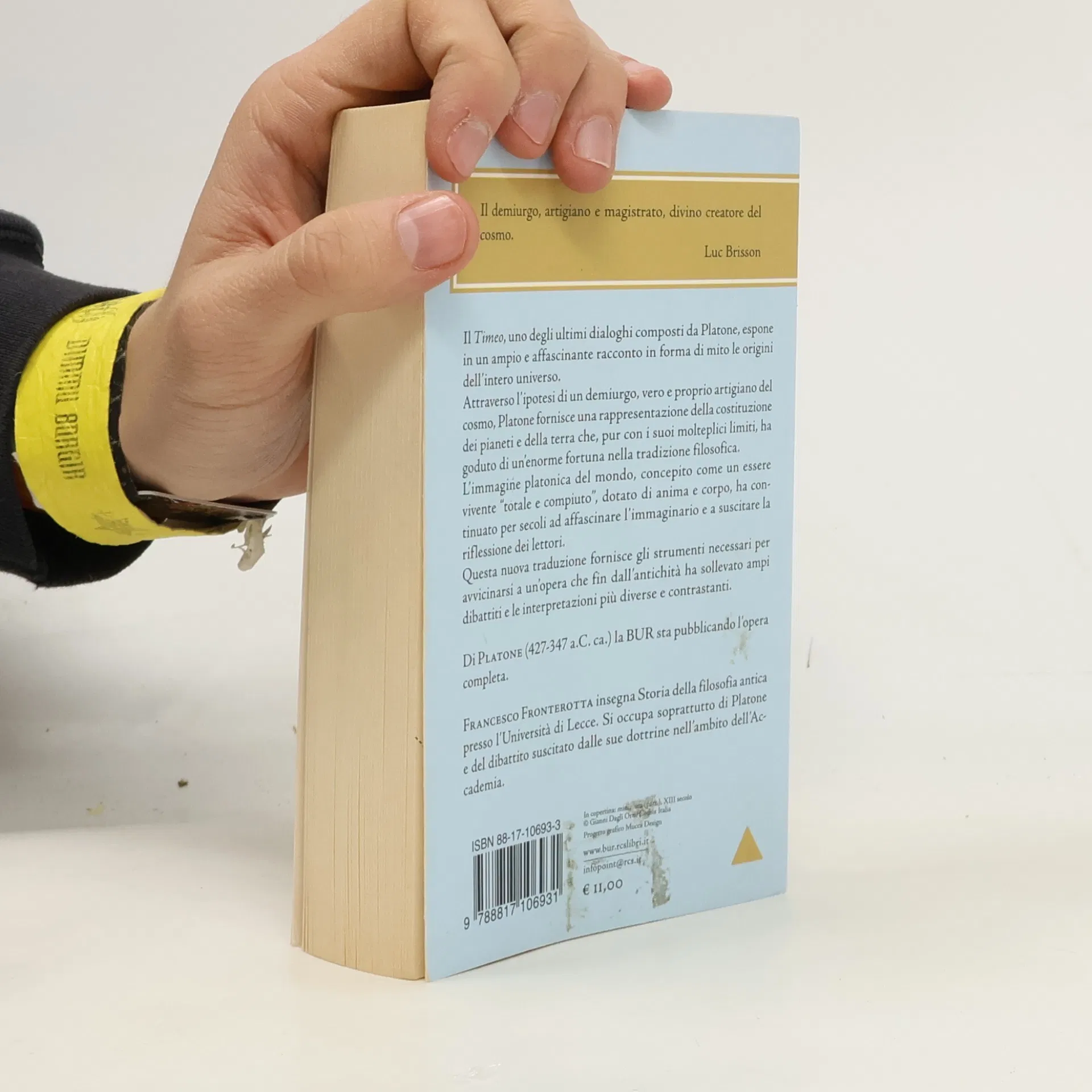
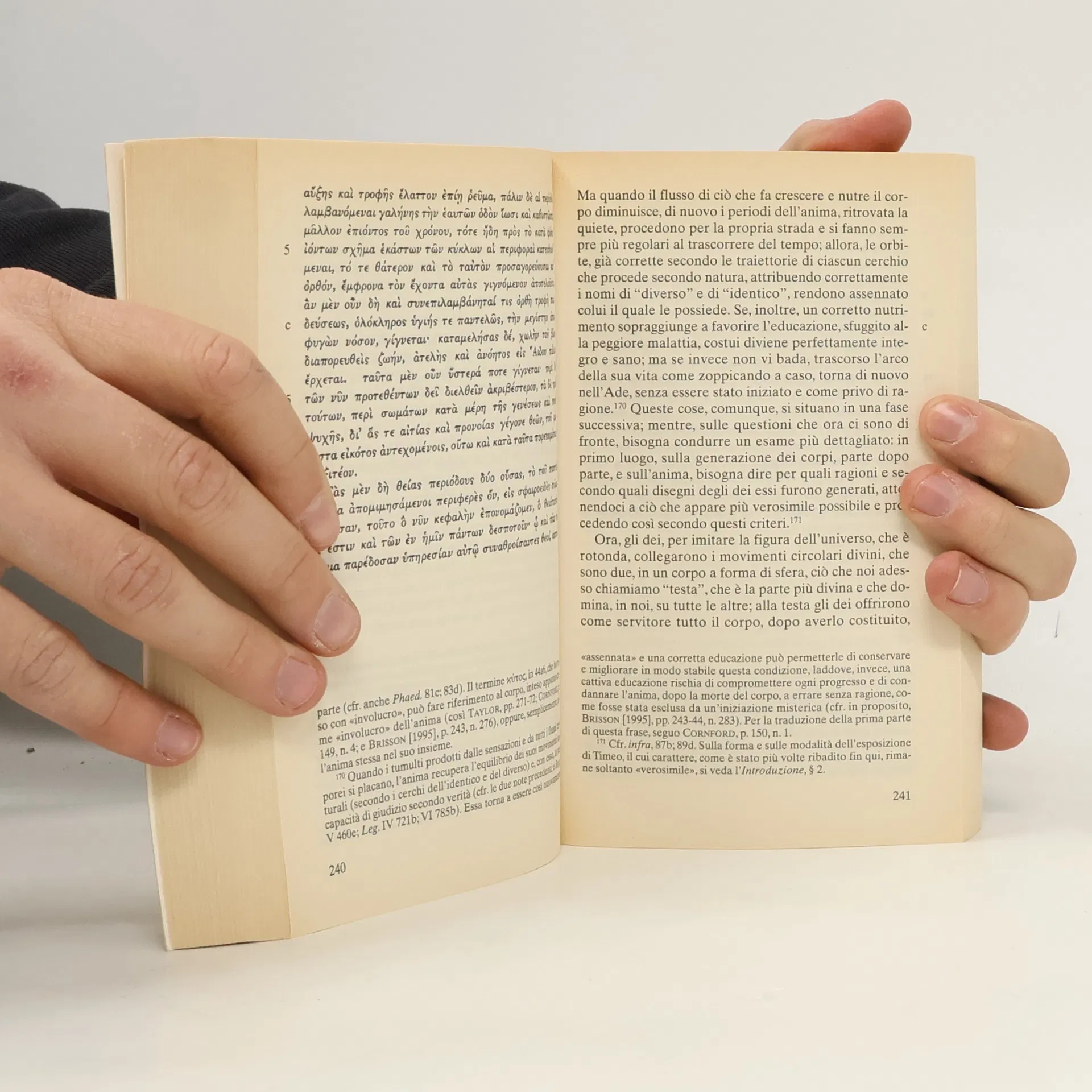
Classici Greci e Latini - 1462: Timeo. Testo greco a fronte
Viac o knihe
This text is extracted from Cornford's longer Plato's Cosmology. Timaeus (c. 360 BCE) is one of Plato's dialogs, mostly in the form of a long monologue given by the title character. The work puts forward speculation on the nature of the physical world & human beings. It's followed by the dialog Critias. Speakers are Socrates, Timaeus of Locri, Hermocrates & Critias. Some believe that it isn't the Critias of the Thirty Tyrants who appears, but his grandfather of the same name. The dialog takes place the day after Socrates described his ideal state. In Plato's works such a discussion occurs in the Republic. Socrates feels that his description of the ideal state wasn't sufficient for the purposes of entertainment & that "I'd be glad to hear some account of it engaging in transactions with other states" (19b). Hermocrates wishes to oblige & mentions that Critias knows just the account (20b) to do so. Critias proceeds to tell the story of Solon's journey to Egypt where he hears the story of Atlantis & how Athens used to be an ideal state that subsequently waged war against Atlantis (25a). Critias believes he's getting ahead of himself, & mentions that Timaeus will tell part of the account from the origin of the cosmos to man. The history of Atlantis is postponed to Critias. The main content of the dialog, Timaeus' exposition, follows.
Nákup knihy
Classici Greci e Latini - 1462: Timeo. Testo greco a fronte, Francesco Fronterotta, Plato
- Jazyk

- Rok vydania
- 2003
- Väzba
- (mäkká),
- Stav knihy
- Dobrá
- Cena
- 11,99 €
Doručenie
Platobné metódy
Nikto zatiaľ neohodnotil.
- Titul
- Classici Greci e Latini - 1462: Timeo. Testo greco a fronte
- Jazyk
- taliansky
- Autori
- Francesco Fronterotta, Plato
- Vydavateľ
- BUR
- Rok vydania
- 2003
- Väzba
- mäkká
- Počet strán
- 429
- ISBN10
- 8817106933
- ISBN13
- 9788817106931
- Série
- Kategórie
- Štítky
- Veda, Starovek, antika, Gréčtina
- Anotácia
- This text is extracted from Cornford's longer Plato's Cosmology. Timaeus (c. 360 BCE) is one of Plato's dialogs, mostly in the form of a long monologue given by the title character. The work puts forward speculation on the nature of the physical world & human beings. It's followed by the dialog Critias. Speakers are Socrates, Timaeus of Locri, Hermocrates & Critias. Some believe that it isn't the Critias of the Thirty Tyrants who appears, but his grandfather of the same name. The dialog takes place the day after Socrates described his ideal state. In Plato's works such a discussion occurs in the Republic. Socrates feels that his description of the ideal state wasn't sufficient for the purposes of entertainment & that "I'd be glad to hear some account of it engaging in transactions with other states" (19b). Hermocrates wishes to oblige & mentions that Critias knows just the account (20b) to do so. Critias proceeds to tell the story of Solon's journey to Egypt where he hears the story of Atlantis & how Athens used to be an ideal state that subsequently waged war against Atlantis (25a). Critias believes he's getting ahead of himself, & mentions that Timaeus will tell part of the account from the origin of the cosmos to man. The history of Atlantis is postponed to Critias. The main content of the dialog, Timaeus' exposition, follows.