

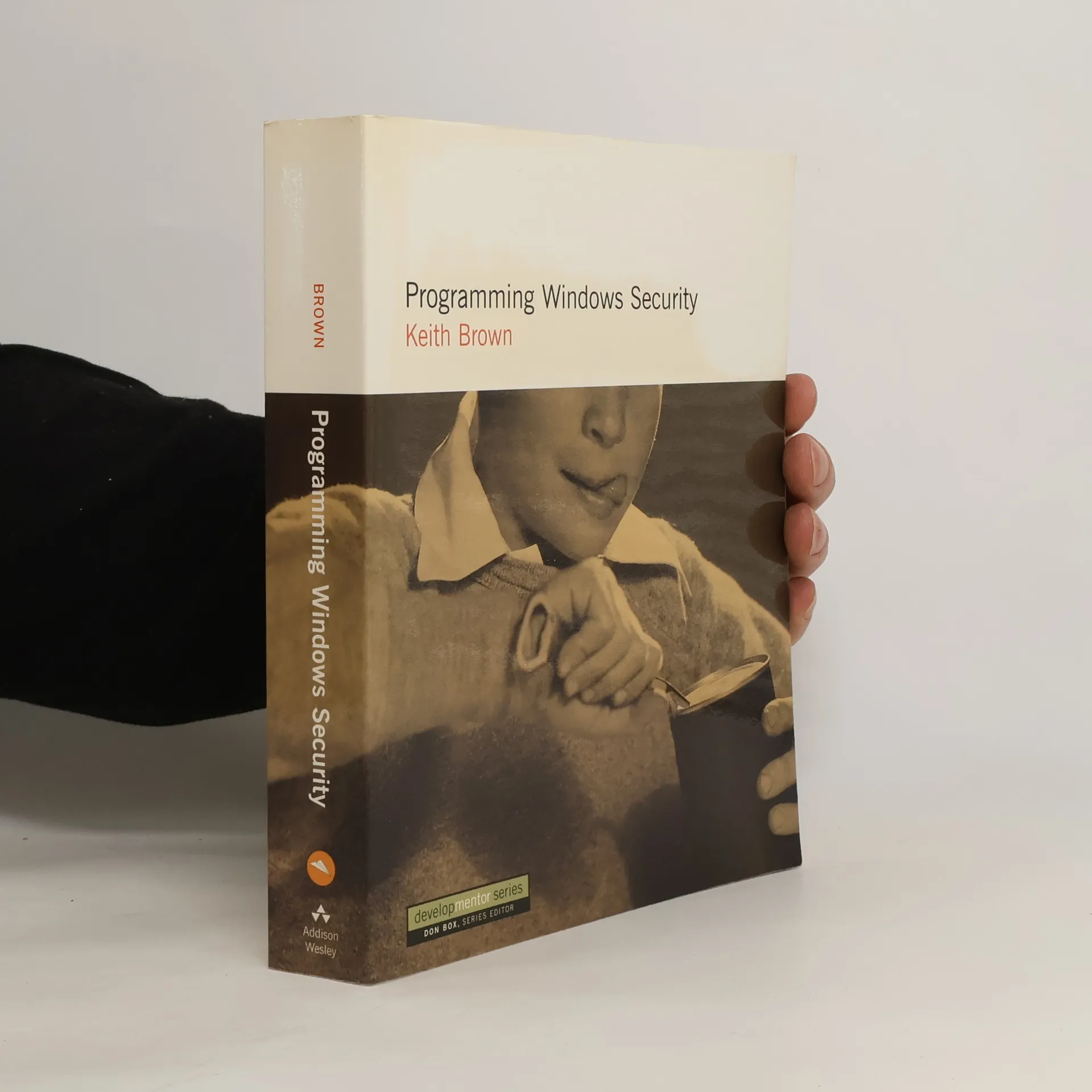
Viac o knihe
Windows 2000 and NT offer programmers powerful security tools that few developers use to the fullest -- and many are completely unaware of. In Programming Windows Security, a top Windows security expert shows exactly how to apply them in enterprise applications. Keith Brown starts with a complete roadmap to the Windows 2000 security architecture, describing every component and how they all fit together. He reviews the "actors" in a secure system, including principals, authorities, authentication, domains, and the local security authority; and the role of trust in secure Windows 2000 applications. Developers will understand the security implications of the broader Windows 2000 environment, including logon sessions, tokens, and window stations. Next, Brown introduces Windows 2000 authorization and access control, including groups, aliases, roles, privileges, security descriptors, DACLs and SACLs - showing how to choose the best access strategy for any application. In Part II, he walks developers through using each of Windows 2000's security tools, presenting techniques for building more secure setup programs, using privileges at runtime, working with window stations and user profiles, and using Windows 2000's dramatically changed ACLs. Finally, Brown provides techniques and sample code for network authentication, working with the file system redirector, using RPC security, and making the most of COM/COM+ security.
Nákup knihy
Programming Windows security, Keith Brown
- Jazyk

- Rok vydania
- 2000
- Väzba
- (mäkká)
Tu nám chýba tvoja recenzia
- Titul
- Programming Windows security
- Jazyk
- anglicky
- Autori
- Keith Brown
- Vydavateľ
- Addison-Wesley
- Rok vydania
- 2000
- Väzba
- mäkká
- Počet strán
- 608
- ISBN10
- 0201604426
- ISBN13
- 9780201604429
- Série
- Štítky
- Technológia
- Hodnotenie
- 4,15 z 5
- Anotácia
- Windows 2000 and NT offer programmers powerful security tools that few developers use to the fullest -- and many are completely unaware of. In Programming Windows Security, a top Windows security expert shows exactly how to apply them in enterprise applications. Keith Brown starts with a complete roadmap to the Windows 2000 security architecture, describing every component and how they all fit together. He reviews the "actors" in a secure system, including principals, authorities, authentication, domains, and the local security authority; and the role of trust in secure Windows 2000 applications. Developers will understand the security implications of the broader Windows 2000 environment, including logon sessions, tokens, and window stations. Next, Brown introduces Windows 2000 authorization and access control, including groups, aliases, roles, privileges, security descriptors, DACLs and SACLs - showing how to choose the best access strategy for any application. In Part II, he walks developers through using each of Windows 2000's security tools, presenting techniques for building more secure setup programs, using privileges at runtime, working with window stations and user profiles, and using Windows 2000's dramatically changed ACLs. Finally, Brown provides techniques and sample code for network authentication, working with the file system redirector, using RPC security, and making the most of COM/COM+ security.