

Parametre
- 438 stránok
- 16 hodin čítania
Viac o knihe
An amalgamation of two books published in 1841 and 1844, the 21 pieces known as "Essays: First and Second Series" describe Emerson's concepts of self-reliance, the law of compensation (a sort of yin-yang polarity in morality), and the transcendental Over-Soul, an ideal Emerson first enunciated (without naming it as such) in his infamous Divinity School Address, for which he was accused of atheism. "The world is not the product of manifold power, but of one will, of one mind; and that one mind is everywhere active," he said to Harvard's startled divinity students and teachers. "All things proceed out of the same spirit." In these essays, he expands upon this notion of the individual Self as part of a universal All, of the human soul bound by a physical body yet tethered to an omniscient spirit.



Nákup knihy
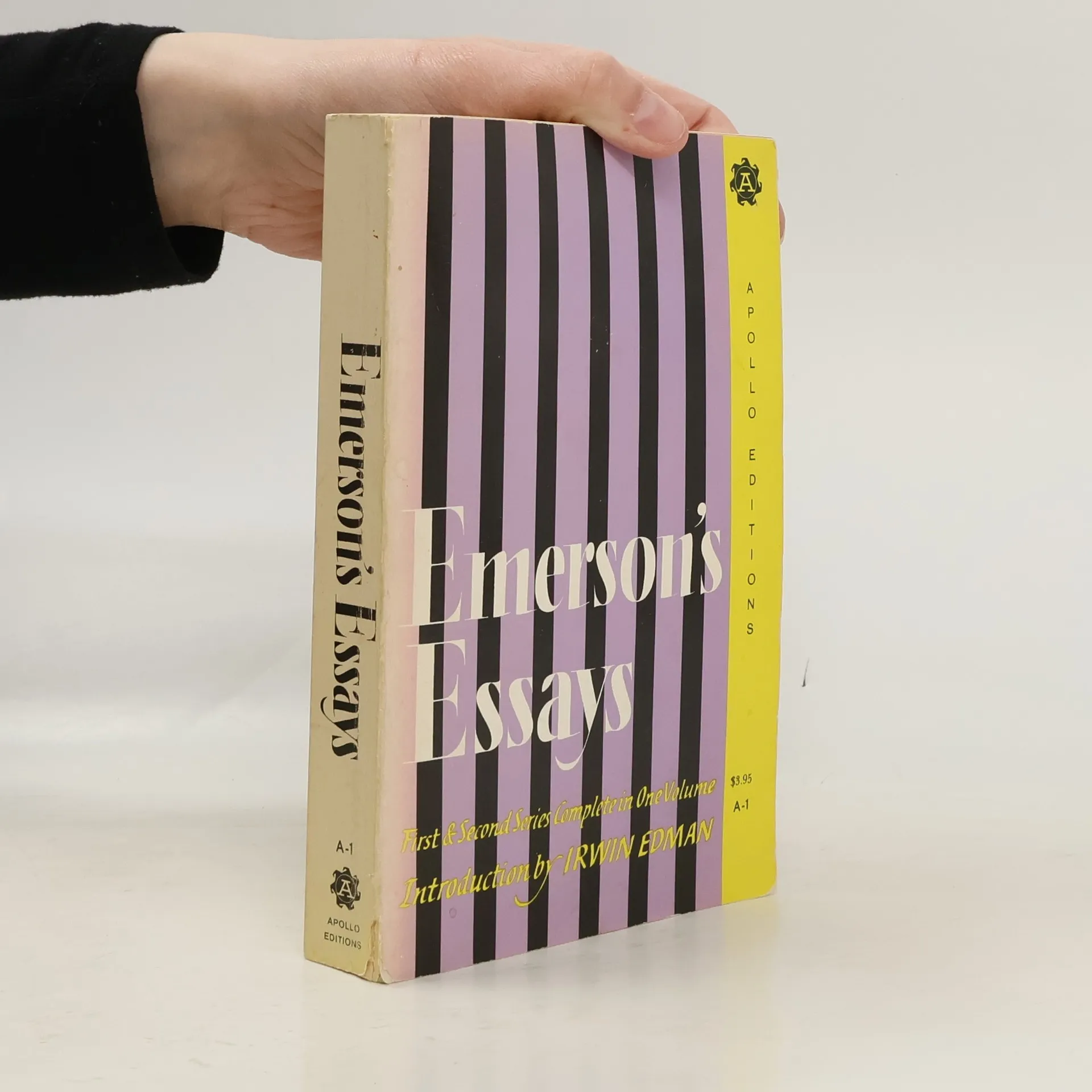
Essays, Ralph Waldo Emerson
- Jazyk

- Rok vydania
- 1981
- Väzba
- (mäkká)
Doručenie
Platobné metódy
Tu nám chýba tvoja recenzia
- Titul
- Essays
- Jazyk
- anglicky
- Autori
- Ralph Waldo Emerson
- Vydavateľ
- Thomas Y. Crowell
- Rok vydania
- 1981
- Väzba
- mäkká
- Počet strán
- 438
- ISBN10
- 0815200013
- ISBN13
- 9780815200017
- Série
- Pôvodný názov
- Essays
- Hodnotenie
- 3,85 z 5
- Anotácia
- An amalgamation of two books published in 1841 and 1844, the 21 pieces known as "Essays: First and Second Series" describe Emerson's concepts of self-reliance, the law of compensation (a sort of yin-yang polarity in morality), and the transcendental Over-Soul, an ideal Emerson first enunciated (without naming it as such) in his infamous Divinity School Address, for which he was accused of atheism. "The world is not the product of manifold power, but of one will, of one mind; and that one mind is everywhere active," he said to Harvard's startled divinity students and teachers. "All things proceed out of the same spirit." In these essays, he expands upon this notion of the individual Self as part of a universal All, of the human soul bound by a physical body yet tethered to an omniscient spirit.