

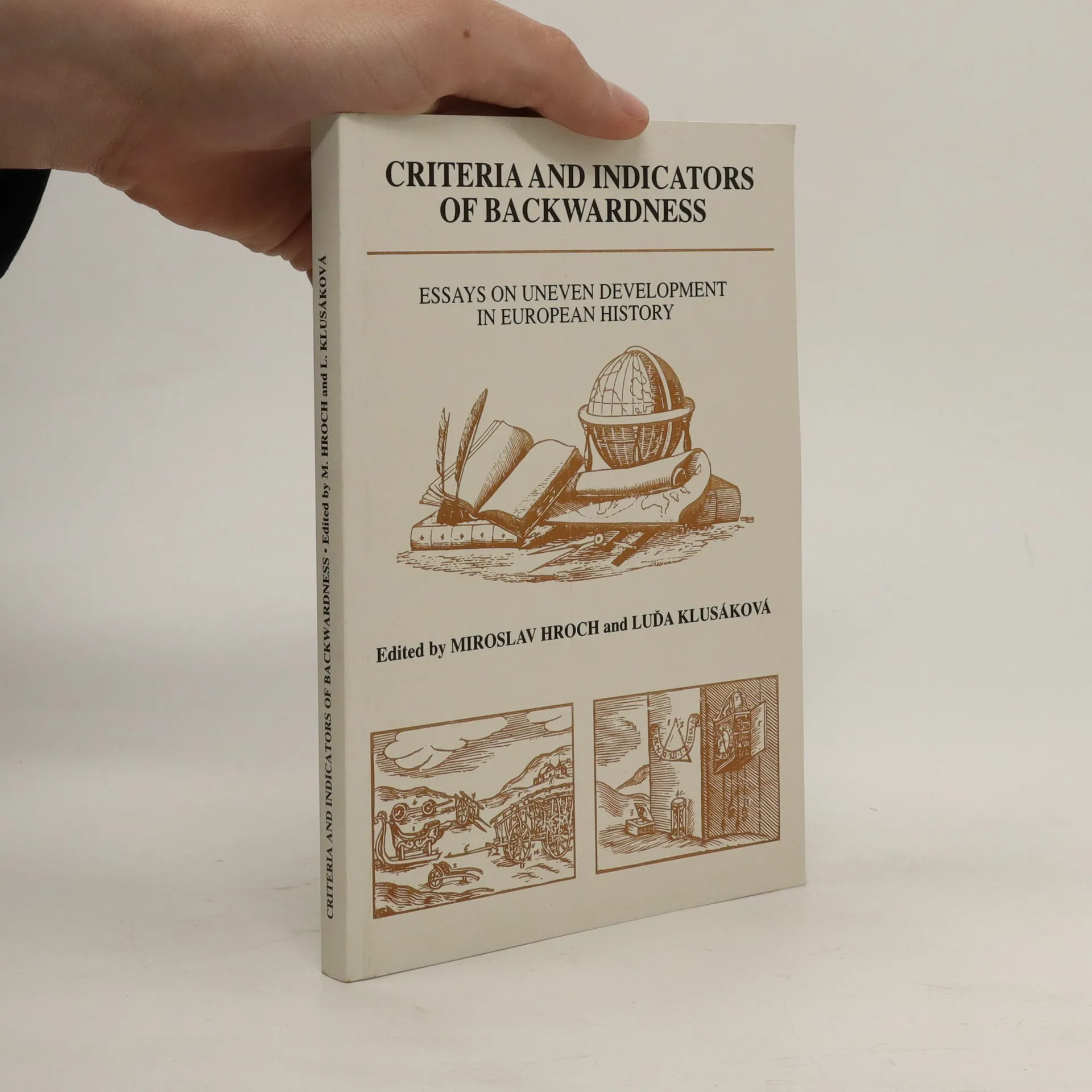



Criteria and indicators of backwardness : essays on uneven development in European history
Viac o knihe
The two main themes of this selection of articles by Professor Hroch are the process of nation formation during the 19th century, especially in the case of 'smaller' European nations, i.e. those without statehood, and the social and political aspects of the transition from a pre-modern, feudal and traditional society to a modern capitalist one and the uneven pace of this change in the West and East of Europe. The author argues that we cannot study the process of nation-formation as a mere product of some nebulous 'nationalism'; we have to understand it as a part of social and cultural transformation, as a component of modernization of European societies, even though this modernization did not occur synchronically and had its regional specificities. Many of the papers focus specifically on the Czech case, but throughout there is an emphasis on comparative history.
Nákup knihy
Criteria and indicators of backwardness : essays on uneven development in European history, Miroslav Hroch, Luďa Klusáková
- Jazyk

- Rok vydania
- 1996
- Väzba
- (mäkká)
Doručenie
Platobné metódy
Nikto zatiaľ neohodnotil.
- Titul
- Criteria and indicators of backwardness : essays on uneven development in European history
- Jazyk
- anglicky
- Autori
- Miroslav Hroch, Luďa Klusáková
- Vydavateľ
- Variant
- Rok vydania
- 1996
- Väzba
- mäkká
- Počet strán
- 200
- ISBN10
- 8090096913
- ISBN13
- 9788090096912
- Série
- Štítky
- Historické téma
- Anotácia
- The two main themes of this selection of articles by Professor Hroch are the process of nation formation during the 19th century, especially in the case of 'smaller' European nations, i.e. those without statehood, and the social and political aspects of the transition from a pre-modern, feudal and traditional society to a modern capitalist one and the uneven pace of this change in the West and East of Europe. The author argues that we cannot study the process of nation-formation as a mere product of some nebulous 'nationalism'; we have to understand it as a part of social and cultural transformation, as a component of modernization of European societies, even though this modernization did not occur synchronically and had its regional specificities. Many of the papers focus specifically on the Czech case, but throughout there is an emphasis on comparative history.