


Viac o knihe
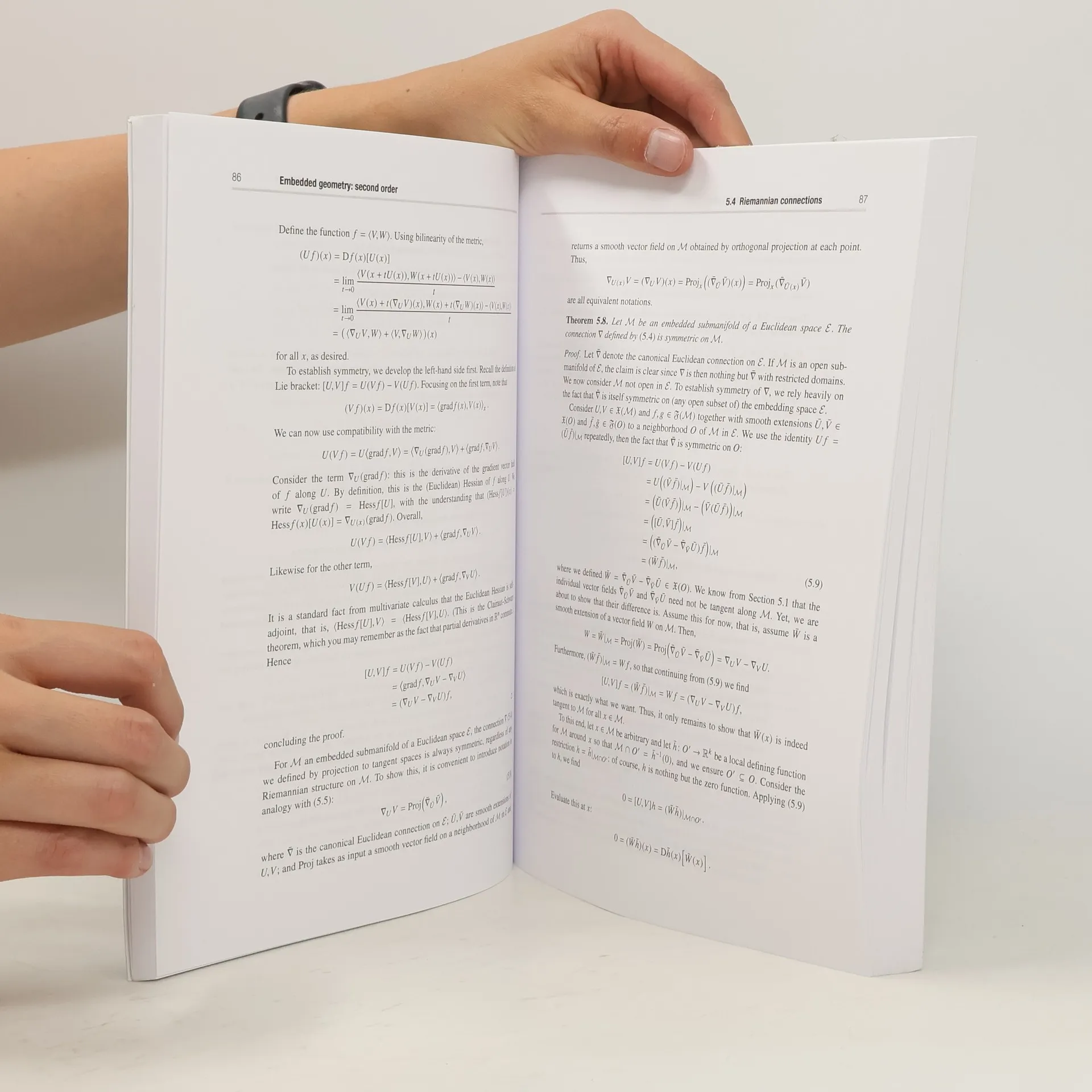
Optimization on Riemannian manifolds-the result of smooth geometry and optimization merging into one elegant modern framework-spans many areas of science and engineering, including machine learning, computer vision, signal processing, dynamical systems and scientific computing. This text introduces the differential geometry and Riemannian geometry concepts that will help students and researchers in applied mathematics, computer science and engineering gain a firm mathematical grounding to use these tools confidently in their research. Its charts-last approach will prove more intuitive from an optimizer's viewpoint, and all definitions and theorems are motivated to build time-tested optimization algorithms. Starting from first principles, the text goes on to cover current research on topics including worst-case complexity and geodesic convexity. Readers will appreciate the tricks of the trade for conducting research and for numerical implementations sprinkled throughout the book.
Nákup knihy
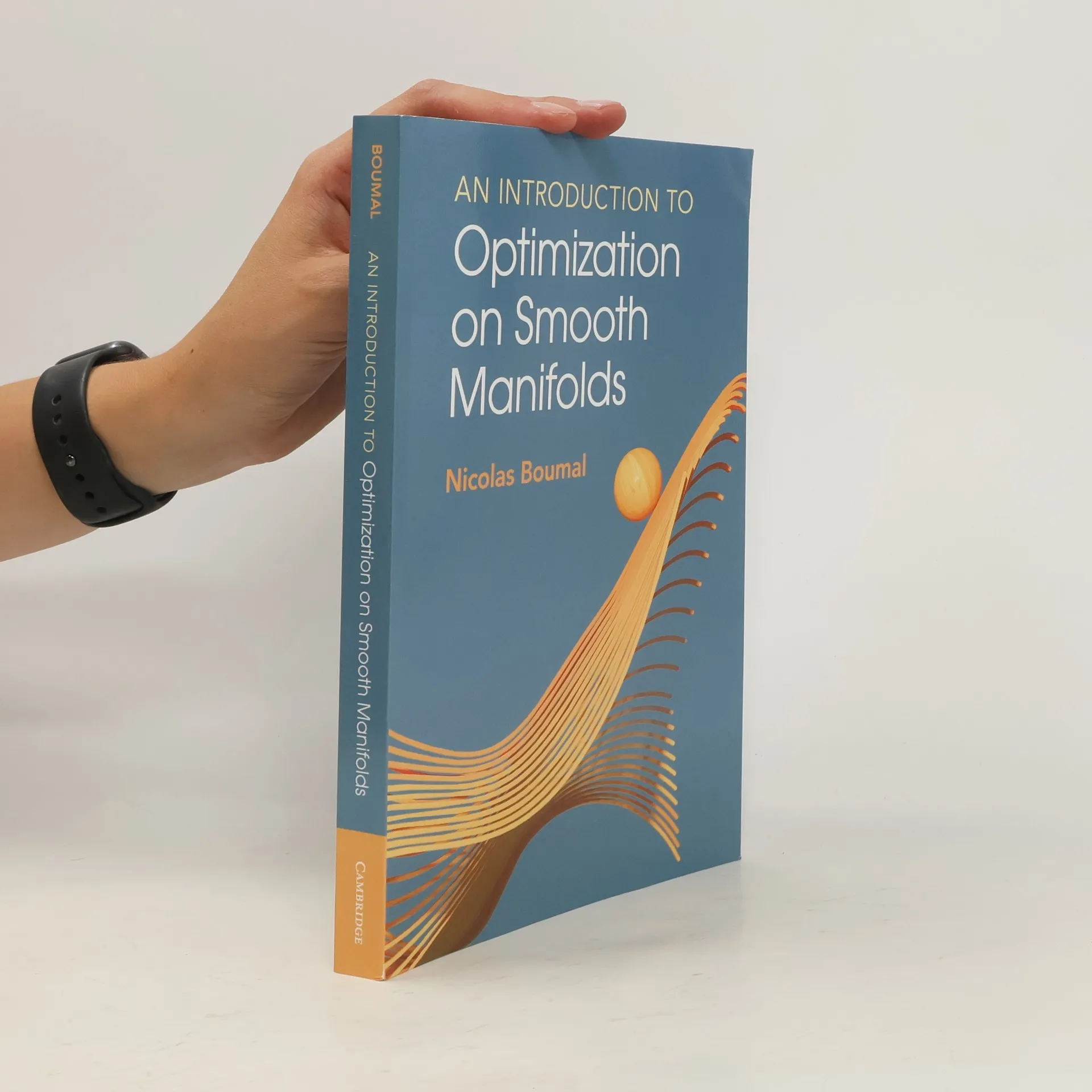
Introduction to Optimization on Smooth Manifolds, Nicolas Boumal
- Jazyk

- Rok vydania
- 2023
- Väzba
- (mäkká)
Nikto zatiaľ neohodnotil.
- Titul
- Introduction to Optimization on Smooth Manifolds
- Jazyk
- anglicky
- Autori
- Nicolas Boumal
- Vydavateľ
- Cambridge University Press
- Rok vydania
- 2023
- Väzba
- mäkká
- Počet strán
- 358
- ISBN10
- 1009166158
- ISBN13
- 9781009166157
- Série
- Kategórie
- Štítky
- Prírodné vedy, Veda, Výskum
- Anotácia
- Optimization on Riemannian manifolds-the result of smooth geometry and optimization merging into one elegant modern framework-spans many areas of science and engineering, including machine learning, computer vision, signal processing, dynamical systems and scientific computing. This text introduces the differential geometry and Riemannian geometry concepts that will help students and researchers in applied mathematics, computer science and engineering gain a firm mathematical grounding to use these tools confidently in their research. Its charts-last approach will prove more intuitive from an optimizer's viewpoint, and all definitions and theorems are motivated to build time-tested optimization algorithms. Starting from first principles, the text goes on to cover current research on topics including worst-case complexity and geodesic convexity. Readers will appreciate the tricks of the trade for conducting research and for numerical implementations sprinkled throughout the book.