

Hodnotenie knihy
Viac o knihe
In over 80 books, Wilson has explored alternate realities involving crime, sex, and the occult, suggesting that our everyday consciousness is limited compared to the potential powers available to us. His synthesis of the alien/UFO phenomenon showcases both his encyclopedic knowledge and a notable weakness. In his eagerness to be inclusive, he covers the history of UFOs from mythology to modern accounts, alongside topics like Uri Geller, LSD research, crop circles, ley lines, the Loch Ness monster, remote viewing, Jung, hypnotism, poltergeists, Ouspensky, out-of-body experiences, and quantum physics. Much of the content consists of unfootnoted second- and third-hand accounts of UFOs and related phenomena, leading to an unfocused collection of anecdotes with little deeper analysis. He frequently poses the question, "What, then, are we to make of it all?" At times, he suggests that the absurdity of certain claims might actually lend them credibility, as a fabricator would likely make a story more believable. By the time readers reach the chapter titled "Oh no, not again!" the phrase carries an unintended weight. Ultimately, he seems to view aliens as agents of consciousness transformation, yet he offers scant evidence or clarity to support this idea.


Nákup knihy
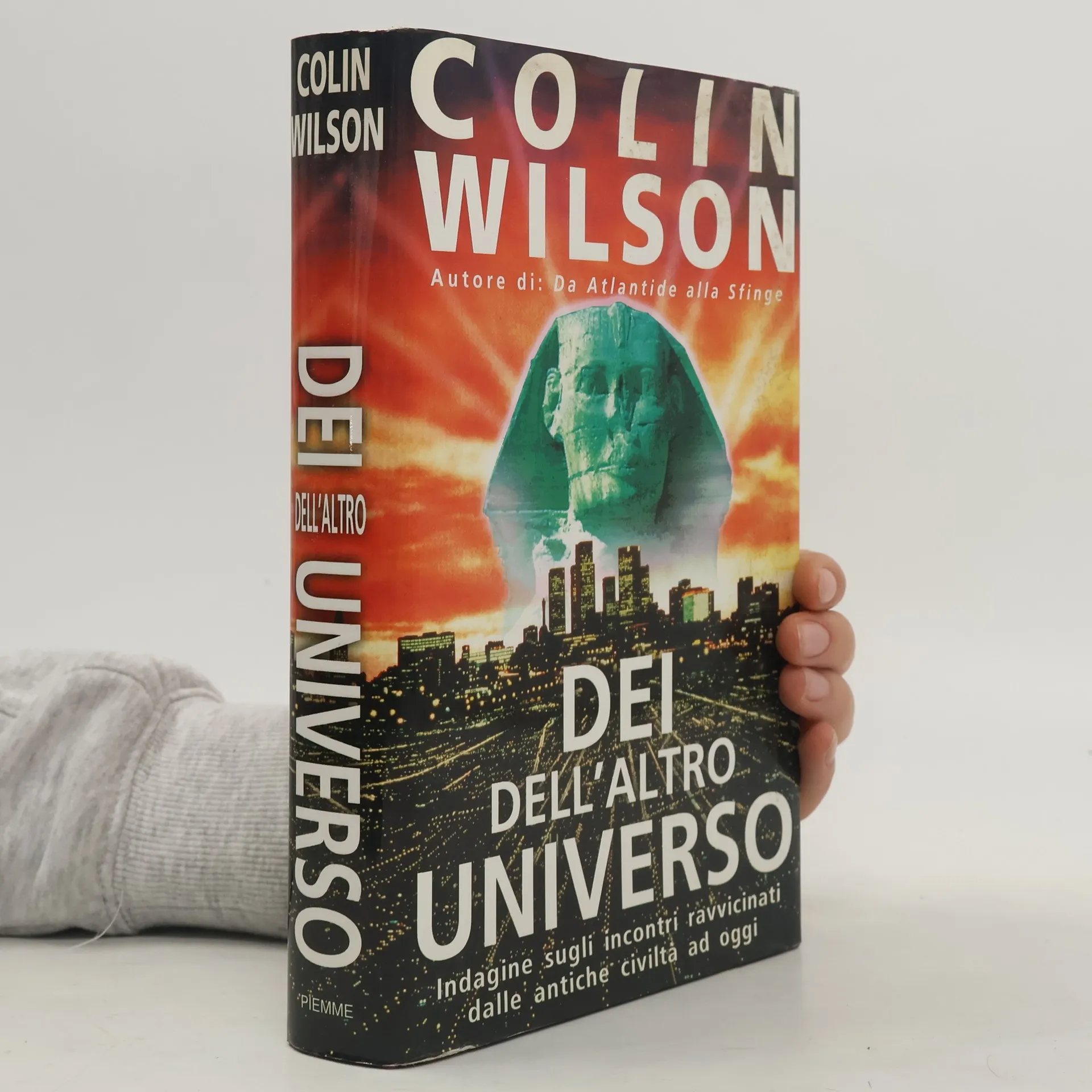
Dei dell'altro universo, Colin Wilson
- Jazyk

- Rok vydania
- 1999
- Väzba
- (pevná)
Doručenie
Platobné metódy
Tu nám chýba tvoja recenzia
- Titul
- Dei dell'altro universo
- Podtitul
- Indagine sugli incontri ravvicinati dalle antiche civiltà ad oggi
- Jazyk
- taliansky
- Autori
- Colin Wilson
- Vydavateľ
- Piemme
- Rok vydania
- 1999
- Väzba
- pevná
- Počet strán
- 420
- ISBN10
- 8838443254
- ISBN13
- 9788838443251
- Série
- Kategórie
- Štítky
- Psychologická tematika
- Hodnotenie
- 3,4 z 5
- Anotácia
- In over 80 books, Wilson has explored alternate realities involving crime, sex, and the occult, suggesting that our everyday consciousness is limited compared to the potential powers available to us. His synthesis of the alien/UFO phenomenon showcases both his encyclopedic knowledge and a notable weakness. In his eagerness to be inclusive, he covers the history of UFOs from mythology to modern accounts, alongside topics like Uri Geller, LSD research, crop circles, ley lines, the Loch Ness monster, remote viewing, Jung, hypnotism, poltergeists, Ouspensky, out-of-body experiences, and quantum physics. Much of the content consists of unfootnoted second- and third-hand accounts of UFOs and related phenomena, leading to an unfocused collection of anecdotes with little deeper analysis. He frequently poses the question, "What, then, are we to make of it all?" At times, he suggests that the absurdity of certain claims might actually lend them credibility, as a fabricator would likely make a story more believable. By the time readers reach the chapter titled "Oh no, not again!" the phrase carries an unintended weight. Ultimately, he seems to view aliens as agents of consciousness transformation, yet he offers scant evidence or clarity to support this idea.