


Viac o knihe
The concept behind Docker is straightforward: it creates small virtual environments, known as containers, for applications, encompassing only their specific dependencies. The Docker engine manages these containers using the host operating system, allowing software within them to share the Linux OS and other resources, significantly reducing their footprint. This makes containerized applications easier to install, manage, and remove. Developers can package applications without the hassle of environment-specific deployment issues, while operations teams benefit from cleaner, more efficient systems. Docker is also free and open source. This resource teaches readers how to create, deploy, and manage applications in Docker containers. It begins with a clear explanation of Docker's virtualization model, contrasting it with traditional hypervisors. Developers will learn to package applications in containers and explore techniques for testing and distributing them via Docker Hub and other registries. The book covers leveraging Linux OS features for secure program execution and managing shared resources. Through well-designed examples, readers will learn to orchestrate containers and applications, from installation to removal, and discover techniques for using Docker on various systems, from personal development machines to large-scale cloud deployments.
Nákup knihy
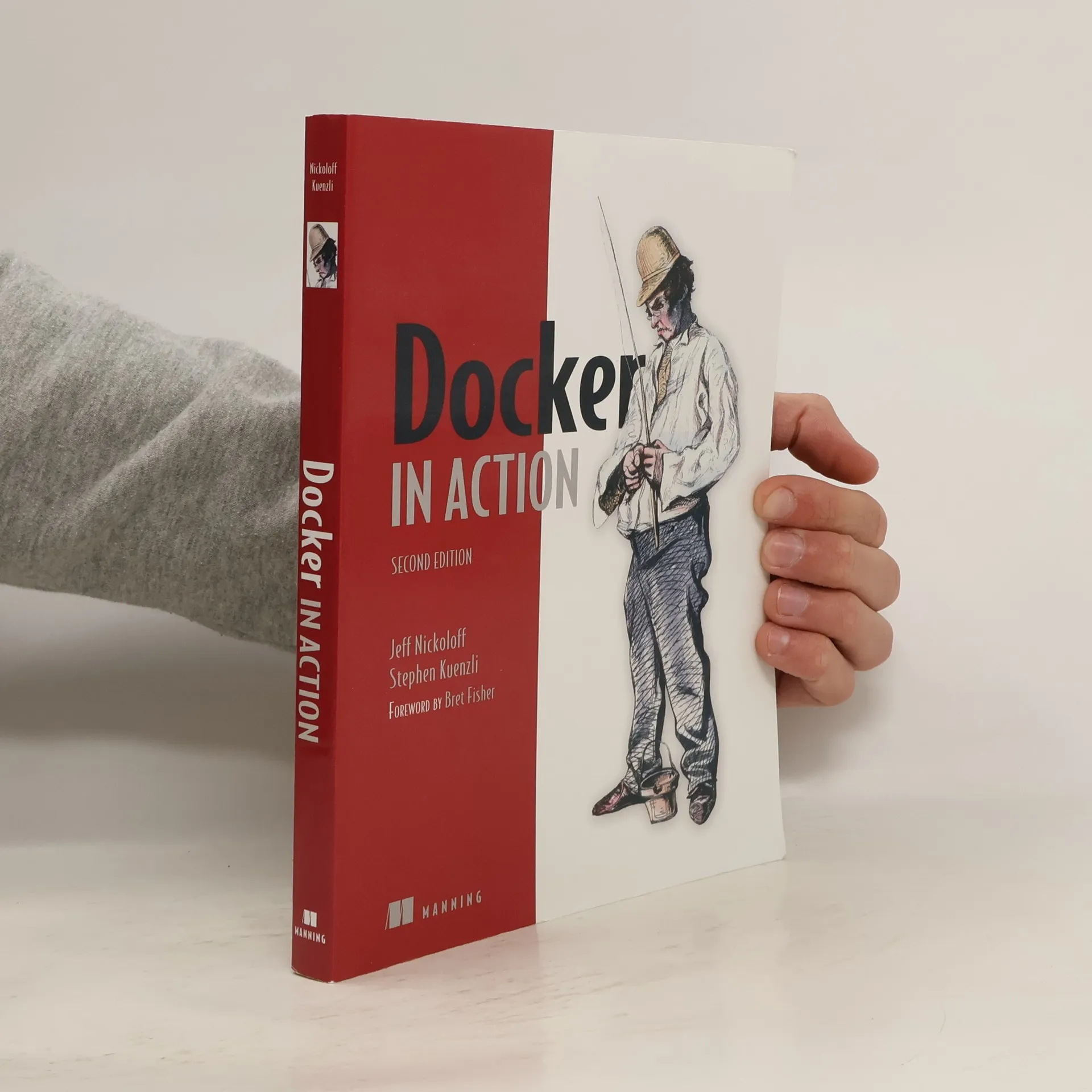
Docker in Action, Jeff Nickoloff, Stephen Kuenzli, Bret Fisher
- Jazyk

- Rok vydania
- 2019
- Väzba
- (mäkká)
Tu nám chýba tvoja recenzia
- Titul
- Docker in Action
- Podtitul
- Second Edition
- Jazyk
- anglicky
- Autori
- Jeff Nickoloff, Stephen Kuenzli, Bret Fisher
- Vydavateľ
- Manning Publications
- Rok vydania
- 2019
- Väzba
- mäkká
- Počet strán
- 350
- ISBN10
- 1617294764
- ISBN13
- 9781617294761
- Série
- Štítky
- Príručky a návody, USA, Technológia, Odborná literatúra, Internet, Softvér, Tvorba webu, Operačné systémy, Vývoj softvéru, Linux, Virtualizácia
- Hodnotenie
- 3,7 z 5
- Anotácia
- The concept behind Docker is straightforward: it creates small virtual environments, known as containers, for applications, encompassing only their specific dependencies. The Docker engine manages these containers using the host operating system, allowing software within them to share the Linux OS and other resources, significantly reducing their footprint. This makes containerized applications easier to install, manage, and remove. Developers can package applications without the hassle of environment-specific deployment issues, while operations teams benefit from cleaner, more efficient systems. Docker is also free and open source. This resource teaches readers how to create, deploy, and manage applications in Docker containers. It begins with a clear explanation of Docker's virtualization model, contrasting it with traditional hypervisors. Developers will learn to package applications in containers and explore techniques for testing and distributing them via Docker Hub and other registries. The book covers leveraging Linux OS features for secure program execution and managing shared resources. Through well-designed examples, readers will learn to orchestrate containers and applications, from installation to removal, and discover techniques for using Docker on various systems, from personal development machines to large-scale cloud deployments.