

Parametre
- 239 stránok
- 9 hodin čítania
Viac o knihe
This book explores the intricate relationship between media and politics, focusing on political communication in radio and television. It begins with an introduction to the overarching issues surrounding media's role in the political landscape. Key themes include the transformation of the intermediary system in a media society, the tension between media representation of politics and political action, and the dynamics of communication between politics and broadcasting. The book examines the development of broadcasting within a dual system and the implications of private broadcasting and media concentration. Subsequent sections delve into the portrayal of politics through television and radio, analyzing the offerings of television providers and the nature of political reporting across private and public channels. It addresses concerns about political alienation stemming from television's influence and evaluates the political information landscape in German radio, including findings from content analyses. The work also considers youth perspectives in a German-German context and the role of broadcasting in fostering integration. Finally, the book includes a bibliography and contributions from various authors, providing a comprehensive overview of the intersection of politics and media.
Nákup knihy
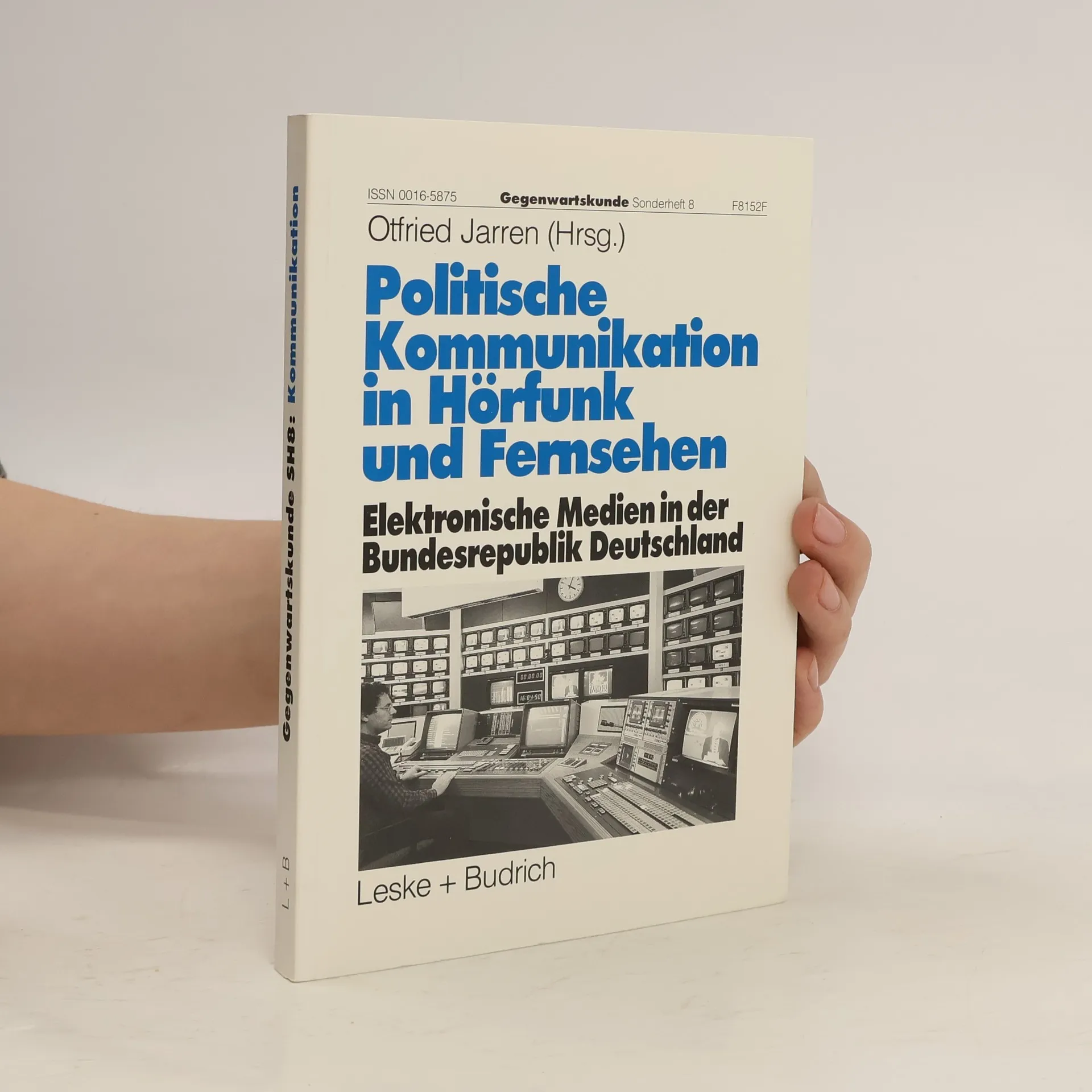
Politische Kommunikation in Hörfunk und Fernsehen, Otfried Jarren
- Jazyk

- Rok vydania
- 1994
- Väzba
- (pevná)
Nikto zatiaľ neohodnotil.
- Titul
- Politische Kommunikation in Hörfunk und Fernsehen
- Podtitul
- Elektronische Medien in der Bundesrepublik Deutschland
- Jazyk
- nemecky
- Autori
- Otfried Jarren
- Vydavateľ
- Leske und Budrich
- Rok vydania
- 1994
- Väzba
- pevná
- Počet strán
- 239
- ISBN10
- 3810011533
- ISBN13
- 9783810011534
- Série
- Kategórie
- Štítky
- Byznys, Právna tematika, Ostatné učebnice, Žurnalistika, Politické teórie, Komunikácia, Média a mediálna komunikácia, Televízia, Rozhlas
- Anotácia
- This book explores the intricate relationship between media and politics, focusing on political communication in radio and television. It begins with an introduction to the overarching issues surrounding media's role in the political landscape. Key themes include the transformation of the intermediary system in a media society, the tension between media representation of politics and political action, and the dynamics of communication between politics and broadcasting. The book examines the development of broadcasting within a dual system and the implications of private broadcasting and media concentration. Subsequent sections delve into the portrayal of politics through television and radio, analyzing the offerings of television providers and the nature of political reporting across private and public channels. It addresses concerns about political alienation stemming from television's influence and evaluates the political information landscape in German radio, including findings from content analyses. The work also considers youth perspectives in a German-German context and the role of broadcasting in fostering integration. Finally, the book includes a bibliography and contributions from various authors, providing a comprehensive overview of the intersection of politics and media.