

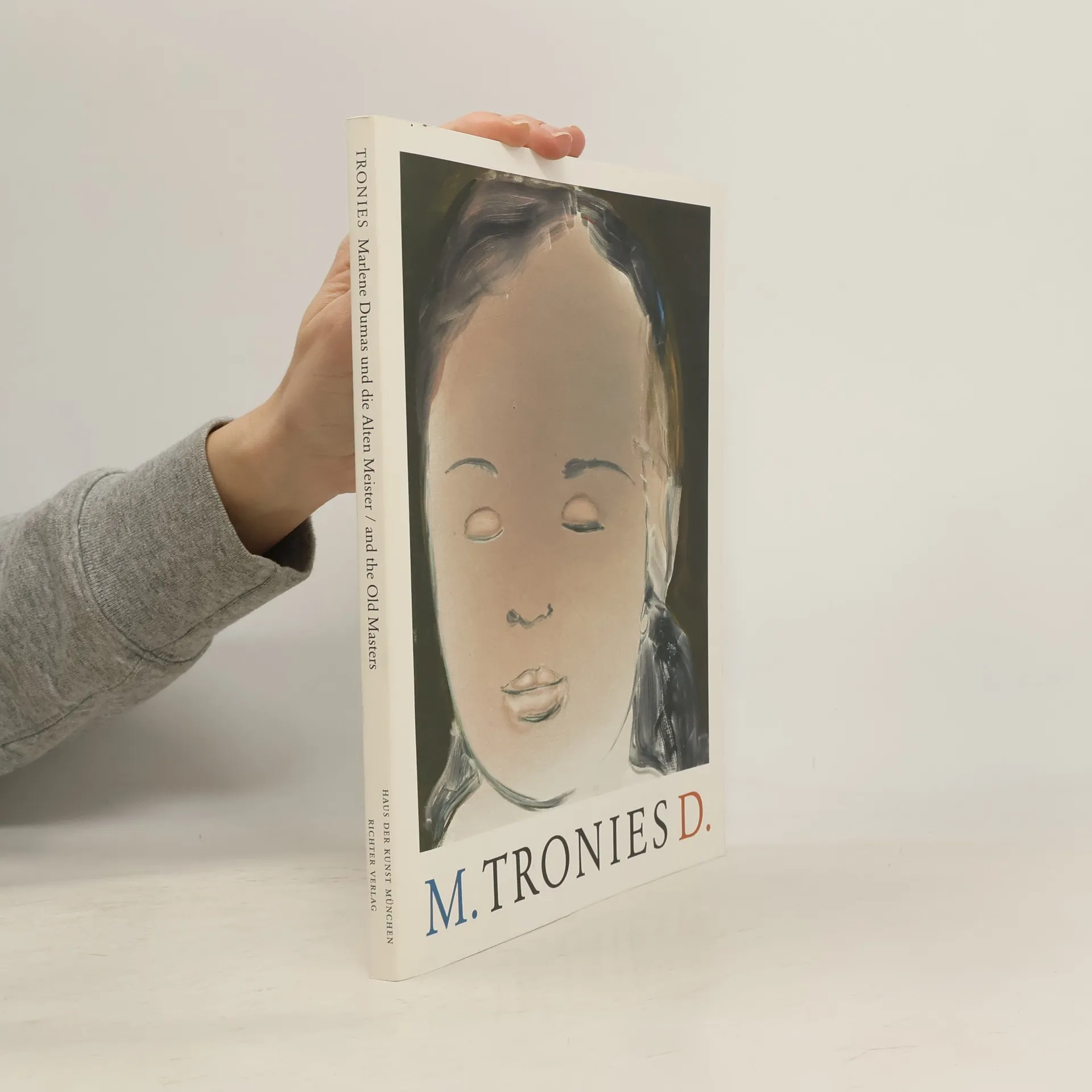
Viac o knihe
South African-born, Amsterdam-based painter Marlene Dumas (born 1953) focuses primarily on the human figure, often making explicit nods to the history of portraiture. In this monograph, she contextualizes her figurative work by placing it in a visual dialogue with paintings by sixteenth- and seventeenth-century Flemish and Dutch masters including Pieter Bruegel the Elder, Anthony van Dyck, Frans Hals, Rembrandt van Rijn, Peter Paul Rubens and Johannes Vermeer. This book concentrates on Dumas' "tronies"--that supremely Dutch genre of painting faces and heads to serve as model expositions of facial expressions and character types. These works on paper, which include the Black Drawings (1991-92) and Models (1994), explore facial structure and emotional expression in ways that resonate with and make overtures towards these earlier paintings and the continuum of art history.
Nákup knihy
Marlene Dumas, León Krempel, Chris Dercon
- Jazyk


- Rok vydania
- 2010
- Väzba
- (mäkká)
Tu nám chýba tvoja recenzia
- Titul
- Marlene Dumas
- Podtitul
- Tronies
- Jazyk
- anglicky, nemecky
- Autori
- León Krempel, Chris Dercon
- Vydavateľ
- Richter
- Rok vydania
- 2010
- Väzba
- mäkká
- Počet strán
- 96
- ISBN10
- 394126320X
- ISBN13
- 9783941263208
- Série
- Kategórie
- Hodnotenie
- 5 z 5
- Anotácia
- South African-born, Amsterdam-based painter Marlene Dumas (born 1953) focuses primarily on the human figure, often making explicit nods to the history of portraiture. In this monograph, she contextualizes her figurative work by placing it in a visual dialogue with paintings by sixteenth- and seventeenth-century Flemish and Dutch masters including Pieter Bruegel the Elder, Anthony van Dyck, Frans Hals, Rembrandt van Rijn, Peter Paul Rubens and Johannes Vermeer. This book concentrates on Dumas' "tronies"--that supremely Dutch genre of painting faces and heads to serve as model expositions of facial expressions and character types. These works on paper, which include the Black Drawings (1991-92) and Models (1994), explore facial structure and emotional expression in ways that resonate with and make overtures towards these earlier paintings and the continuum of art history.