

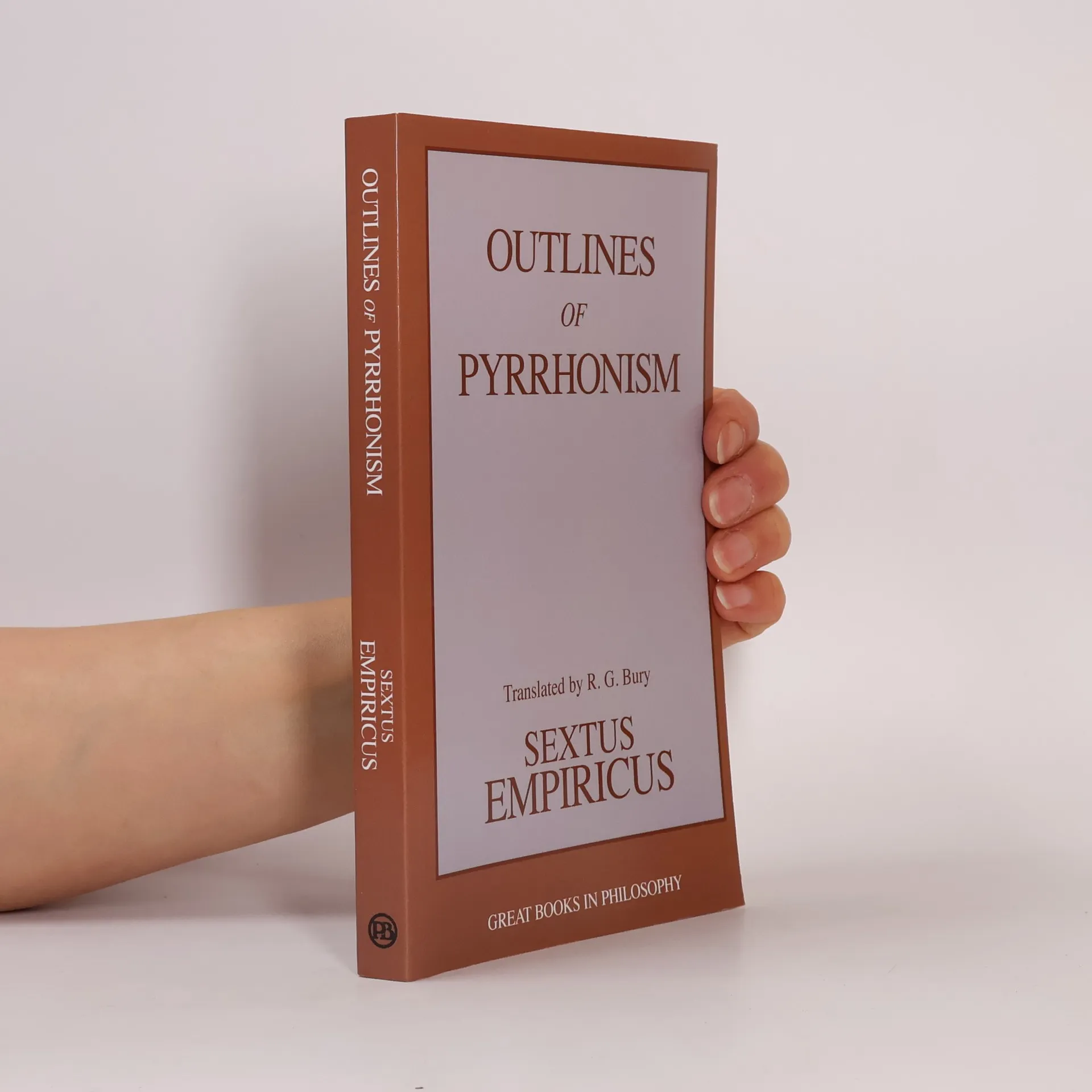


Great Books in Philosophy: Outlines of Pyrrhonism
Hodnotenie knihy
Viac o knihe
Throughout history philosophers have sought to define, understand, and delineate concepts important to human well-being. One such concept is "knowledge." Many philosophers believed that absolute, certain knowledge, is possible—that the physical world and ideas formulated about it could be given solid foundation unaffected by the varieties of mere opinion. Sextus Empiricus stands as an example of the "skeptic" school of thought whose members believed that knowledge was either unattainable or, if a genuine possibility, the conditions necessary to achieve it were next to impossible to satisfy. In other words, in the absence of complete knowledge, one must make do with the information provided by an imperfect world and conveyed to the mind through sense impressions that can often deceive us. Throughout his life Sextus Empiricus entered into intellectual combat with those who confidently claimed to possess indubitable knowledge. For skeptics, the best one can hope to achieve is a reasonable suspension of judgment—remaining ever mindful that claims to knowledge require careful scrutiny, thoughtful analysis, and critical review if we are to prevent ourselves and others from plunging headlong into mistaken notions.

Nákup knihy
Great Books in Philosophy: Outlines of Pyrrhonism, Robert Gregg Bury, Sextus Empiricus
- Jazyk

- Rok vydania
- 1990
- Väzba
- (mäkká)
Doručenie
Platobné metódy
Tu nám chýba tvoja recenzia
- Titul
- Great Books in Philosophy: Outlines of Pyrrhonism
- Jazyk
- anglicky
- Vydavateľ
- Prometheus
- Rok vydania
- 1990
- Väzba
- mäkká
- Počet strán
- 283
- ISBN10
- 0879755970
- ISBN13
- 9780879755973
- Série
- Štítky
- Prírodné vedy, Psychologická tematika, Príručky a návody, Filozofická tematika, Spiritualita, Kresťanské témy, Vojny, Škola, Teológia, Mytológia, Lingvistika, Starovek, antika, Politické teórie, Kultúra, Etika, Okultizmus, Rím, Metafyzika, Životná múdrosť, Latina, Logika, Staroveké Grécko, Existencializmus, Kozmológia, Ateizmus, Kritické myslenie, Staroveká a antická filozofia, Skepticizmus, Sokrates, Stoicizmus
- Hodnotenie
- 3,9 z 5
- Anotácia
- Throughout history philosophers have sought to define, understand, and delineate concepts important to human well-being. One such concept is "knowledge." Many philosophers believed that absolute, certain knowledge, is possible—that the physical world and ideas formulated about it could be given solid foundation unaffected by the varieties of mere opinion. Sextus Empiricus stands as an example of the "skeptic" school of thought whose members believed that knowledge was either unattainable or, if a genuine possibility, the conditions necessary to achieve it were next to impossible to satisfy. In other words, in the absence of complete knowledge, one must make do with the information provided by an imperfect world and conveyed to the mind through sense impressions that can often deceive us. Throughout his life Sextus Empiricus entered into intellectual combat with those who confidently claimed to possess indubitable knowledge. For skeptics, the best one can hope to achieve is a reasonable suspension of judgment—remaining ever mindful that claims to knowledge require careful scrutiny, thoughtful analysis, and critical review if we are to prevent ourselves and others from plunging headlong into mistaken notions.