

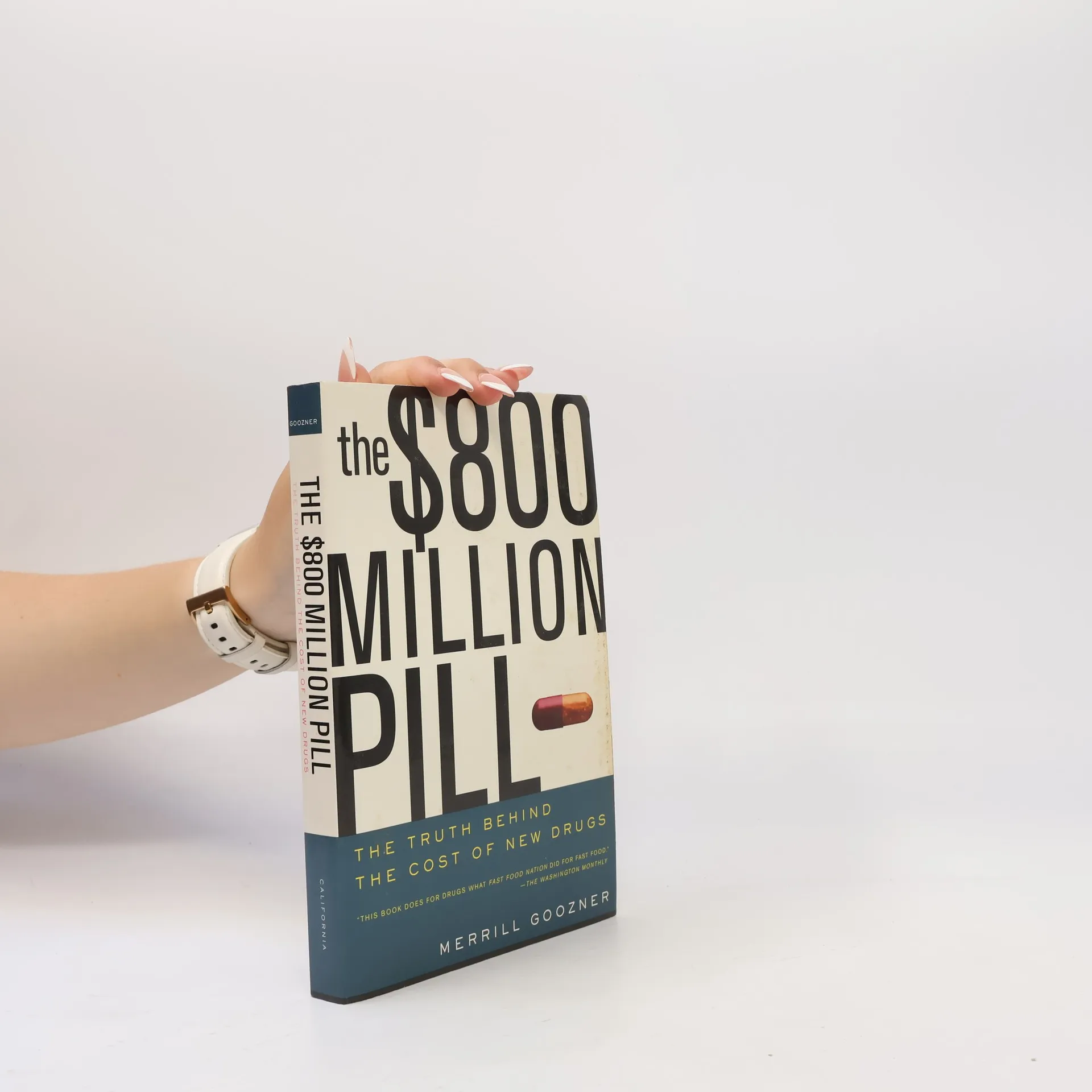
The $800 Million Pill
The Truth Behind the Cost of New Drugs
Autori
Parametre
- 304 stránok
- 11 hodin čítania
Viac o knihe
Why do life-saving prescription drugs cost so much? Drug companies argue that prices reflect their hefty investments in research and development. However, Merrill Goozner reveals that American taxpayers are actually paying twice: first through government-funded research and then through exorbitant drug prices. He highlights that nearly all significant new drugs from the past 25 years originated in taxpayer-supported universities and the National Institutes of Health, with pharmaceutical companies often stepping in to profit after the initial innovation. Goozner emphasizes that drug innovation stems from dedicated scientists seeking cures, not from profit-driven pharmaceutical firms. He shares compelling stories of a biochemist who spent decades on a blood protein that became a top-selling biotech drug, a government employee uncovering genetic disorder causes, and the research that enabled the Human Genome Project. The narrative suggests expanding the government’s role in testing new medicines to reduce the private sector waste inflating drug costs. Goozner argues that pharmaceutical companies should redirect their resources towards genuine medical innovation. This book is crucial for anyone interested in the contentious issues of drug pricing, Medicare, national health care, and the pharmaceutical industry's impact on developing countries.
Nákup knihy
The $800 Million Pill, Merrill Goozner
- Jazyk

- Rok vydania
- 2005
- Väzba
- (mäkká)
Doručenie
Platobné metódy
Nikto zatiaľ neohodnotil.
- Titul
- The $800 Million Pill
- Podtitul
- The Truth Behind the Cost of New Drugs
- Jazyk
- anglicky
- Autori
- Merrill Goozner
- Vydavateľ
- University of California Press
- Rok vydania
- 2005
- Väzba
- mäkká
- Počet strán
- 304
- ISBN10
- 0520246705
- ISBN13
- 9780520246706
- Série
- Kategórie
- Štítky
- Byznys, USA, Zdravie, Medicína, Drogy, Investovanie, Farmakológia, Lekársky výskum
- Anotácia
- Why do life-saving prescription drugs cost so much? Drug companies argue that prices reflect their hefty investments in research and development. However, Merrill Goozner reveals that American taxpayers are actually paying twice: first through government-funded research and then through exorbitant drug prices. He highlights that nearly all significant new drugs from the past 25 years originated in taxpayer-supported universities and the National Institutes of Health, with pharmaceutical companies often stepping in to profit after the initial innovation. Goozner emphasizes that drug innovation stems from dedicated scientists seeking cures, not from profit-driven pharmaceutical firms. He shares compelling stories of a biochemist who spent decades on a blood protein that became a top-selling biotech drug, a government employee uncovering genetic disorder causes, and the research that enabled the Human Genome Project. The narrative suggests expanding the government’s role in testing new medicines to reduce the private sector waste inflating drug costs. Goozner argues that pharmaceutical companies should redirect their resources towards genuine medical innovation. This book is crucial for anyone interested in the contentious issues of drug pricing, Medicare, national health care, and the pharmaceutical industry's impact on developing countries.