




Viac o knihe
In the United States, criminal justice varies significantly from state to state as local preferences influence the Modern Penal Code. Meanwhile, post-Communist countries in Eastern Europe are rapidly developing new criminal codes that reflect their national concerns, moving away from centralized Soviet policies. As these variations grow, the question arises: how do we understand the fundamental concepts of criminal law? Eminent legal scholar George Fletcher observes that criminal law is increasingly localized, with each jurisdiction defining punishable behavior in its own way. However, by stepping back from the specifics of criminal codes, Fletcher identifies an underlying unity among diverse systems of justice. He challenges common assumptions and uncovers a coherence that lies not in the surface rules but in the foundational debates shaping them. Fletcher outlines twelve key distinctions that guide the controversies present in all criminal justice systems, dedicating a chapter to each concept. This framework reveals the deep structure of criminal law, helping students grasp universal principles while appreciating local variations. This accessible exploration of the unity within diverse criminal justice systems will engage and inform students, scholars, and legal practitioners seeking a deeper understanding of the law they navigate.
Nákup knihy
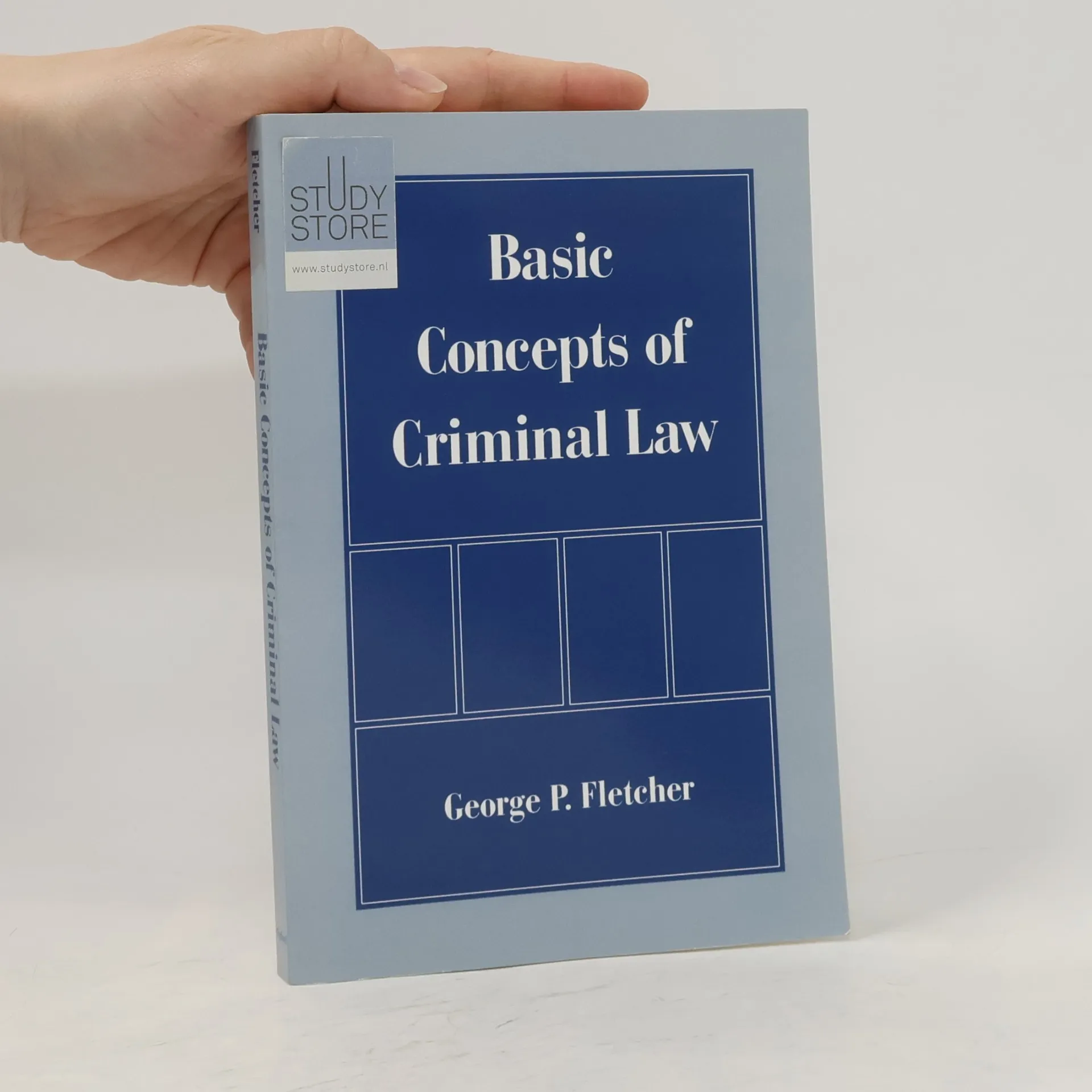
Basic Concepts of Criminal Law, George P. Fletcher
- Jazyk

- Rok vydania
- 1998
- Väzba
- (mäkká),
- Stav knihy
- Poškodená
- Cena
- 4,25 €
Nikto zatiaľ neohodnotil.
- Jazyk
- anglicky
- Autori
- George P. Fletcher
- Vydavateľ
- Oxford University Press
- Rok vydania
- 1998
- Väzba
- mäkká
- Počet strán
- 236
- ISBN10
- 0195121716
- ISBN13
- 9780195121711
- Série
- Štítky
- Náučná literatúra, Spoločenské vedy, Byznys, Biznis & Manažment, Právna tematika, Právo, USA, Trestné právo, Kriminológia
- Anotácia
- In the United States, criminal justice varies significantly from state to state as local preferences influence the Modern Penal Code. Meanwhile, post-Communist countries in Eastern Europe are rapidly developing new criminal codes that reflect their national concerns, moving away from centralized Soviet policies. As these variations grow, the question arises: how do we understand the fundamental concepts of criminal law? Eminent legal scholar George Fletcher observes that criminal law is increasingly localized, with each jurisdiction defining punishable behavior in its own way. However, by stepping back from the specifics of criminal codes, Fletcher identifies an underlying unity among diverse systems of justice. He challenges common assumptions and uncovers a coherence that lies not in the surface rules but in the foundational debates shaping them. Fletcher outlines twelve key distinctions that guide the controversies present in all criminal justice systems, dedicating a chapter to each concept. This framework reveals the deep structure of criminal law, helping students grasp universal principles while appreciating local variations. This accessible exploration of the unity within diverse criminal justice systems will engage and inform students, scholars, and legal practitioners seeking a deeper understanding of the law they navigate.