

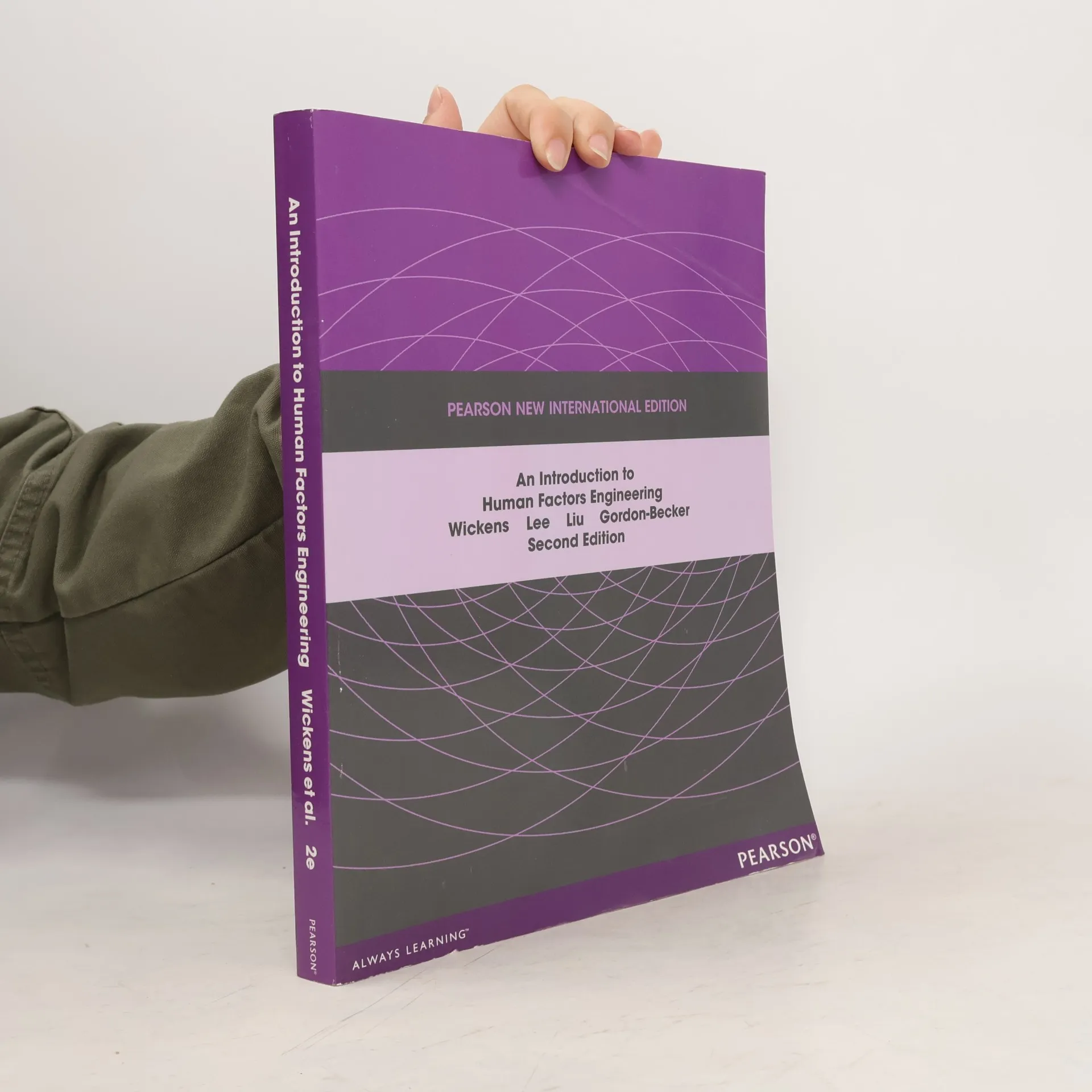


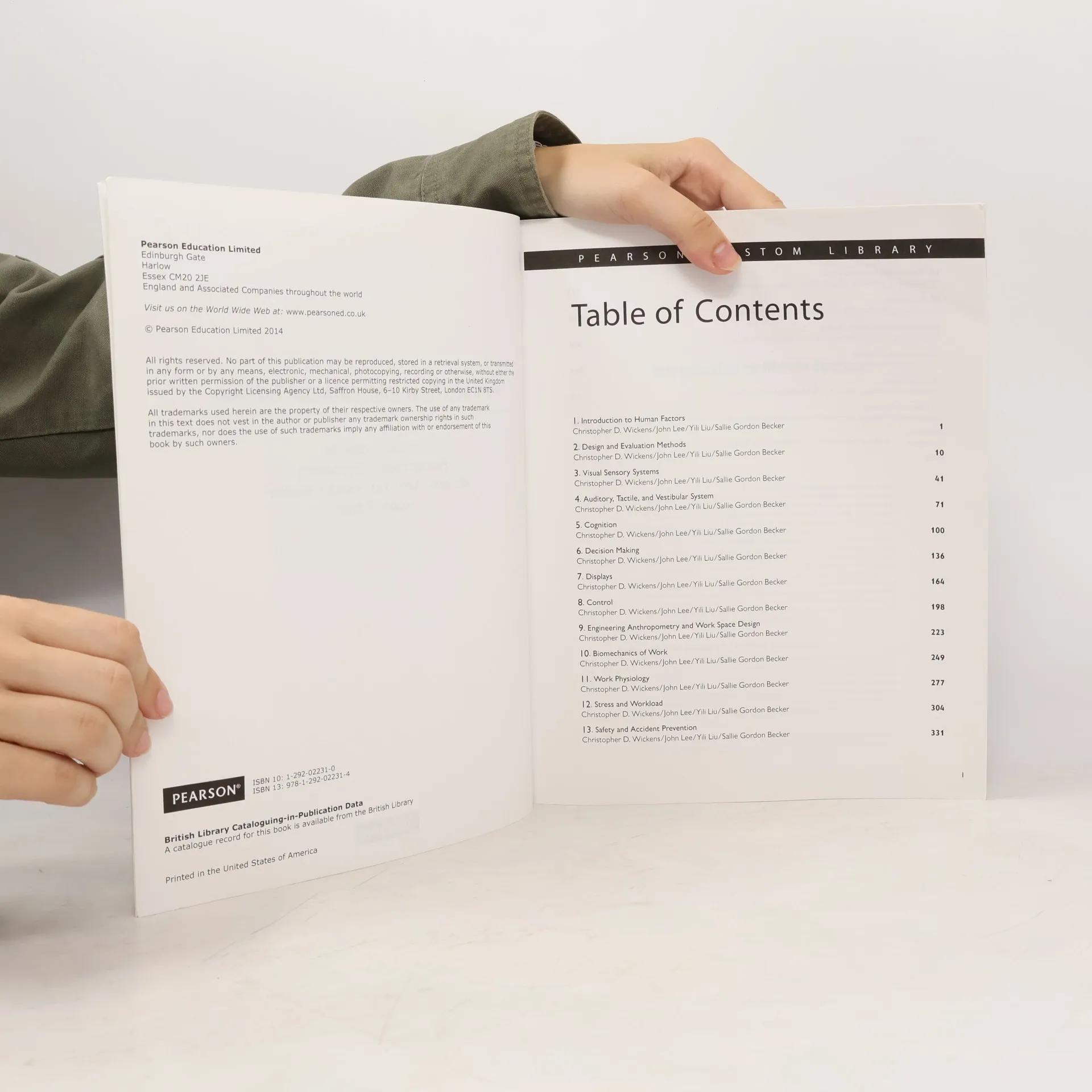
Introduction to Human Factors Engineering
Pearson New International Edition - Second Edition
Hodnotenie knihy
Viac o knihe
For undergraduate courses in Human-Factors Engineering, Human-Computer Interaction, Engineering Psychology, or Human-Factors Psychology. Offering a somewhat more psychological perspective than other human factors books on the market, this text describes the capabilities and limitations of the human operator-both physical and mental-and how these should be used to guide the design of systems with which people interact. General principles of human-system interaction and design are presented, and included are specific examples of successful and unsuccessful interactions. It links theories of human performance that underlie the principles with real-world experience, without a heavy engineering-oriented perspective.


Nákup knihy
Introduction to Human Factors Engineering, John Lee, Christopher D. Wickens, Yili D. Liu, Sallie E. Gordon-Becker
- Jazyk

- Rok vydania
- 2013
- Väzba
- (mäkká)
Doručenie
Platobné metódy
Tu nám chýba tvoja recenzia
- Titul
- Introduction to Human Factors Engineering
- Podtitul
- Pearson New International Edition - Second Edition
- Jazyk
- anglicky
- Vydavateľ
- Pearson Education Limited
- Rok vydania
- 2013
- Väzba
- mäkká
- Počet strán
- 586
- ISBN10
- 1292022310
- ISBN13
- 9781292022314
- Série
- Štítky
- Príručky a návody, Strojárstvo
- Hodnotenie
- 4 z 5
- Anotácia
- For undergraduate courses in Human-Factors Engineering, Human-Computer Interaction, Engineering Psychology, or Human-Factors Psychology. Offering a somewhat more psychological perspective than other human factors books on the market, this text describes the capabilities and limitations of the human operator-both physical and mental-and how these should be used to guide the design of systems with which people interact. General principles of human-system interaction and design are presented, and included are specific examples of successful and unsuccessful interactions. It links theories of human performance that underlie the principles with real-world experience, without a heavy engineering-oriented perspective.